Beagle puppies & breed info
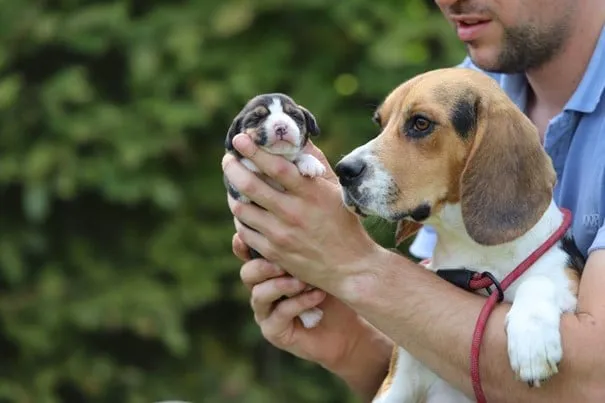
Available Beagle puppies for sale
Click ‘Puppy alert’ to stay up to date on new Beagle litters.
Beagle price
How much does a Beagle puppy cost? At Woefkesranch every puppy is born on the ranch and grows up with its mother, whom you always see when you visit. We have the parents tested for hereditary conditions, and every puppy leaves socialised, vaccinated, dewormed, microchipped, with a European passport and a 1-year guarantee. After the purchase we stay reachable by phone or WhatsApp, around the clock for urgent matters. That is why a Beagle puppy costs €1,250 to €1,500.
Woefkesranch has been a recognised Belgian family kennel since 1990. Puppies that cost much less often come from the Eastern European supply, with inhumane practices and serious health problems. Some sellers offer these puppies as if they were bred in Belgium. Learn more about the risks in the Pano report (VRT, in Dutch), for which the team also filmed at our ranch: De Oost-Europese puppybusiness.
Our usual process
Buying a Beagle puppy from Woefkesranch – Belgian breeder since 1990
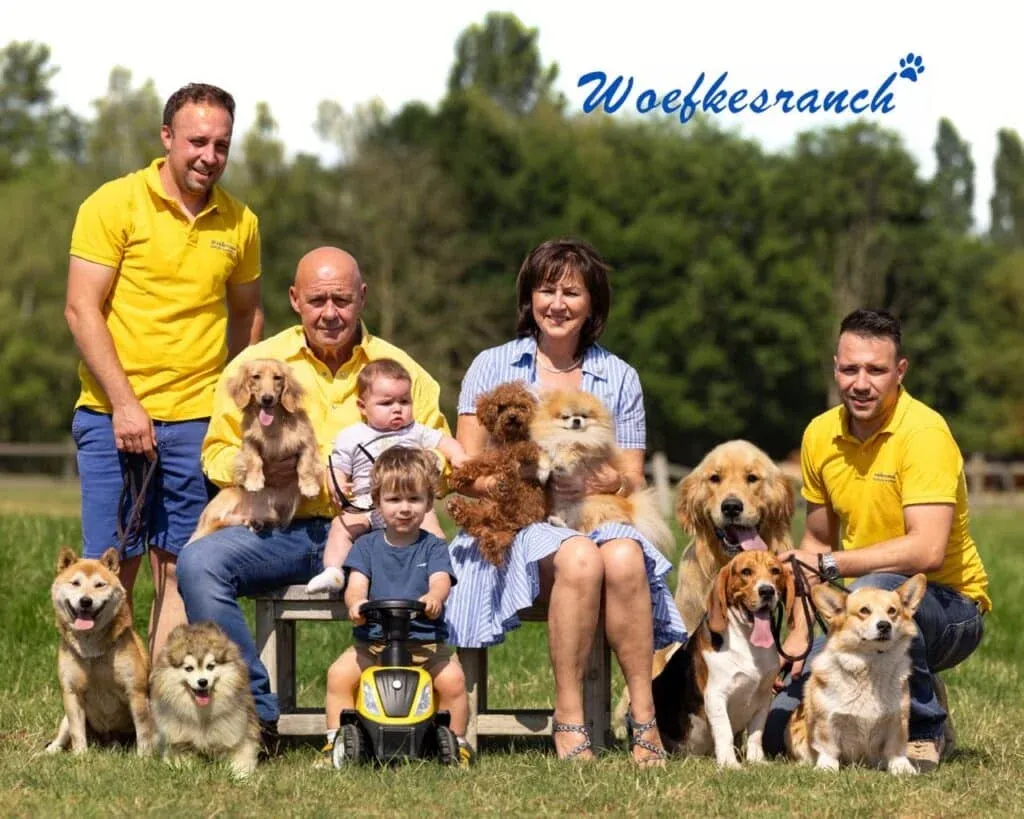
How it works:
- Meet the puppies (optional). Make an appointment to see the puppies with their mother, and to work out together which puppy suits your family.
- Reserve your puppy (optional). You can reserve online (24/7) or by phone on +32 (0)15 75 59 42. After reserving, you receive photos on request. If a puppy is already 8 weeks old, you can also take it home at your visit.
- Collection from us or home delivery. You can collect your puppy from 8 weeks old. It leaves microchipped, vaccinated, dewormed and with its European passport, and we register it in your name in DogID together. If you have no transport, someone from Woefkesranch brings your puppy to your home, within 250 km of our ranch in Putte (including the Netherlands, France, Luxembourg and Germany).
- 1-year guarantee. Every puppy has a 1-year guarantee on hereditary conditions and hidden congenital defects. We remind you about the first booster vaccination and deworming.
- Lifelong support. We remain available by phone or WhatsApp, also for training tips and health questions. For urgent matters we can be reached 24/7.

Written and reviewed by Marleen Dyck, co-founder of Woefkesranch
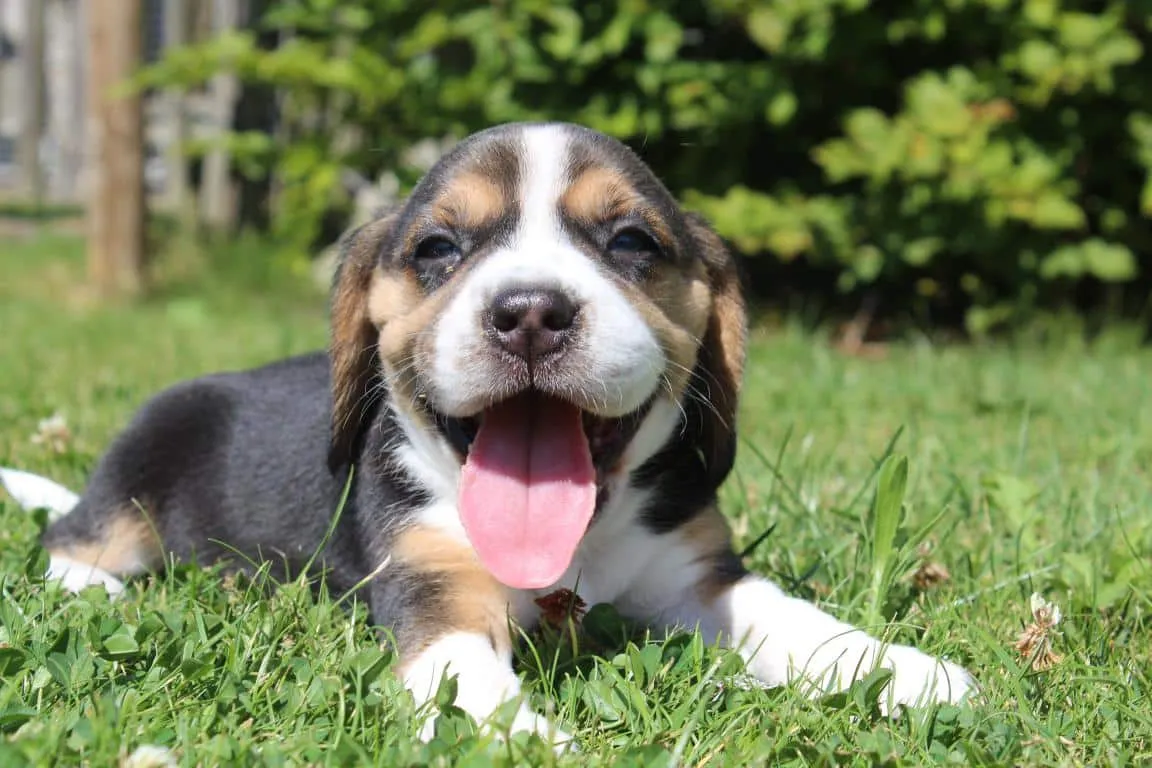
A cheerful, tricolour dog that gets attached to the whole family
Playful, sociable and happiest in company, a dog that attaches itself to the whole household. It learns the basics quickly, and likes to focus on scents.
What to expect
Sociable
Easy with children and with other dogs.
Family-minded
Attaches itself to everyone in the house.
Playful
Picks up the basics fairly easily.
Single-minded
Once it is on a scent, you often lose its attention.
Height*
~36.5 cm
Weight*
~11.5 kg
Life expectancy
~14 years
Origin
England, 14th century
*The sizes above are based on the FCI breed standard. Woefkesranch aims for them, but the health of the dogs always comes first.
Breed summary
You will discover that the Beagle is a cheerful pack hound that bonds with the whole family rather than with one person, which is what makes it suit so many households. Bred in England from the 14th century to hunt small game, it still carries the nose and the persistence that made it good at the work. You will need to give it real exercise every day, and to accept that a Beagle on a scent stops hearing you. Read on to see what this breed asks of you.
In five points
- The Beagle is a pack dog that bonds with the whole family rather than one person, which is what makes it suit so many different households.
- Bred in England from the 14th century to hunt rabbits, the Beagle still has the nose and the persistence that made it good at the work.
- A Beagle needs sixty to ninety minutes of exercise a day, and scent games matter to it just as much as the walking does.
- Puppies are born in two colours and the third appears within days, which is why the breed is described as tricolour rather than black and white.
- This breed has few hereditary health problems, which is one reason it makes a straightforward first pedigree dog.
History and Origin
The Beagle breed has a long history dating back to the 14th century in England. Originally, Beagles were bred for hunting small game, such as rabbits. Their excellent sense of smell and persistence made them perfect for this purpose. But did you know that Beagles used to be much larger than the dogs we know today? Over time, they were bred smaller to be faster and more agile at following the scent trails of game.
In the 19th century, an important change took place in the development of the Beagle breed. The famous breeder Reverend Phillip Honeywood contributed to refining the Beagle type we know today. He selected dogs with a gentler character and a more streamlined appearance. This gave the breed a stable and friendly personality, making them not only excellent hunting dogs but also wonderful companion animals.
The American Kennel Club registered its first Beagle, Blunder, in 1885, and in 1890 a Beagle club was founded in Britain that drew up the first breed standard.
Over the years, the Beagle breed has become beloved worldwide. They are known for their affection, playfulness, and friendly nature. Beagles have even gained enormous popularity thanks to the iconic role of “Snoopy” in Charles M. Schulz’s comic strips. These smart and lively dogs have proven themselves over time as cherished companions and loyal family members.
Thanks to its nose and tracking instinct, the Beagle is still one of the most used breeds for detection work today, by police and customs and by search organisations.
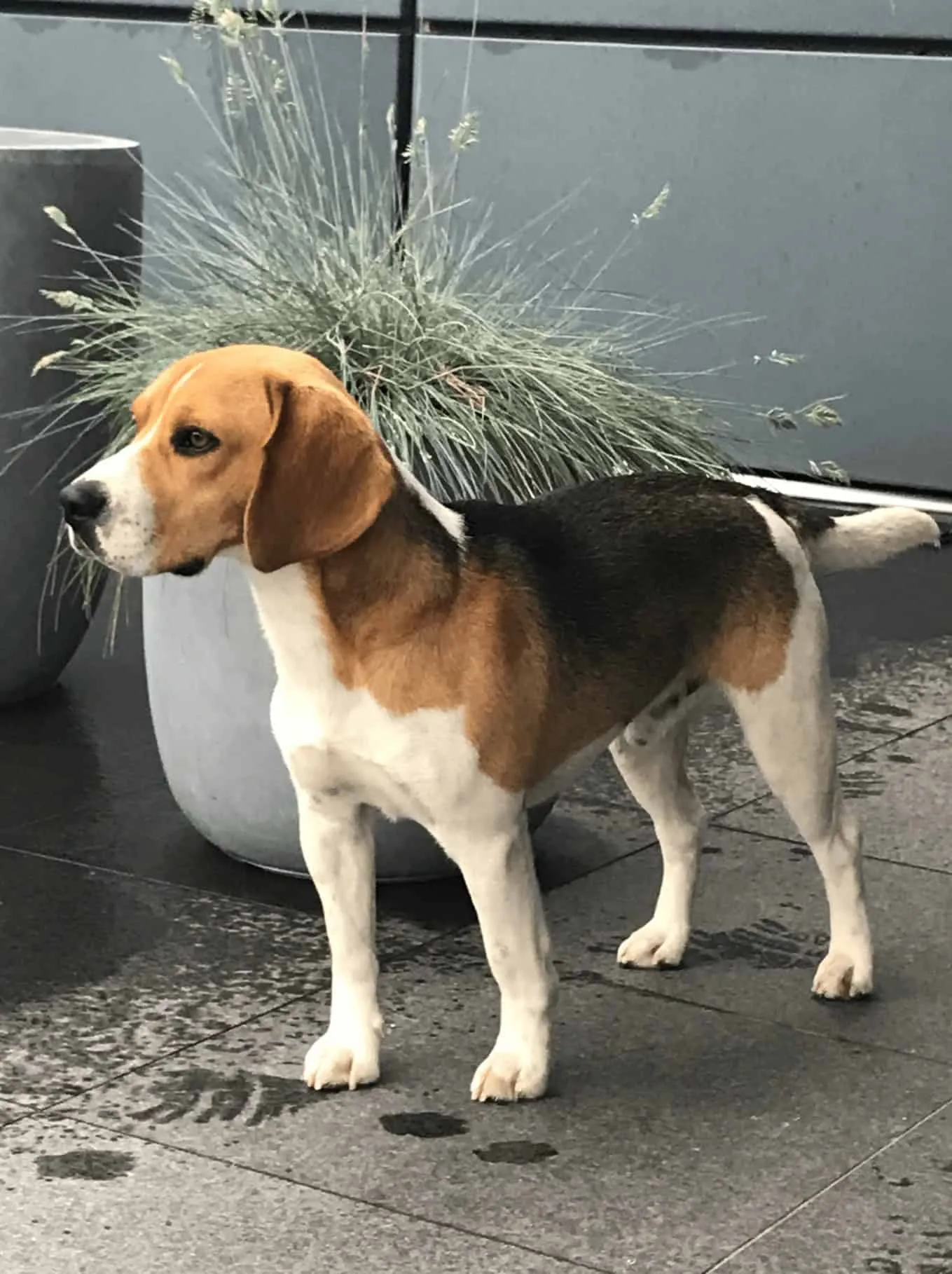
Physical characteristics, three colours and grooming
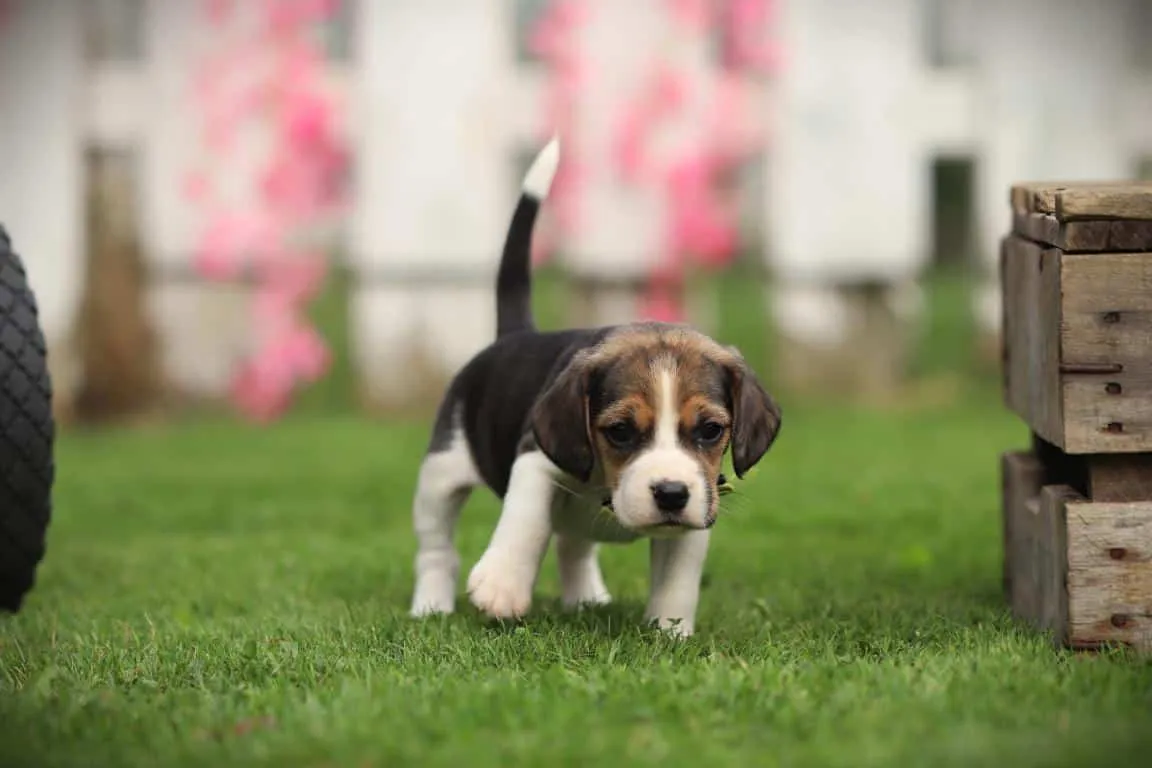
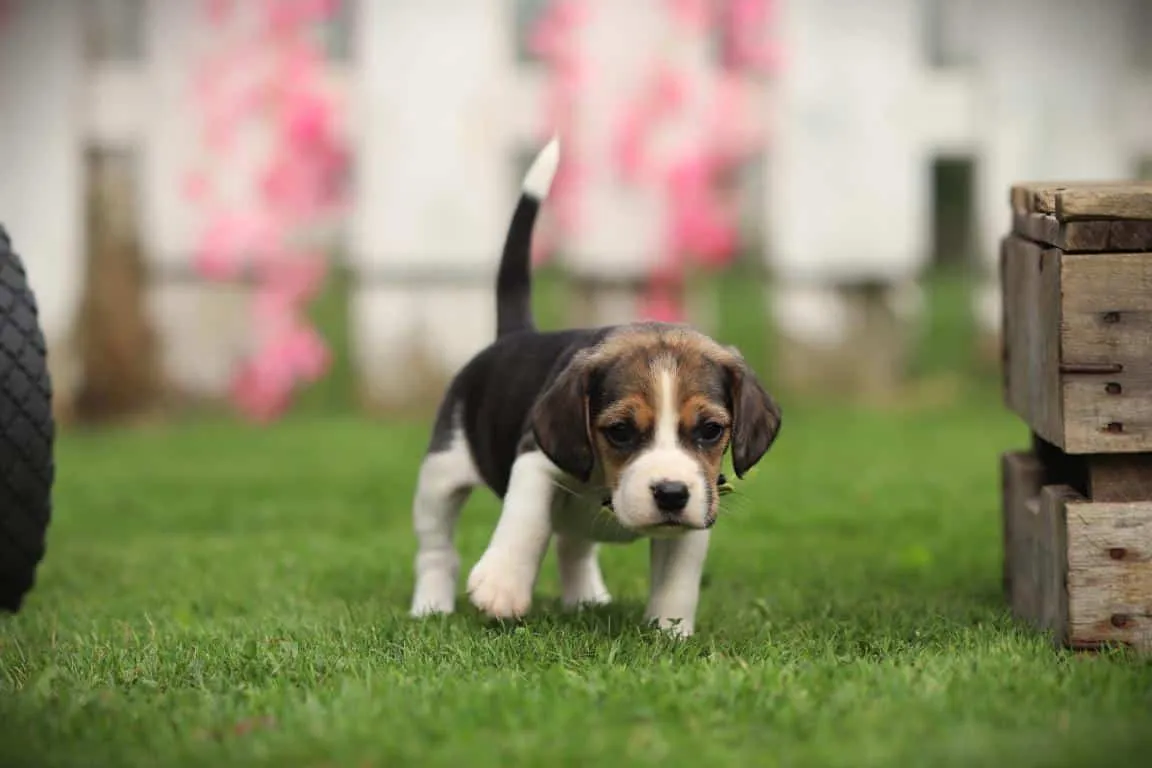
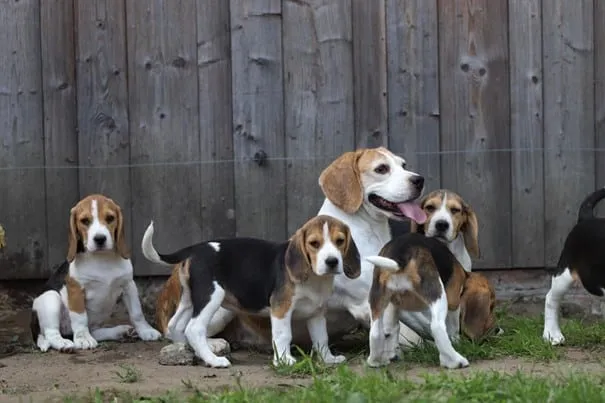
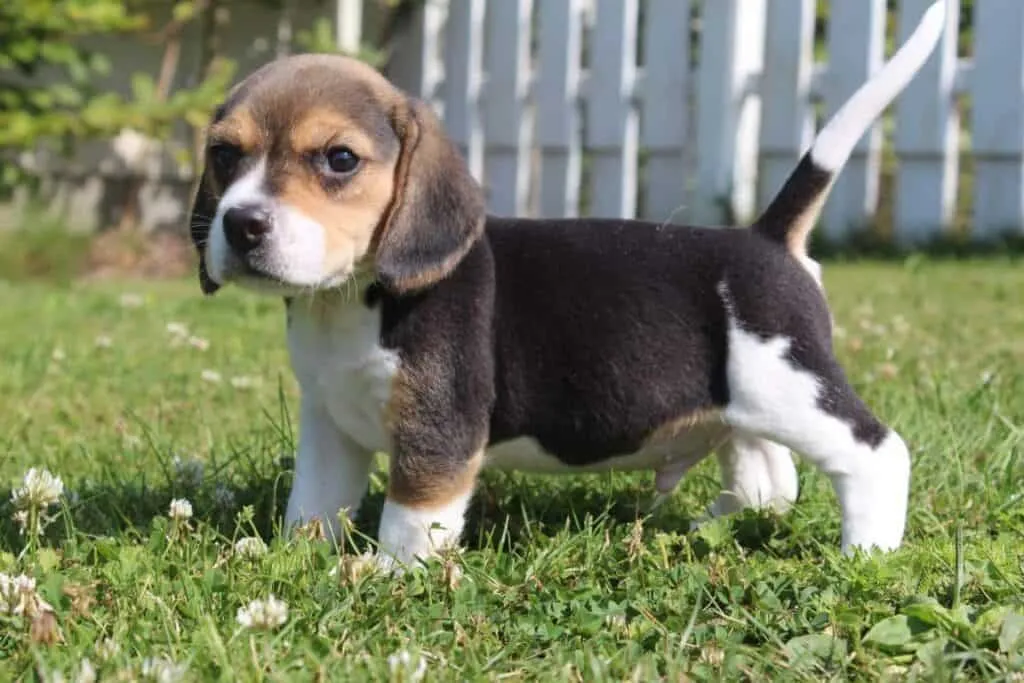
Beagles are born in two colors. But after a few days, the third color begins to appear. Their coloring is described as ‘Tricolor’ in terminology.
When a Beagle puppy is born, only the black and white colors are present, but very quickly a small portion of the black hairs change to a brownish shade. The older a Beagle gets, the more black fades to brown. What is white remains white.
Besides the classic tricolour, Beagles also come in two-colour coats such as lemon and white or red and white. At Woefkesranch we breed tricolour Beagles.
A Beagle has floppy ears, like many hunting dog breeds. This means you should regularly check the ears; cleaning is only necessary when they are dirty. They have a ‘medium skull shape,’ which provides advantages for overall breathing (short-nosed breeds have much more difficulty breathing). All of these factors make the Beagle a breed with relatively low chances of medical issues. However, you should always watch out for overweight.
An adult Beagle has a beautiful ‘sword tail’ covered with short, stiff hair. Dogs of this breed go through a shedding period twice a year. During this time, they lose part of their coat to replace it with a different, more suitable fur for the season. This mainly happens during the transition from winter to spring and summer to autumn. Dogs that usually live outdoors shed more because the temperature fluctuations are greater. Brushing is lightly recommended, especially during the shedding period. Bathing, on the other hand, is unnecessary and even discouraged.
Our growth guide explains when a Beagle is fully grown and what a puppy weighs at each age.
A Beagle is not a hypoallergenic breed; you can find hypoallergenic breeds here.
| Characteristic | Male | Female |
|---|---|---|
| Height | ~36.5 cm | ~36.5 cm |
| Weight | ~11.5 kg | ~11.5 kg |
Heights from the FCI breed standard; weights from the American Kennel Club.
Comparison of the Beagle and the English Cocker Spaniel
| What differs | Beagle | 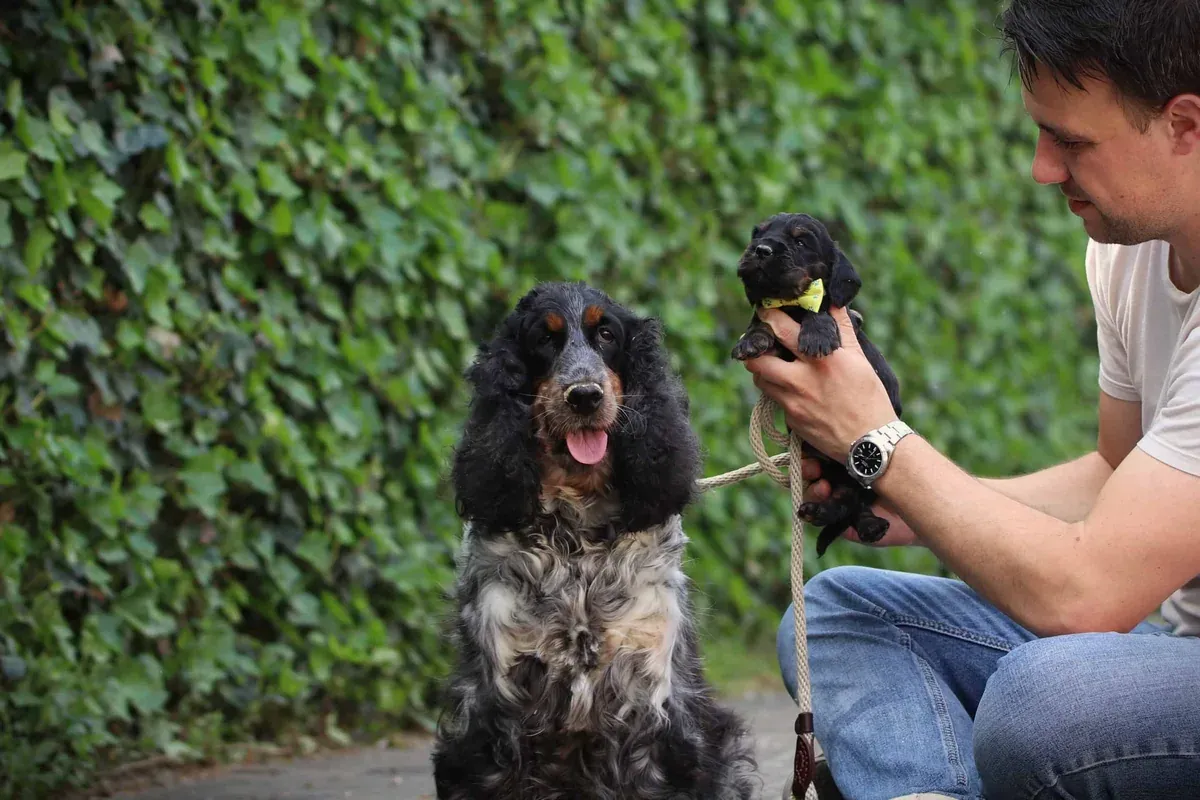 English Cocker Spaniel |
|---|---|---|
| Bred for | A pack hound: hunted hares in a group, followed the trail on its own and signalled with its voice where it led | A hunting dog that worked close to the hunter: flushed birds from the undergrowth without barking and brought them back. Named after the woodcock, the bird it hunted |
| Coat and grooming | Short and stiff. Needs almost no grooming, but sheds heavily twice a year | Silky and medium-length, with feathering. Brushing one to two times a week and the groomer 3 to 5 times a year |
| Temperament | Bonds with everyone in the household. Outdoors, likes to follow a scent trail on its own | Bonds with its own people. Outdoors, likes to work together with them |
A Beagle and an English Cocker are about the same size: ~36.5 cm and ~11.5 kg against ~39 cm and ~14 kg. Both have long drop ears, which need checking regularly. For us, a Beagle is one of the easier pedigree dogs we breed, because it is a pack dog and sociable by nature. With the Beagle breed you also do not take many risks with children.
Personality and Temperament
“Beagles are stubborn dogs, cannot stay alone, and are headstrong.” Or at least, that’s what you often read on the internet about their character. Not entirely untrue, but often greatly exaggerated.
Beagles can really fixate on something. They might be playing with a ball and you want to call them to attention. That’s often harder because this breed really focuses on whatever they’re engaged with (the ball) and disregards what’s happening around them. This works both ways. When you have your Beagle’s attention, they can truly focus. Call it determination, that sounds nicer than ‘stubborn’, and, with training, it is a much more accurate description.
For us, a Beagle is one of the easier pedigree dogs we raise, because it is a pack dog and naturally social. You also don’t run many risks with children when it comes to the Beagle breed.
The Beagle is a very playful breed, learns its basics fairly easily, has a low risk of health problems, and loves a walk.
The big advantage is that a Beagle is not a one-person dog. They will not look up to just one person, but to several. This applies both in a group with other dogs and within a family. That is exactly what makes them, in our eyes, a breed for almost all families.
A Beagle has a loud, carrying voice and barks or howls easily, a legacy of hunting in a pack, which matters in a flat or with close neighbours. Early socialisation helps to limit excessive barking.
Its hunting instinct can make a Beagle chase cats and small animals such as rabbits, especially at first. Socialisation from an early age usually teaches it to live with a cat or other small pets.
Health and Nutrition
Health can, in short, be divided into two parts. On one hand, there is general health, whether the dog is free of viruses or not. On the other hand, we look at the genetic component. What the puppy inherited from both its mother and father (DNA, character, temperament, appearance, and other genetics).
Hip dysplasia and patella luxation are what the breed is screened for. Parents that test free of both are no guarantee that your dog will never develop either, but they do mean the chance is drastically reduced. The environment after weaning (leaving the mother) is also very important. A dog can still develop bone problems due to growth that can be affected by neutering/spaying at a too young age. It is even possible that the use of various products against fleas/ticks/pests causes epilepsy. This is not considered a genetic but an acquired problem. In our opinion, the breeder also has the responsibility to warn potential customers about these risks.
Other conditions found in the breed are Musladin-Lueke syndrome (malformation of the legs and face), steroid-responsive meningitis and factor VII deficiency, a blood clotting disorder. Hereditary (idiopathic) epilepsy also occurs in Beagles; ask the breeder whether it is known in the parents’ lines.
A Beagle generally has a life expectancy of about 14 years, and that figure depends on care, feeding and veterinary attention as much as on the dog itself.
It is important to choose food specifically formulated for the needs of Beagles or dogs of similar size and activity level. These foods are packed with the right nutrients, vitamins, and minerals your Beagle needs to stay healthy. Think, for example, of a balanced mix of proteins, carbohydrates, healthy fats, and fibers.
Feed an adult Beagle two measured meals a day and do not leave food out between meals, because the breed tends to overeat.
Because a Beagle eats whatever it finds, keep chocolate, grapes and raisins, onions and garlic, macadamia nuts and products with xylitol out of its reach: they are toxic to dogs.
To find out when a female Beagle has her first heat, read our article on the heat cycle.
Training and Exercise
A Beagle puppy is energetic and inquisitive, and it has particular needs when it comes to training.
Make training fun and rewarding: by rewarding positive behaviour with treats, praise and affection, your puppy learns more quickly and enjoys it. Keep the sessions short and playful, because a Beagle that is bored stops listening long before it stops being able to learn. Consistency matters more than length: the same words, the same rules and the same rewards every time.
House training a Beagle often takes longer than some owners expect, so stay on the same routine until it is fully adopted.
Our guide to the right crate for a Beagle explains which size it needs and how to measure it.
Choosing and caring for your Beagle
Choosing the right breed, puppy and breeder
A Beagle suits a household that wants a sociable dog rather than one that attaches to a single person, and that can give it an hour or more of walking and scent work a day.
A Beagle that picks up a scent will try to follow it, so a garden needs secure fencing without gaps. A Beagle that gets too little exercise tends to bark, dig and try to escape.
Before bringing a Beagle home, read our overview of the pros and cons.
A good breeder not only shares information about a Beagle and its character, but goes further. A good breeder knows their parent dogs, provides information about the health of the puppies, and remains accessible to their customers to support them in the future as well.
Beagles are widely available and at a range of prices, so it is worth comparing, though price on its own is a poor guide. Ask to see the mother dogs, ask as many questions as you want, look at how the dogs are housed, and take the time to get to know a puppy before choosing it.
Essential daily care
Caring for a Beagle means committing to a daily routine that addresses their grooming, feeding, exercise and health needs.
For optimal daily care, focus on these key points:
Coat
Short and easy to keep, but it sheds properly twice a year when the coat changes for the season.
Ears
Floppy ears want checking regularly. Clean them only when they are actually dirty.
Food
Food suited to a dog of this size and build, and a close eye on the amount: a Beagle will eat whatever it finds.
Exercise
Sixty to ninety minutes a day, with scent work or tracking games to tire the nose as well as the legs.
Regular veterinary visits are essential to monitor health, contributing to a longer lifespan for your Beagle. If you are considering getting a puppy, it is important to recognize a good breeder.
Recognised family business since 1990, now in its second generation
We are a recognized breeder of Beagle puppies in Belgium. Our ranch is in Putte (near Mechelen), between Brussels and Antwerp, about 40 kilometers from Brussels, 30 kilometers from Antwerp and 80 kilometers from Ghent. Our puppies are socialized on the ranch through contact with our caretakers and with other dogs and puppies. Woefkesranch has been a family business since 1990 and is now in its second generation. Every puppy is born in our own kennel under permanent supervision, with no imports and no middlemen. Families are guided before the purchase and are welcome back with their questions long afterwards.
Delivery to your door in and around Brussels, Cologne, Amsterdam, Rotterdam, Düsseldorf, Essen, The Hague…
If you have no transport, someone from Woefkesranch brings your puppy to your home, up to 250 km from Putte. Approximately: Hasselt 60 km, Charleroi 80 km, Mons 100 km, Liège 110 km, Bruges 120 km, Rotterdam 120 km, The Hague 150 km, Düsseldorf 180 km, Amsterdam 190 km, Cologne 190 km, Essen 220 km.
Frequently Asked Questions
How much does a Beagle puppy cost?
The price of a Beagle puppy varies from breeder to breeder. Rarely is there a price difference between a male and a female. A typical price for a Beagle is between €1,250 and €1,500.
Just because another breeder has less demand for a puppy, you shouldn’t rush to switch locations. Because a dog’s health is priceless. One vet bill can sometimes already offset differences.
The price of a Beagle is determined by several different factors here. But it should never be determined by health. Whether a dog costs one euro or 10,000 euros, health must always come first.
Age is the biggest factor why a breeder might lower their price. When a breeder receives a visitor, each of their puppies should have an equal chance of being ‘chosen.’ And price is simply a decisive factor for many.
Additionally, you often find dogs at ridiculously low prices, sometimes with a difference of up to 50%. Usually, it’s not just about older ‘puppies;’ they often originate from Eastern Europe, and you won’t be able to visit the mother dog.
And finally, beauty. We also browse the internet and see what ‘competitors’ sometimes offer as a ‘Beagle.’ The breed purity/standard is sometimes really hard to find.
Are Beagles stubborn or difficult to train?
Beagles are intelligent but independent dogs with a strong scent-driven instinct. They respond best to consistent, positive training with clear boundaries and motivation-based methods.
Can a Beagle stay home alone during the day?
Beagles are social dogs and do not tolerate long periods of isolation well. Being left alone must be introduced gradually to prevent separation-related stress or unwanted behaviors.
How much daily exercise does a Beagle need?
A Beagle requires at least ~75 minutes of daily exercise. Activities involving scent work, tracking games, or mental challenges are strongly recommended.
Is it safe to let a Beagle off-leash?
Caution is advised. Beagles may follow a scent and ignore recall commands. Off-leash freedom should only be allowed in secure areas or after extensive recall training.
Are Beagle puppies suitable for families with children?
Yes. Beagles are generally friendly, playful, and tolerant, making them well-suited for active families with children, provided their exercise and training needs are met.
Come and see
Make an appointment
Do you want to visit our puppies? You can also make an appointment.
- 100% Belgian puppies
- Professional statutory warranty
- 24/7 service after sale
- Puppies have all necessary vaccines
- Puppies are dewormed multiple times
- Chipped and with Belgian/European passport
- DNA-tested parents