Miniature Poodle
From its origin to character and care.
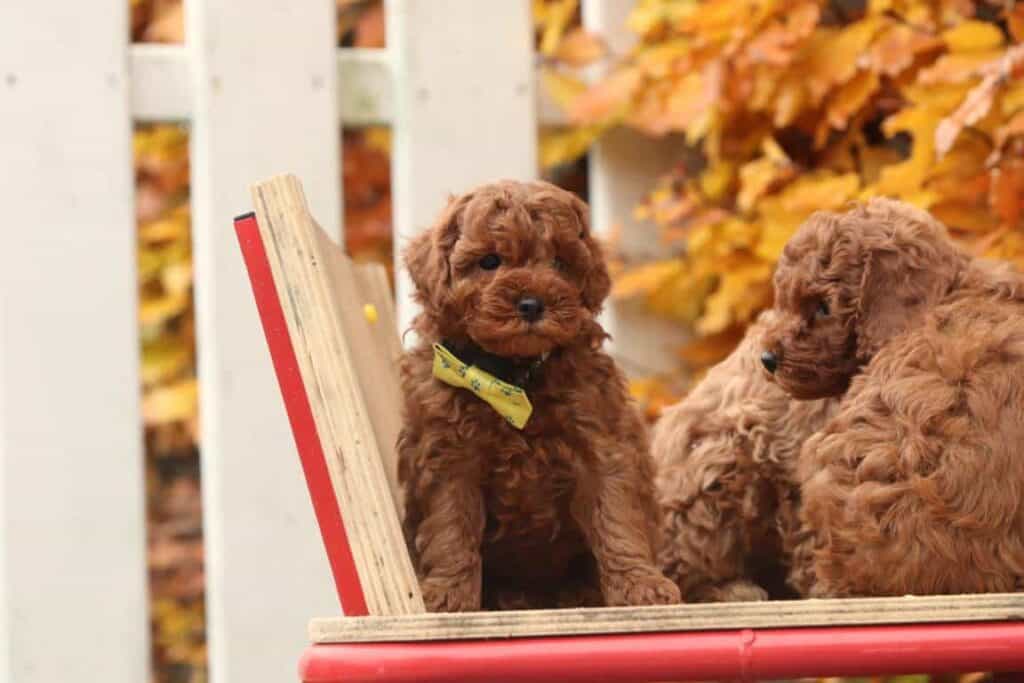
- Belgian breeder since 1990
- DNA-tested parents

Written and reviewed by Marleen Dyck, co-founder of Woefkesranch
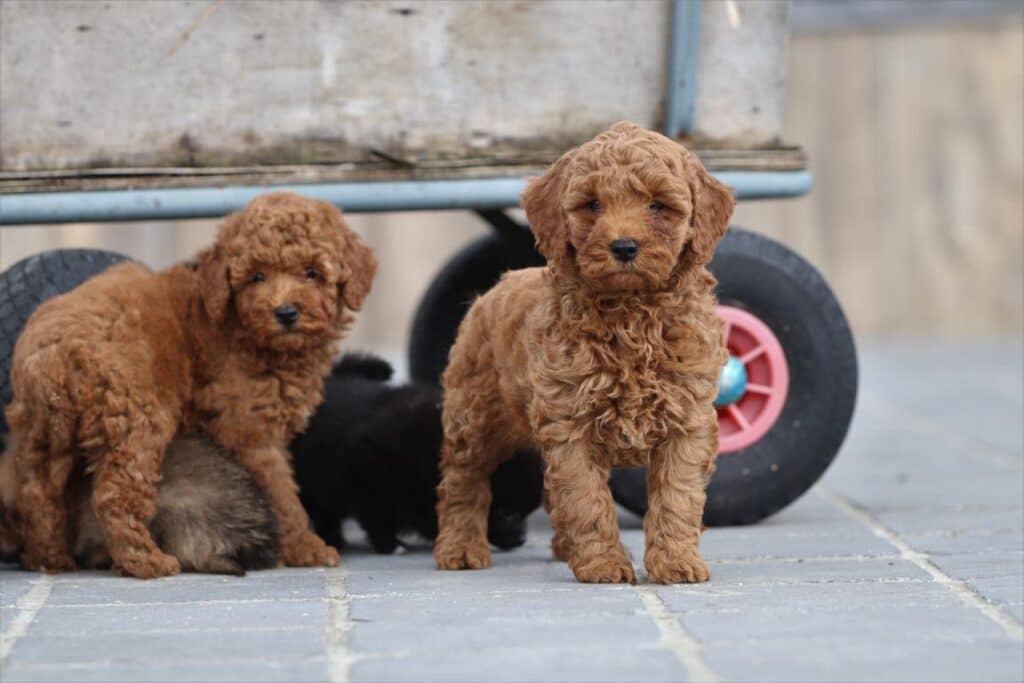
A clever little dog that learns almost anything
Sensitive, intelligent and straightforward to train. It loves being with people and stays watchful with strangers, so early socialising is what turns that caution into confidence.
What to expect
- Quick to learn
- Takes to training quickly and retains it.
- Attached to people
- Happiest in company, and quick to read a mood.
- Watchful
- Reserved with strangers, and a genuinely good watchdog.
- Low-shedding
- Sheds almost nothing, which suits allergy sufferers.
- Height
- ~32 cm
- Weight
- ~7 kg
- Life expectancy
- ~14 years
- Origin
- France, 19th century
You will discover that the Miniature Poodle is intelligent and highly trainable, and that a Poodle left with nothing to do will occupy itself. It descends from a French water dog, the Barbet, and has been known across western Europe for four hundred years. The curly coat sheds almost nothing, which suits allergy sufferers, and in exchange it needs a professional trim roughly every six weeks. You will need to socialise it early, because this breed is watchful with strangers and will bark if nobody teaches it otherwise. Read on to see what this breed asks of you.
About Woefkesranch
Miniature Poodle Puppies at Woefkesranch
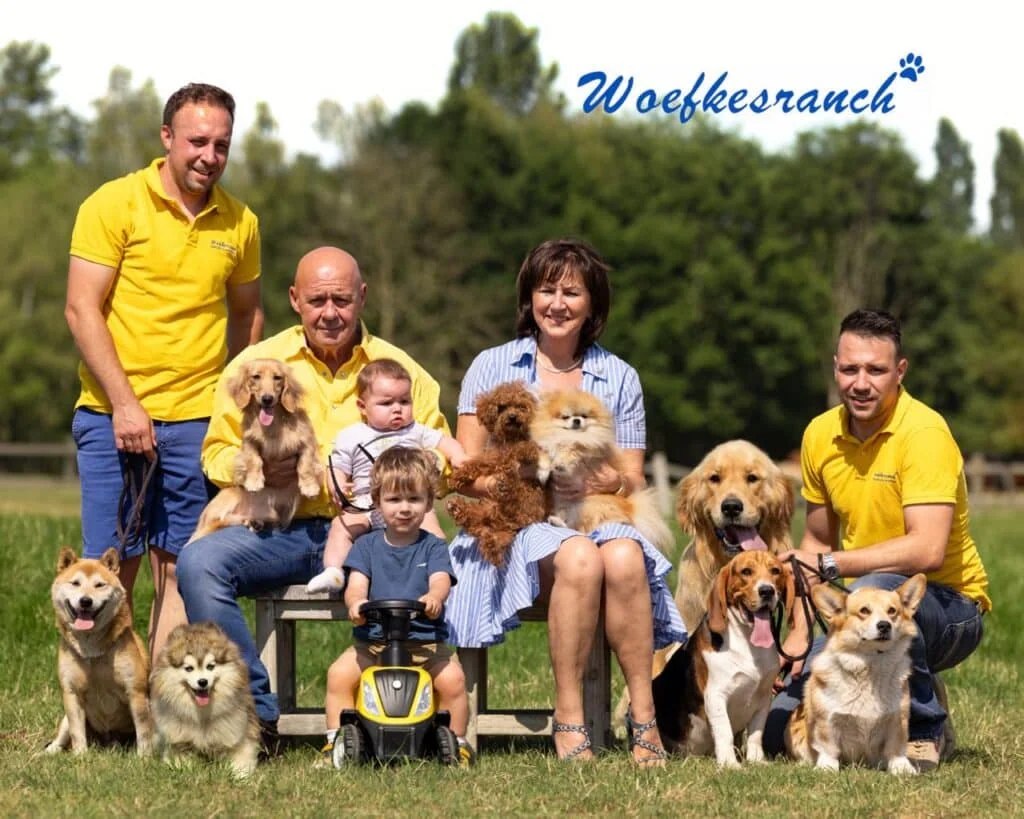
We are a recognized breeder of Miniature Poodle puppies in Belgium. Our puppies are raised in a family environment and are optimally socialized. Woefkesranch has been a family business since 1990 and is now in its second generation. Every puppy is born in our own kennel under permanent supervision, with no imports and no middlemen. Families are guided before the purchase and are welcome back with their questions long afterwards.We have been a recognized family breeder in Putte, Belgium since 1990, now in our second generation: every Miniature Poodle puppy is born and socialized here, with no imports and no middlemen, and families are guided before the purchase and long afterwards.
What you get with our puppies:
- Puppy raised in Belgium
- Good puppies
- Initial vaccinations and microchip
- Lifetime support by phone/WhatsApp
- Available 24/7 for emergencies
Available Miniature Poodle puppies for sale
There are currently no Miniature Poodle puppies available:
click ‘Puppy alert’ and be notified when a new litter is available.
In five points
- The Poodle descends from a French water dog, the Barbet, and has been known across western Europe for four hundred years.
- It comes in three sizes judged to one standard, and the one sold here is the Miniature at ~32 cm and ~7 kg.
- The breed is highly trainable, which is why it is used in the Labradoodle, the Cockapoo and the Maltipoo crosses.
- The curly coat sheds almost nothing and suits allergy sufferers, in exchange for a trim roughly every six weeks.
- It is watchful with strangers and will bark if untrained, so early socialising matters.
History and Origin
Poodles have been known across western Europe for at least four hundred years, and their origin is still argued over: France, Germany and Denmark have all claimed them. France is the country the breed is officially recognised to, and the dog it descends from is French, a water dog called the Barbet that is now nearly extinct. A Hungarian water dog may have contributed too.
The name tells the same story twice. Caniche comes from the French for a duck dog, and Pudel from the German for the one who splashes. The dense curly coat was not a fashion: it protected the dog from cold water while it worked.
The French turned that intelligence and trainability into a circus act, which is where the breed’s reputation for performing comes from, and Poodles were also used to find truffles. They appear in paintings from the 15th century and became royal favourites in the 18th. The Miniature and Toy varieties were bred down from the Standard, and all three are judged to one standard.
Physical characteristics and grooming
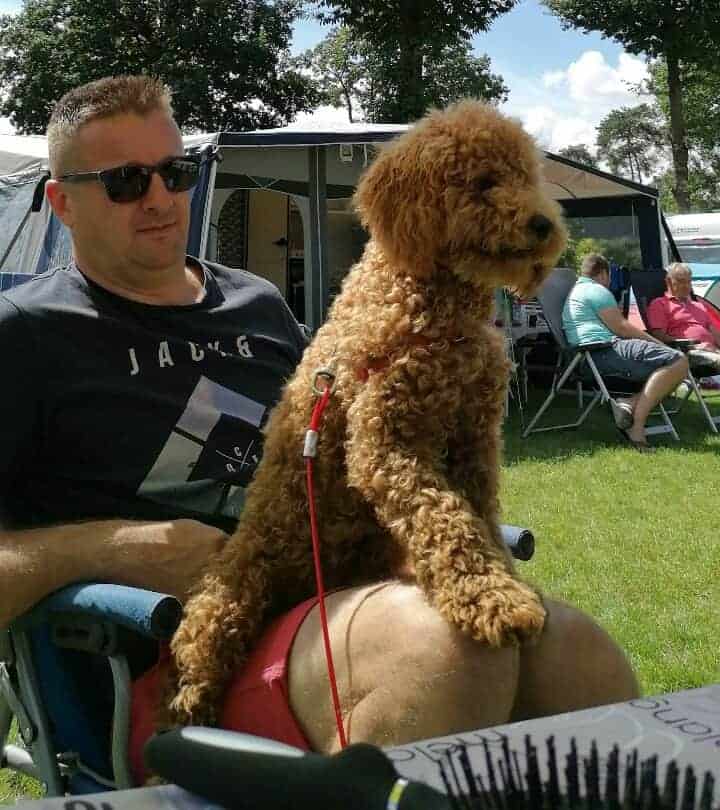
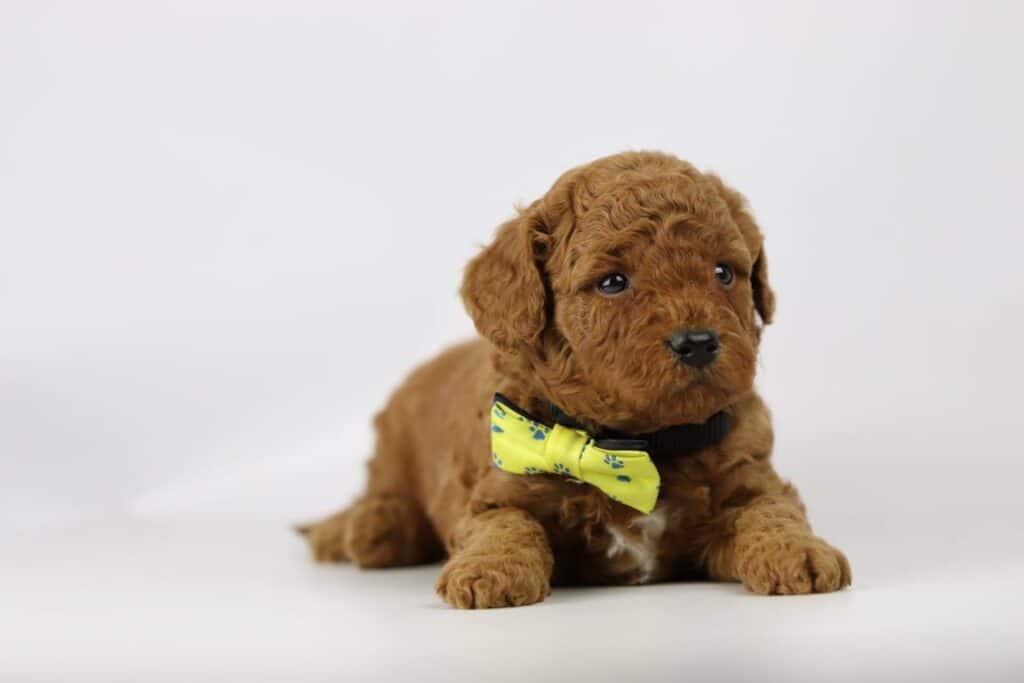
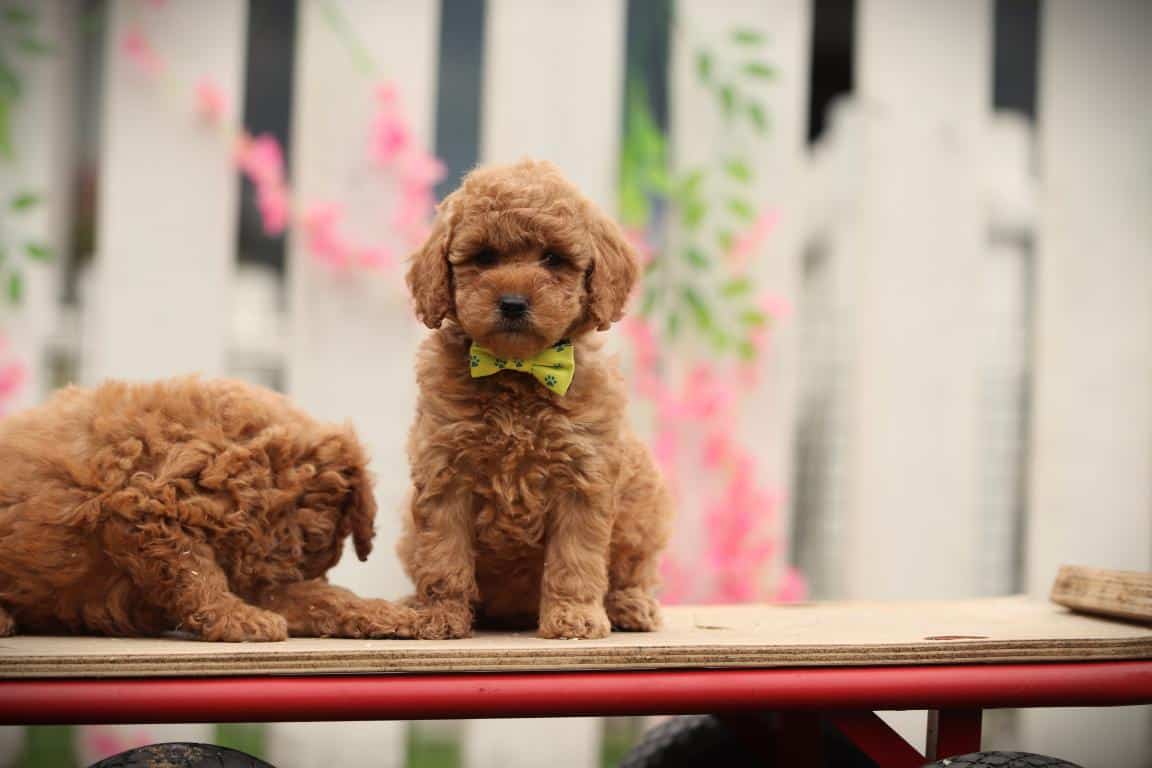
A Miniature Poodle is a small, elegant, square-built dog: the length of the body matches the height at the withers. The coat is strongly curled, the ears long, flat and broad and set close to the head, and the head itself is long with dark almond-shaped eyes that give the breed its watchful expression.
The teeth close in a scissor bite and the feet are small and oval with arched toes. The gait is smooth and springy. The coat can be groomed short all over, or in the traditional pattern with the hindquarters shaved and pompons left on the tail and hips, and every colour is allowed.
| Characteristic | Miniature (Nain) | Royal (Grand) | Medium (Moyen) | Toy |
|---|---|---|---|---|
| Height | ~32 cm | ~53 cm | ~40 cm | Under 28 cm |
| Weight | ~7 kg | ~22 kg | ~12 kg | Under 7 kg |
Hypoallergenic: all breeds at Woefkesranch
A purebred coat is known in advance, while a cross can take after either parent. The low shedding depends on the coat being kept up, so grooming is needed whichever you choose. Where an allergy is a real concern, spend time with the individual puppy before deciding.
| Characteristic | Miniature Poodle | Lagotto Romagnolo | Labradoodle | Cockapoo | Maltipoo | Maltese |
|---|---|---|---|---|---|---|
| Height | ~32 cm | ~45 cm | ~49 cm | ~36.5 cm | ~28 cm | ~23 cm |
| Weight | ~7 kg | ~14 kg | ~21 kg | ~10 kg | ~5 kg | ~4 kg |
| Hypoallergenic | Always | Always | Not always, depends on the parents | Not always, depends on the parents | Usually, both parent breeds are low-shedding | Always |
| Coat care | Comb regularly, professional trim every 6 weeks | Brush twice a week, trim every 6 to 8 weeks | Brush several times a week, groomer every 8 to 12 weeks | Brush daily, trim every 8 to 10 weeks and never shorter than 5 cm | Brush weekly, professional trim every 6 to 8 weeks | Comb weekly, trim once or twice a year |
| Breed origin | Purebred, from France | Purebred, from Italy | Labrador Retriever and Poodle | Cocker Spaniel and Poodle | Maltese and Miniature Poodle | Purebred, from Malta and Italy |
Heights from the FCI breed standard.
Comparing the Miniature Poodle, the Maltese and the Maltipoo
| What differs | 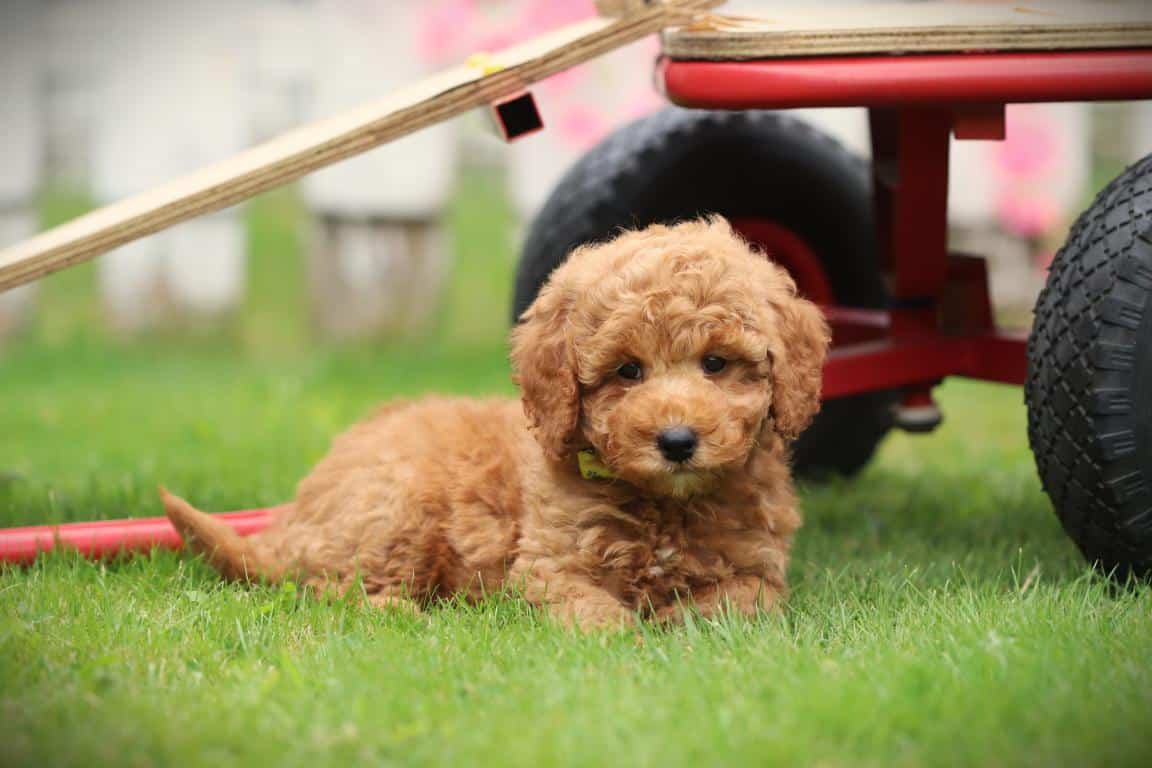 Miniature Poodle Miniature Poodle |
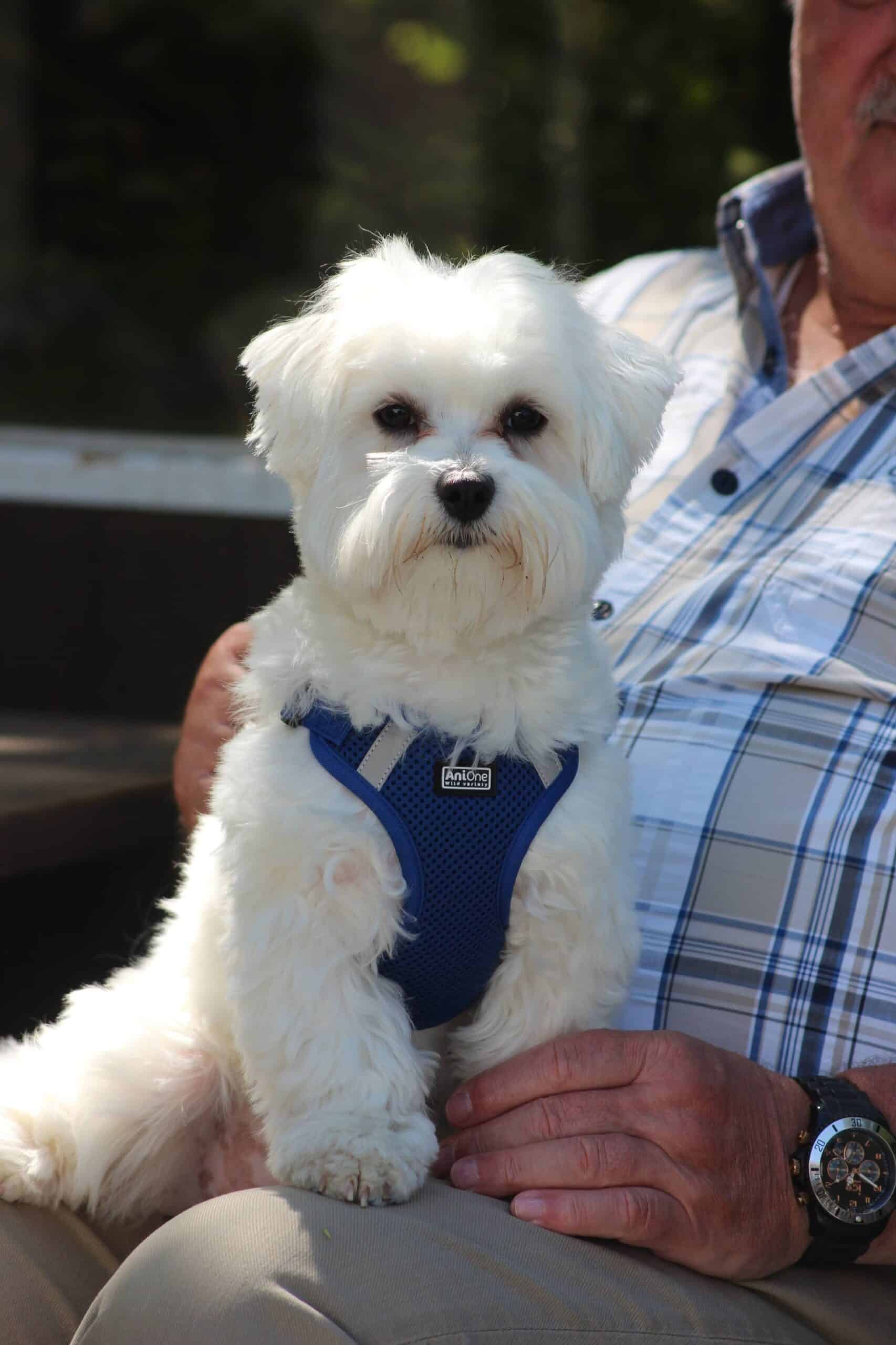 Maltese Maltese |
 Maltipoo Maltipoo |
|---|---|---|---|
| Breed status | A purebred, the smallest of the poodle sizes | A purebred from Malta and Italy, with a history running back three thousand years | A cross of the other two, bred in the United States from the 1990s |
| Height | ~32 cm | ~23 cm | ~28 cm |
| Weight | ~7 kg | ~4 kg | ~5 kg |
| Coat | Dense and curled, and it sheds no hair | Long, white and silky, with no undercoat | Medium length and curling, between the two |
| Grooming | A professional trim roughly every six weeks | Comb it through weekly, trimmed once or twice a year | Brush it through every week |
| Life expectancy | ~14 years | ~14 years | ~12 years |
All three are small companion dogs that want to be with their people, and all three shed very little. The difference is what you can count on: the two purebreds give a coat and a size that are known in advance, one asking for weekly combing and the other for a trim every six weeks, while a Maltipoo can take after either parent.
Personality and Temperament
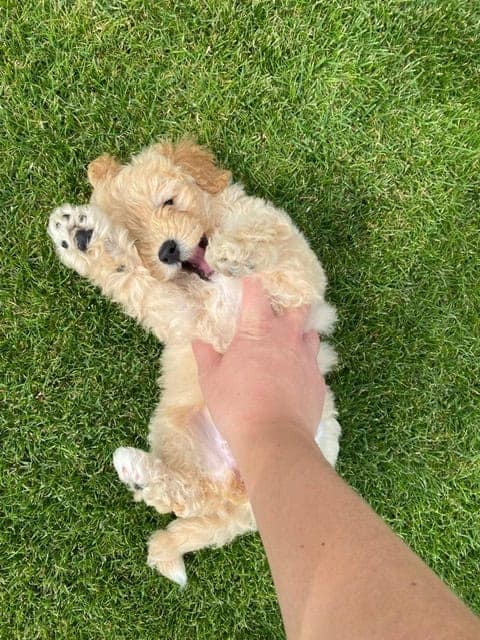
This is a sensitive, intelligent dog and straightforward to train. It likes being with people, and it is playful and quick to pick up a household’s routine.
It is also watchful with strangers, and some individuals are shy. A Poodle that is surprised or provoked can snap, and one that is not trained will bark. It does better with older, attentive children, and it is generally fine with other dogs and pets. Socialise it from puppyhood and most of that caution turns into confidence.
Health and Nutrition
A Miniature Poodle lives ~14 years. The breed is generally healthy, and the conditions to ask a breeder about are hip dysplasia and eye disease, with the patellae worth checking on the smaller varieties.
Grooming is part of health here rather than decoration. A trim roughly every six weeks, a bath three or four times a year, the ears checked often and cleaned, the hair in the ear canal kept short, and the teeth brushed.
Training and Exercise
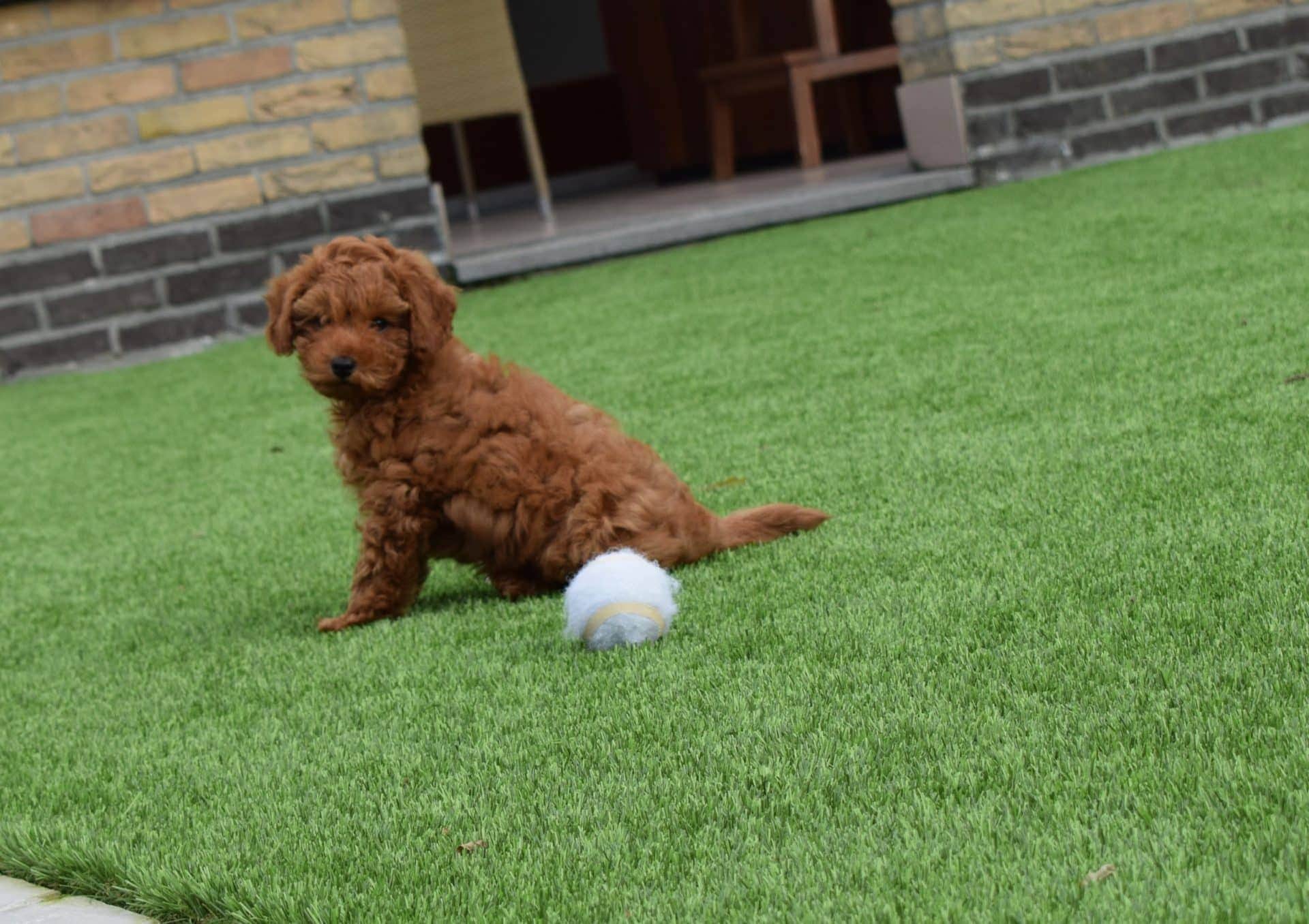
Train it early and keep it interested. The breed is highly trainable, and a Poodle left with nothing to do will teach itself something instead.
It is active indoors and will be content with a small garden, but it wants real walks and the chance to run off the lead. Its mood improves measurably when it gets that regularly.
The intelligence is also why this breed is behind so many crosses, from the Labradoodle to the Cockapoo and the Maltipoo.
Choosing and caring for your Miniature Poodle
Is this the right breed for you?
A Miniature Poodle suits a household that wants a dog to do things with and can keep up a six-weekly trim. It fits city and country equally, and it is at its best with older children who are attentive around a small dog.
Essential daily care
Caring for a Miniature Poodle means committing to a daily routine that addresses their grooming, feeding, exercise and health needs.
For optimal daily care, focus on these key points:
Coat
A professional trim roughly every six weeks and a bath three or four times a year. A single even length all over is the easiest choice to live with.
Ears
Check them often, clean them regularly and keep the hair in the ear canal trimmed. The long flat ears hold moisture.
Teeth
Brush them. This breed’s teeth need it more than most, and the vet bill for not doing it arrives later.
Exercise
Active indoors and happy with a small garden, but it wants proper walks and the chance to run off the lead.
Regular veterinary visits are essential to monitor health, contributing to a longer lifespan for your Miniature Poodle. If you are considering getting a puppy, it is important to recognize a good breeder.
How getting your puppy works
- Come and meet them. Make an appointment to see the puppies and their mother.
- Reserve your puppy. Choose your puppy and reserve it.
- Collect from 8 weeks. Your puppy leaves microchipped, vaccinated, dewormed and with its European passport, and we register it in your name in DogID together.
- We stay close. You take home care instructions and the guarantee certificate, with lifetime support by phone or WhatsApp.
Frequently Asked Questions
How big does a Miniature Poodle get?
Around ~32 cm at the withers and ~7 kg. The breed comes in four sizes judged to one standard, and this is the Miniature: smaller than the Medium, larger than the Toy.
Does a Miniature Poodle shed?
Almost nothing. That is why the breed suits allergy sufferers and why it is behind so many crosses. The trade is grooming: a professional trim roughly every six weeks.
Is a Miniature Poodle easy to train?
It is straightforward to train. It is also intelligent enough to need something to think about, and a Poodle left with nothing to do will occupy itself.
Is a Miniature Poodle good with children?
It does better with older, attentive children. It is a small, sensitive dog that can snap if it is surprised or handled roughly, and it is generally fine with other dogs and pets.
Does a Miniature Poodle bark a lot?
It will if nobody teaches it otherwise. The breed is watchful with strangers and makes a genuinely good watchdog, and early socialising is what keeps the caution from turning into suspicion.
Where does the Poodle come from?
France officially, from a water dog called the Barbet, though Germany and Denmark have both claimed the breed. The curly coat was working equipment: it protected the dog in cold water.
Make an appointment
Do you want to visit our puppies? You can also make an appointment.
- 100% Belgian puppies
- Professional statutory warranty
- 24/7 service after sale
- Puppies have all necessary vaccines
- Puppies are dewormed multiple times
- Chipped and with Belgian/European passport
- DNA-tested parents