Everything about the breed
Short-haired Miniature Dachshund
From its origin to character and care.
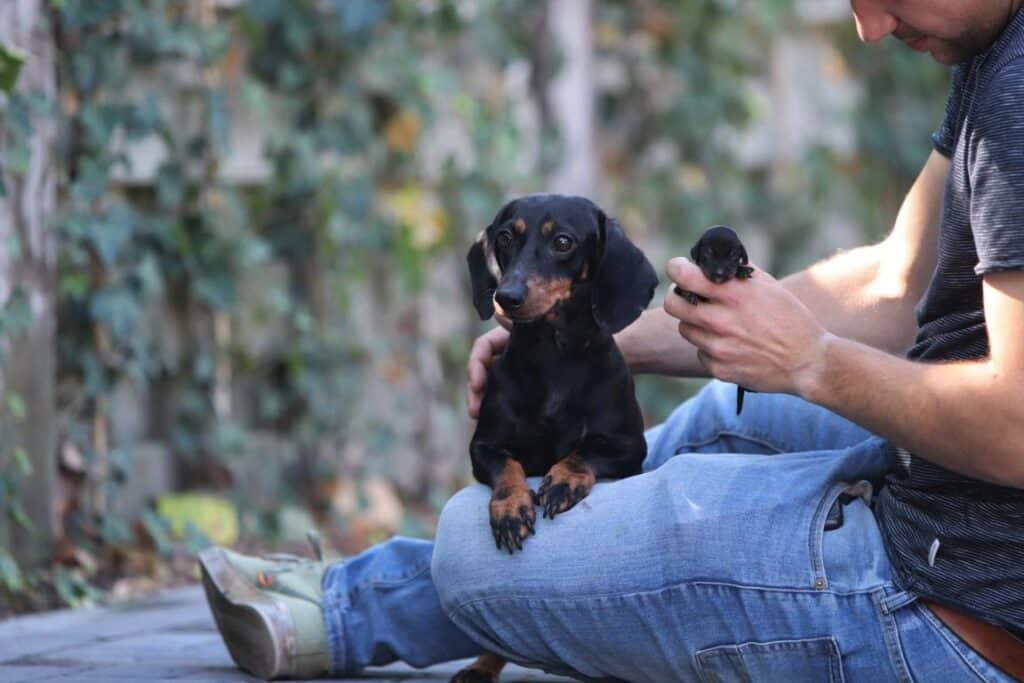
- Belgian breeder since 1990
- DNA-tested parents

Written and reviewed by Marleen Dyck, co-founder of Woefkesranch
Character
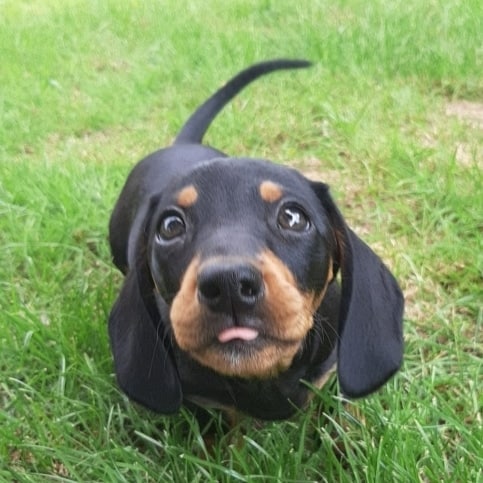
An affectionate dog that shows it openly
A sociable, devoted family dog that is openly affectionate with its own people. It kept its badger-hunting courage and a strong will, so it needs patient training rather than insistence.
What to expect
Affectionate
Openly affectionate with its own family.
Devoted
Sociable with its family, and a good watchdog.
Independent
Bred to work alone, out of sight of its handler.
Easy to keep
A weekly brush, and a wipe with a damp cloth.
Height
~28 cm
Weight
~6.5 kg
Life expectancy
~14 years
Origin
Germany, 19th century
Breed info
You will discover that the short-haired miniature dachshund is an openly affectionate family dog in the breed’s original coat: when the German breed association was founded in 1888 it was founded for this one. It is also the easiest to keep, needing a weekly brush rather than daily combing. You will need to watch the long back, keep the weight down, and train with patience rather than insistence. Read on to see what this variety asks of you.
About Woefkesranch
Short-haired Miniature Dachshund Puppies at Woefkesranch
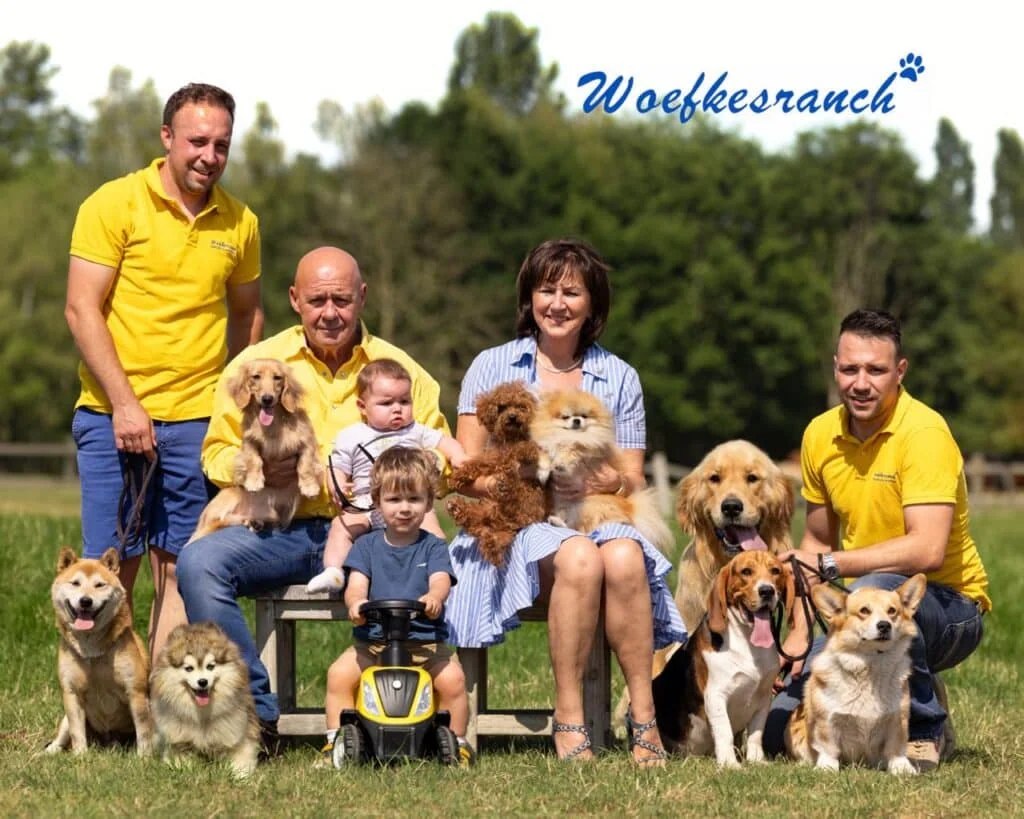
We are a recognized breeder of Short-haired Miniature Dachshund puppies in Belgium. Our puppies are raised in a family environment and are optimally socialized. Woefkesranch has been a family business since 1990 and is now in its second generation. Every puppy is born in our own kennel under permanent supervision, with no imports and no middlemen. Families are guided before the purchase and are welcome back with their questions long afterwards.
We have been a recognized family breeder in Putte, Belgium since 1990, now in our second generation: every Short-haired Miniature Dachshund puppy is born and socialized here, with no imports and no middlemen, and families are guided before the purchase and long afterwards.
What you get with our puppies:
- Puppy raised in Belgium
- Good puppies
- Initial vaccinations and microchip
- Lifetime support by phone/WhatsApp
- Available 24/7 for emergencies
Available now
There are currently no Miniature Dachshund puppies available:
click ‘Puppy alert’ and be notified when a new litter is available.
Available Miniature Dachshund puppies for sale


Available from 12 October
- Miniature Dachshund
- Short Haired
- Mother: Benji
- Father: Garry
- 🧬 DNA Tested
- 🦴 IVDD Tested
- Born: 16 August 2026
- 🇧🇪 Origin: our own kennel


Available from 12 October
- Miniature Dachshund
- Short Haired
- Mother: Benji
- Father: Garry
- 🧬 DNA Tested
- 🦴 IVDD Tested
- Born: 16 August 2026
- 🇧🇪 Origin: our own kennel


Available from 12 October
- Miniature Dachshund
- Short Haired
- Mother: Benji
- Father: Garry
- 🧬 DNA Tested
- 🦴 IVDD Tested
- Born: 16 August 2026
- 🇧🇪 Origin: our own kennel


Available from 12 October
- Miniature Dachshund
- Short Haired
- Mother: Benji
- Father: Garry
- 🧬 DNA Tested
- 🦴 IVDD Tested
- Born: 16 August 2026
- 🇧🇪 Origin: our own kennel


Available from 12 October
- Miniature Dachshund
- Short Haired
- Mother: Benji
- Father: Garry
- 🧬 DNA Tested
- 🦴 IVDD Tested
- Born: 16 August 2026
- 🇧🇪 Origin: our own kennel
Short-haired Miniature Dachshund
In five points
- The smooth coat is the original dachshund, and the German breed association of 1888 was founded for this variety.
- This is still a badger dog, bred to go down a burrow alone and decide for itself, which is why it is brave, resourceful and not naturally obedient.
- A miniature dachshund stands ~28 cm and weighs ~6.5 kg, with a body ~45 cm long.
- Grooming is a weekly brush and a wipe with a damp cloth, and that is all it needs.
- The long back is the breed’s weak point, so stairs, jumping off furniture and extra weight are the three things to manage for its whole ~14 years.
History
History and Origin
Short-legged dogs appear in ancient Egyptian and Greek temples and in Chinese art, and the dachshund is said to descend from the oldest German hunting breeds, the Bibarhund and the German Bracke. Illustrations from the 13th century already show its ancestors hunting badgers underground.
The breed was made to hunt and track badgers in their burrows. The short legs dug the badger out and followed it down, and the dog brought a strong nose and sharp hearing to the work. The smaller dachshunds were bred to hunt hares, and the breed will go after foxes and otters as readily as badgers.
The smooth coat is the original. When the German breed association was founded in 1888 it was founded for the smooth-haired variety, and the first breed standard had been written in the United Kingdom eight years earlier. The wire-haired and long-haired coats came afterwards, from crosses with terriers and with the Cocker Spaniel.
Appearance
Physical characteristics and grooming
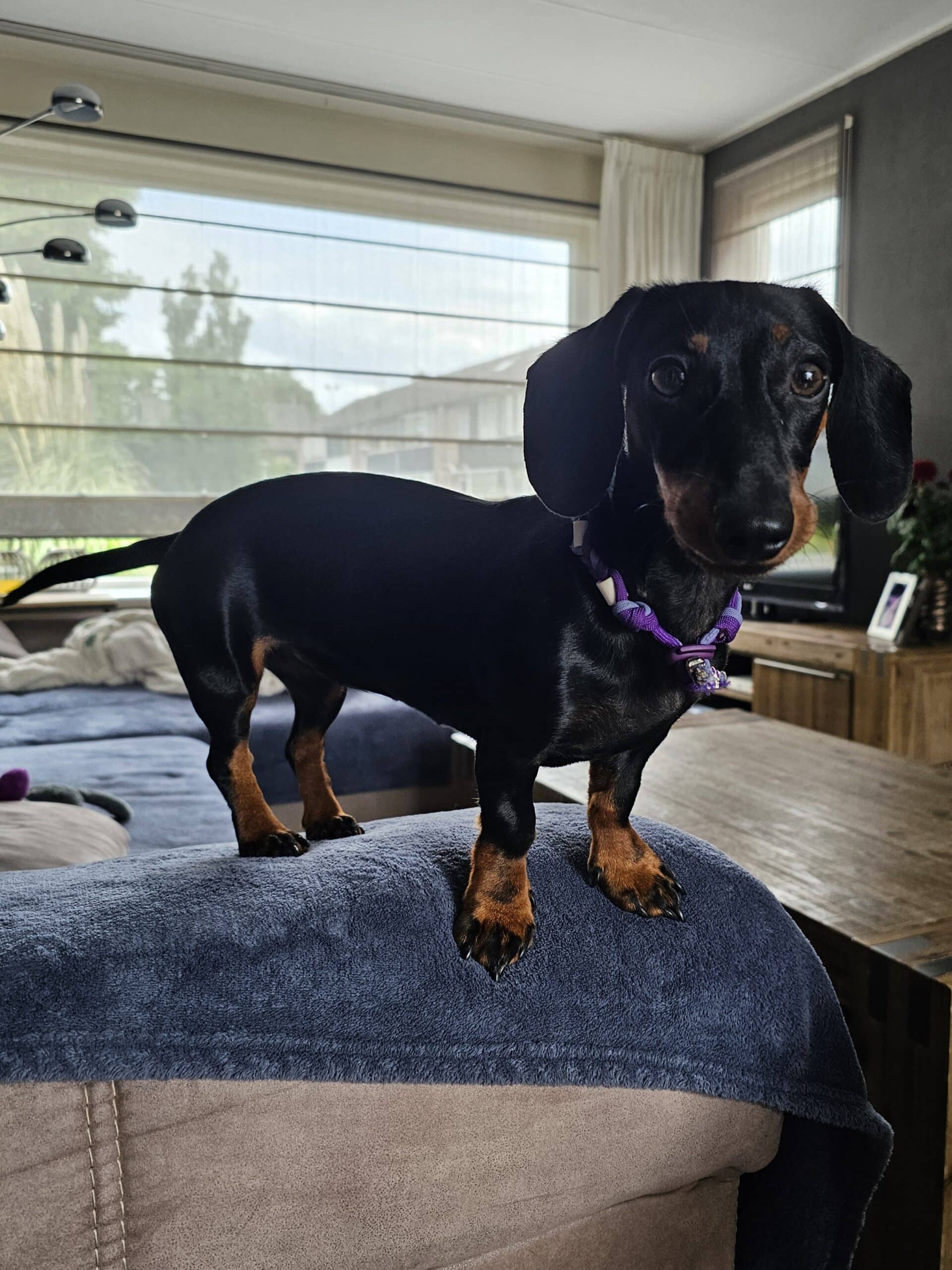
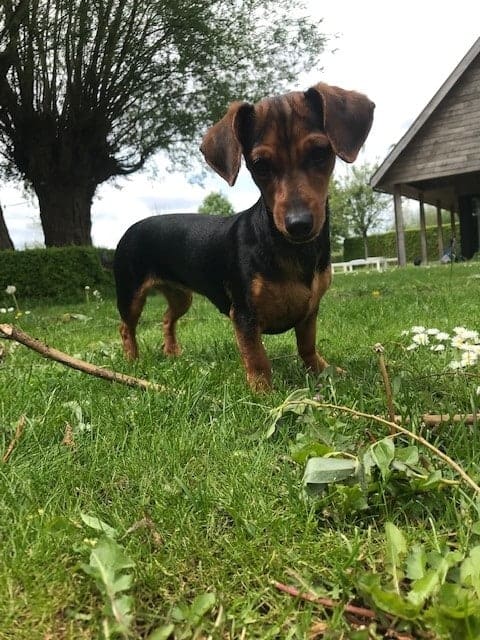
A miniature dachshund stands ~28 cm at the withers and weighs ~7 kg, with a body ~45 cm long. The breed is defined by that proportion rather than by its height: a long, muscular body on short legs, an elongated head carried high, and a deep chest that gave the dog the lung room for a fight underground.
The smooth coat is short, dense and close-lying, and it is easy to keep. It needs a weekly brush and a wipe with a damp cloth, and no more than that.
The ears are long and hang against the cheeks, the eyes are oval and dark, and the teeth meet in a scissor bite with notably strong canines. The short coat hides nothing, which is part of why this is the variety most often drawn and caricatured.
| Characteristic | Dwarf | Kaninchen | Standard |
|---|---|---|---|
| Chest circumference | ~33 cm | Up to 30 cm | Over 35 cm |
| Weight | ~6.5 kg | ~4.5 kg | Up to 9 kg |
Heights from the FCI breed standard.
Comparing the three dachshund coats
| What differs | Short-haired | 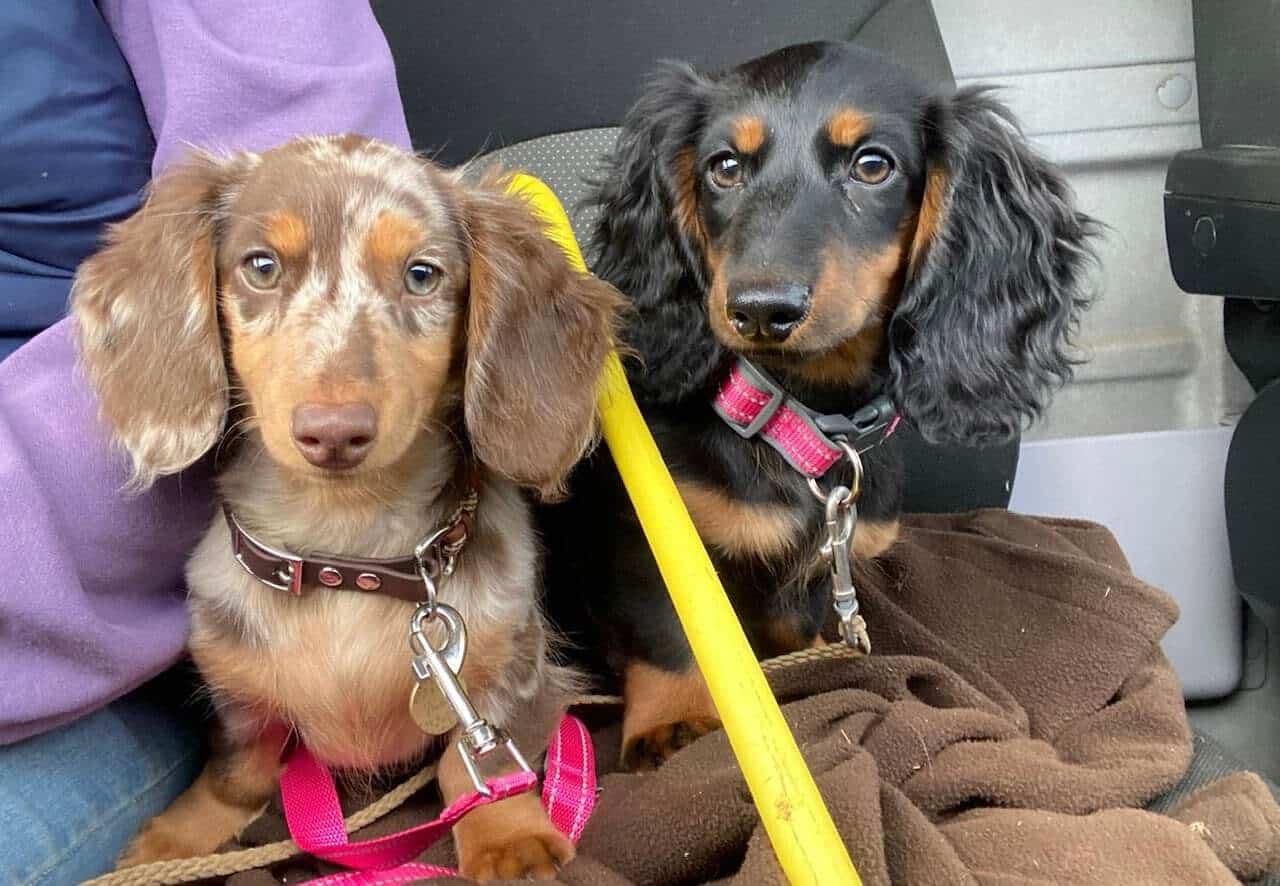 Long-haired Long-haired | 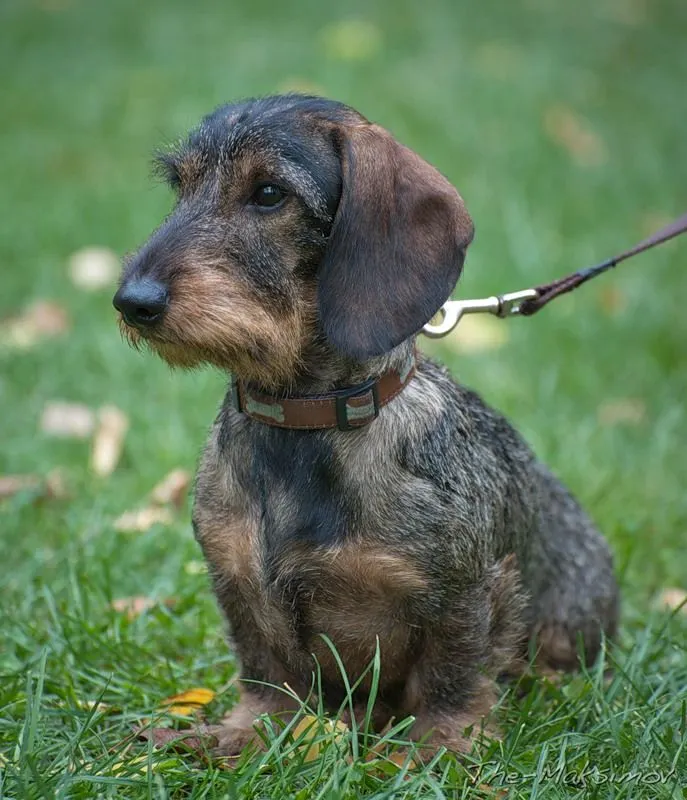 Wire-haired Wire-haired |
|---|---|---|---|
| Grooming | Almost none. A wipe with a damp cloth when the dog is dirty. No combing, no trimming and no grooming appointments | Combing or brushing every day | A trim twice a year, and a wipe of the beard after meals |
| Coat | Short, dense and close-lying | Long, soft and slightly wavy, with feathering on the ears, chest and legs | Harsh and close-lying over a dense undercoat, with beard and eyebrows |
| Temperament | The most openly affectionate | The calmer, gentler of the three | Often temperamental, energetic and extroverted, from the terrier input |
| How the variety was made | The original. The German breed association of 1888 was founded for this coat | Smooth-haired dachshunds crossed with the Cocker Spaniel and the Stoberhund | Dachshunds crossed with the Dandie Dinmont Terrier and other terriers |
Everything else is the same dog. Size, weight, life expectancy, the long back and what it needs from you, and how the breed learns do not change with the coat, so this is a choice about grooming and about temperament rather than about health or size. The temperament descriptions are Woefkesranch’s own, from years of breeding all three.
Temperament
Personality and Temperament
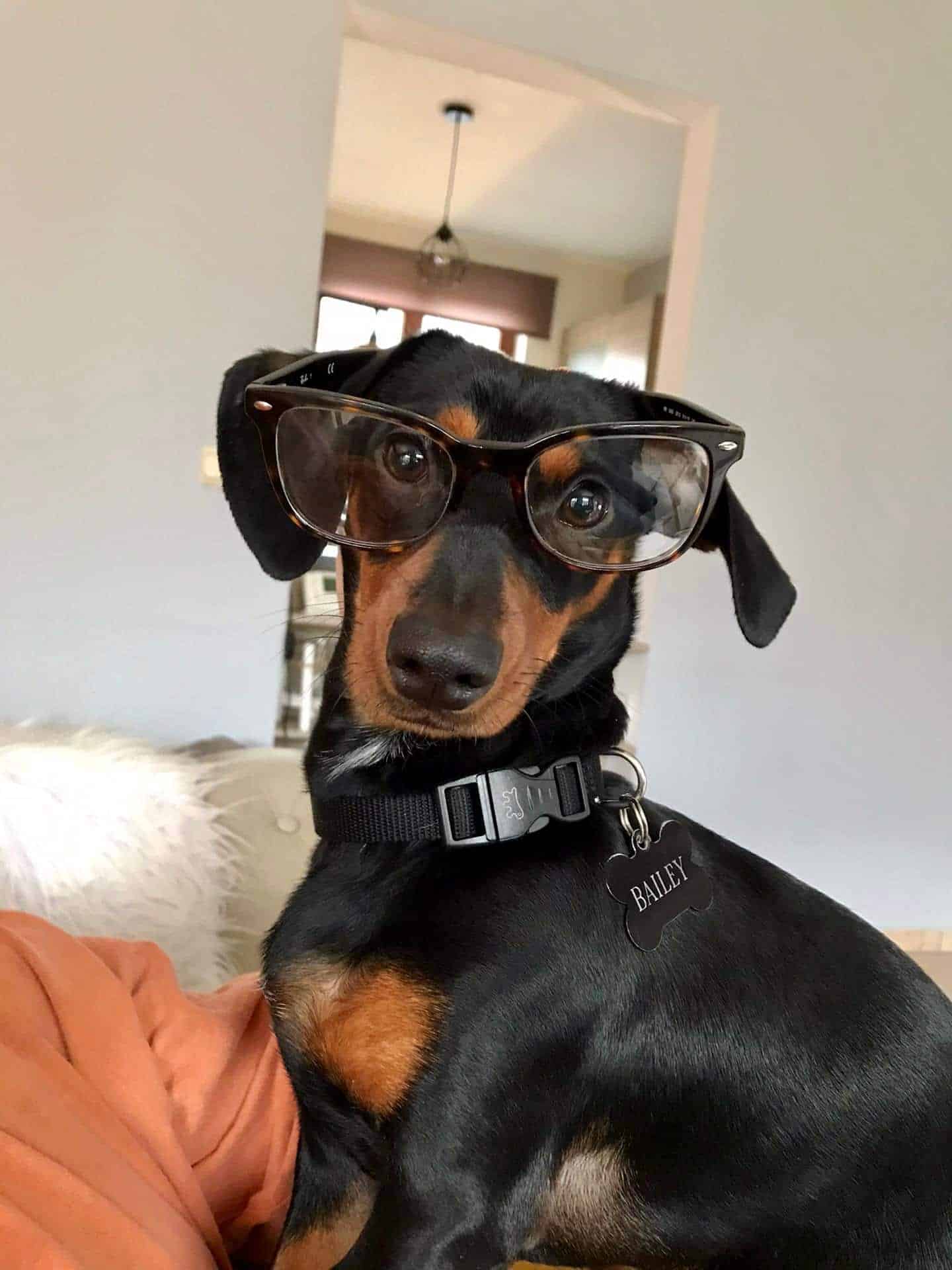
The short-haired dachshund is openly affectionate with its own people, sociable with its family and a good watchdog. It kept the badger hunter’s courage and the independence that goes with it, which is what its temperament is built on.
Dachshunds are sociable family dogs and good watchdogs, but they are hunting dogs with real endurance underneath that. This is not a naturally obedient breed. It is intelligent, resourceful, curious and brave, and it will work out what it wants and then work out how to get it.
They are at their best with older children and generally get on well with other pets, though they are quick to become jealous and can bite when irritated. A dachshund will act wonderfully to get its way and will deliberately seek eye contact while doing it. Grown up, it becomes a very loyal dog.
Health
Health and Nutrition
The long back that makes a dachshund a dachshund is also its weak point. The breed is known for spinal problems, so this is not the dog for a house full of stairs, it should not be allowed to jump on and off furniture, and its weight has to be watched. A dachshund gains weight quickly and should not be overfed.
Ask a breeder what the parent dogs were tested for, and ask to see the results rather than taking the answer on trust. The smooth coat gives one small practical advantage here: skin, ears and any lump or scrape are easy to see and feel, so problems tend to be noticed early.
A dachshund lives ~14 years, which is a long commitment for a small dog. They suit apartment living, are quite active indoors and manage without a garden, but they are active dogs with surprising endurance and they want a proper walk or a game in the park every day.
Training
Training and Exercise
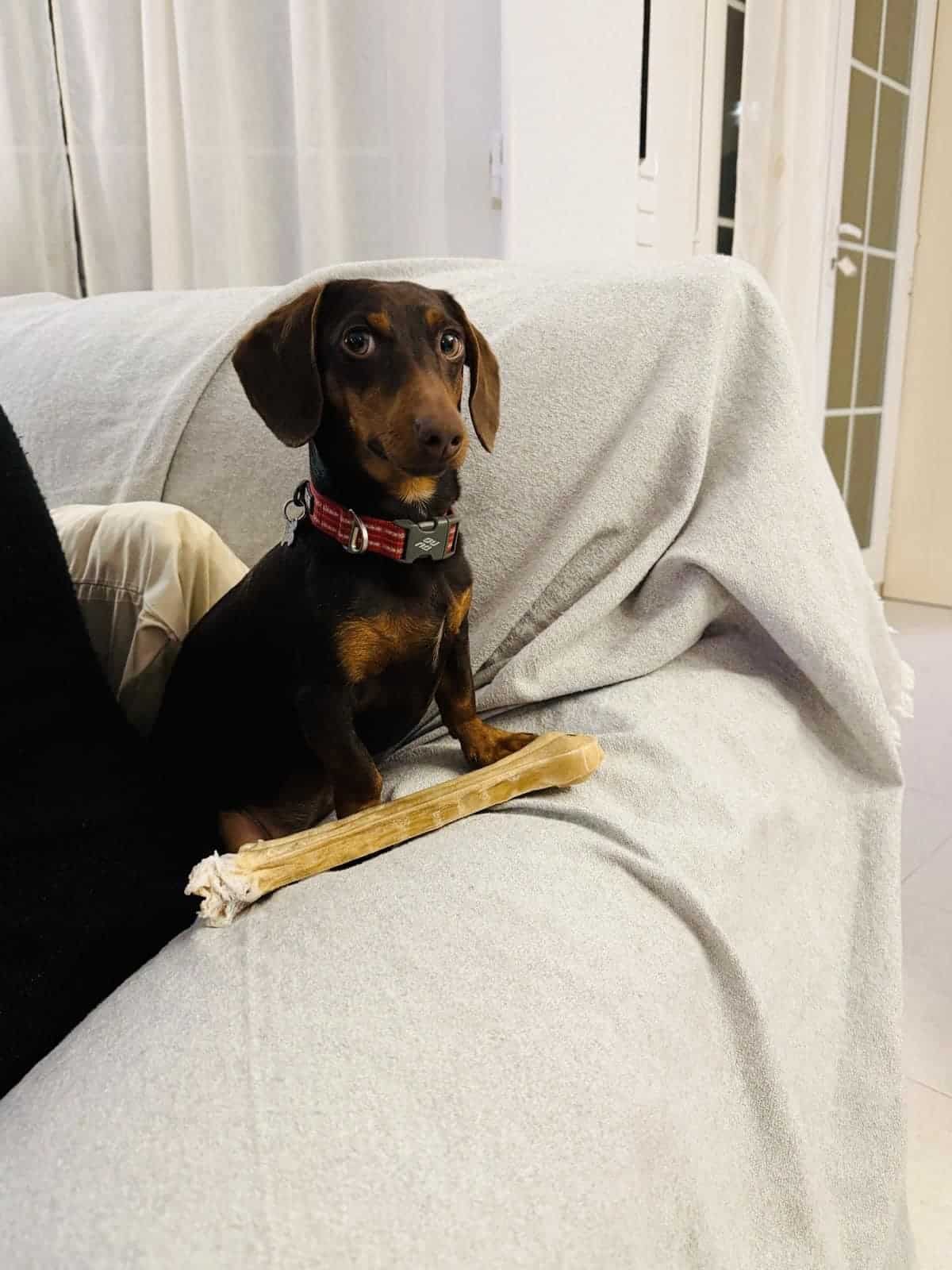
A dachshund is intelligent and perfectly trainable, and it is also not naturally obedient, which is a different thing from being stupid. It was bred to go down a hole alone and make its own decisions, and that independence is still there. Obedience training works; expecting instant compliance does not.
A puppy course is worth doing. Start early, keep sessions short, and reward what you want rather than correcting what you do not, because a dachshund that decides a session is a battle will simply out-stubborn you. Consistency from everyone in the house matters more than the length of any one session.
Crate training is worth the effort with this breed, both as a house-training tool and as a way of protecting the back: a crate gives the dog somewhere to settle instead of launching itself off the sofa. Choose one long enough for the dog to lie fully stretched out, which for a miniature dachshund matters more than the height.
Choosing
Choosing and caring for your Short-haired Miniature Dachshund
Choosing the right breed, puppy and breeder
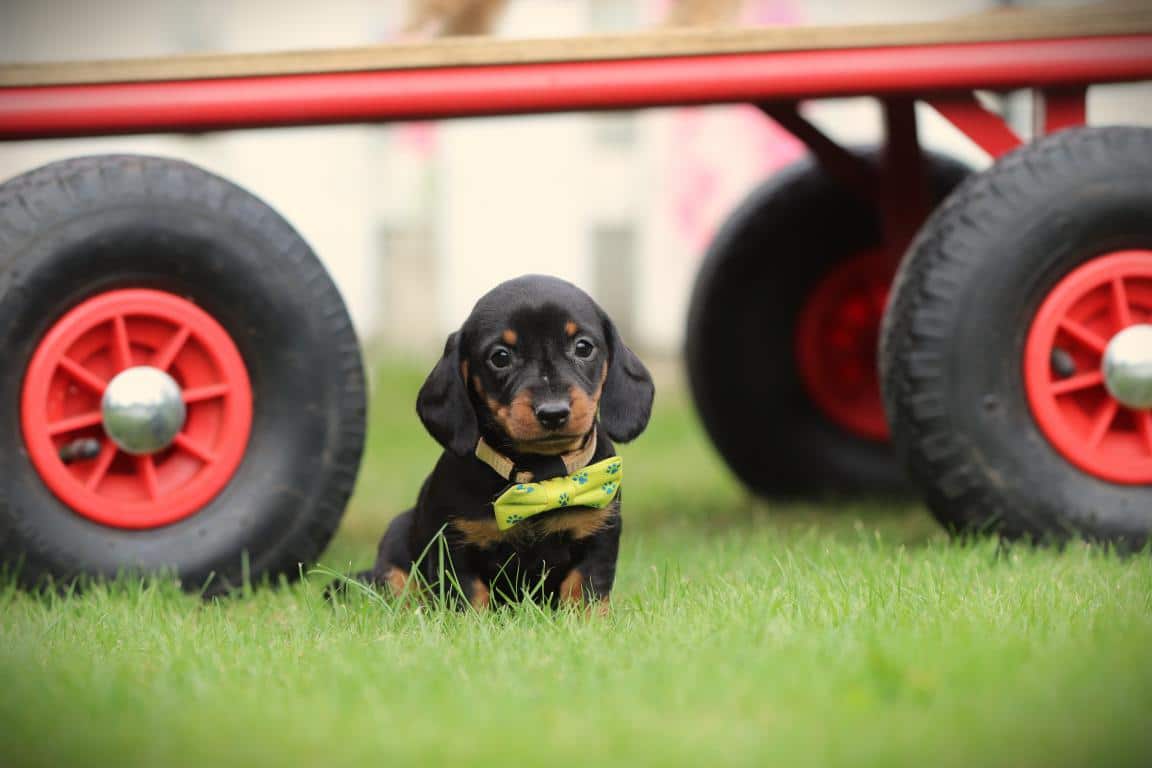
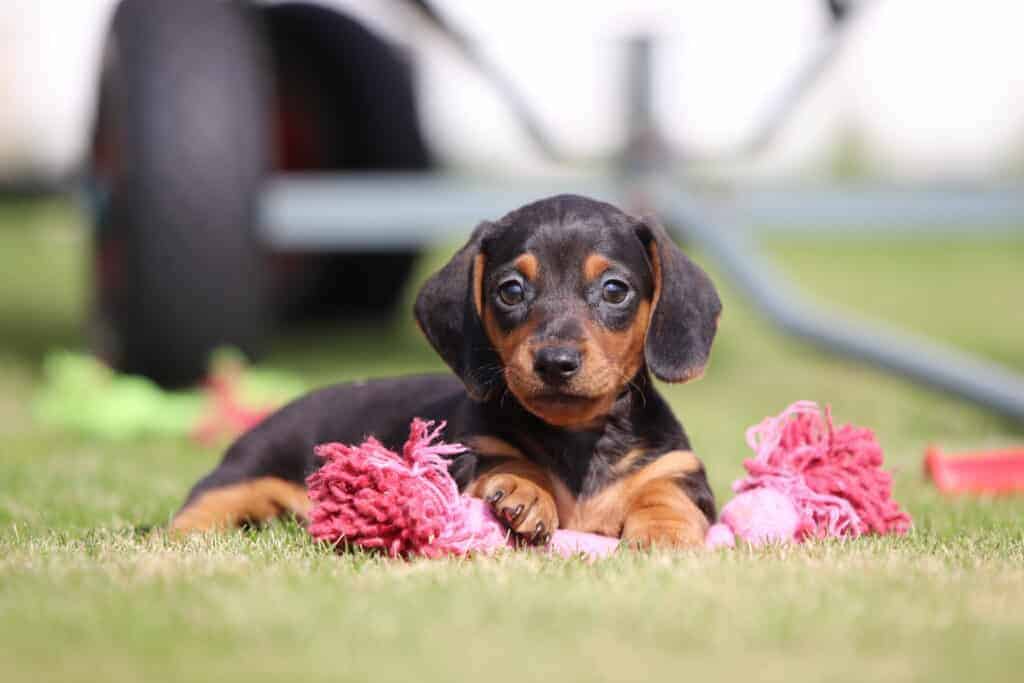
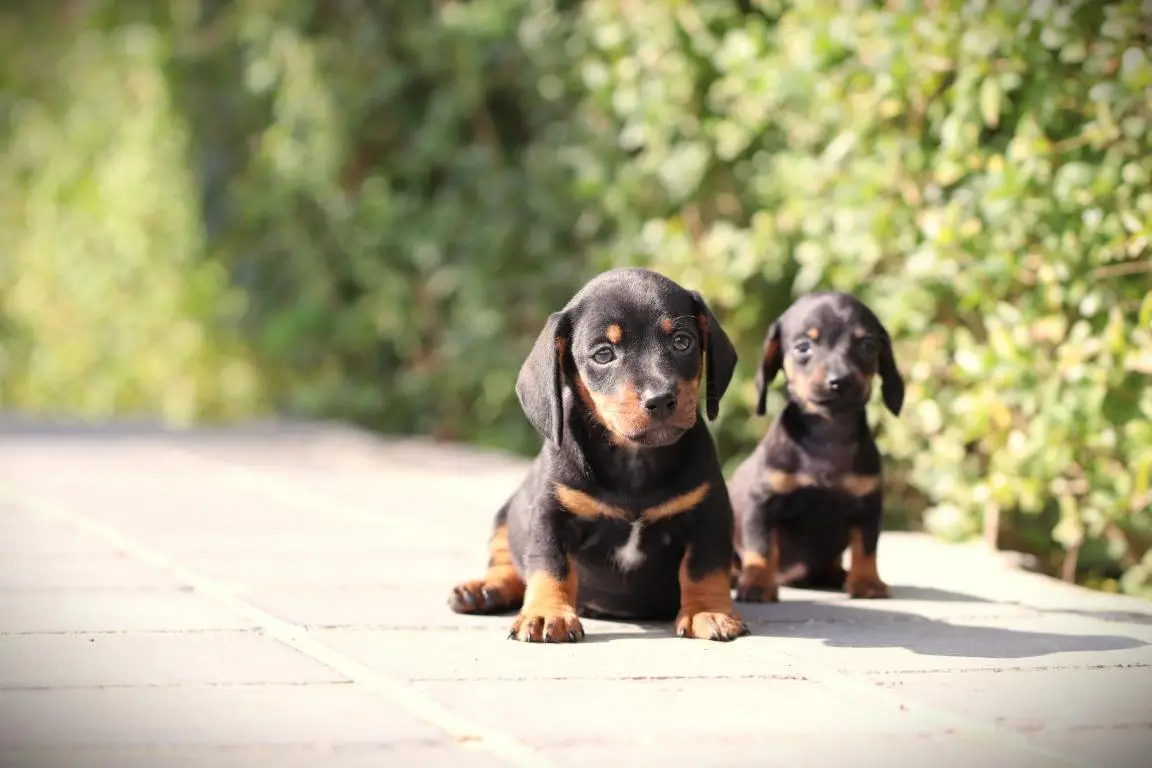
Are you interested in a puppy or looking for an adult dog? Buying a dachshund is a big step, so it is worth thinking carefully about what you want: a male or a female, and whether you have had a dog before or this is your first. A dog from a shelter can be an option, but if you are looking for the specific characteristics of the breed, a breeder is the better route.
A puppy needs a great deal of attention and training to become housebroken and to learn to behave, and that takes time and patience in the first weeks. An adult dog may already have a past and need retraining, which can be a demanding process, though with the right guidance it works out well.
What matters most is that your dachshund is healthy. Choose a recognised breeder who is open about the health of the puppies and of the parents, and make sure you can see the home and the conditions the puppies grew up in. Ask for the puppy guarantee in writing: it runs for a year, and since 2004 the Civil Code obliges the seller to compensate you if the dog becomes ill or dies within it. A seller who will not put that in writing is one to walk away from.
Essential daily care
Caring for a Short-haired Miniature Dachshund means committing to a daily routine that addresses their grooming, feeding, exercise and health needs.
For optimal daily care, focus on these key points:
Coat
Short, dense and close-lying. An occasional wipe with a damp cloth is all it needs.
Back
No stairs if you can avoid them, no jumping off furniture, and keep the weight down. The long back is the breed’s weak point.
Food
Measured meals. This breed gains weight quickly, and every extra kilo lands on that back.
Exercise
A proper walk or a game in the park every day. They manage without a garden, but not without the walk.
Regular veterinary visits are essential to monitor health, contributing to a longer lifespan for your Short-haired Miniature Dachshund. If you are considering getting a puppy, it is important to recognize a good breeder.
How getting your puppy works
- Come and meet them. Make an appointment to see the puppies and their mother.
- Reserve your puppy. Choose your puppy and reserve it.
- Collect from 8 weeks. Your puppy leaves microchipped, vaccinated, dewormed and with its European passport, and we register it in your name in DogID together.
- We stay close. You take home care instructions and the guarantee certificate, with lifetime support by phone or WhatsApp.
Frequently Asked Questions
Frequently Asked Questions
What is distinctive about a short-haired dachshund?
It is the original. The German breed association founded in 1888 was founded for the smooth-haired variety, and the other coat varieties came later, from crosses with terriers and with the Cocker Spaniel.
How much grooming does a short-haired dachshund need?
Very little. A weekly brush and a wipe with a damp cloth is all it needs.
How big does a miniature dachshund get?
~28 cm at the withers and ~7 kg, with a body ~45 cm long. The standard dachshund is larger at ~35 cm and ~10 kg, and the Kaninchen is smaller again at ~25 cm and ~4 kg. All three come in all three coats.
Are dachshunds difficult to train?
They are intelligent and perfectly trainable, but they are not naturally obedient. The breed was made to work alone underground and decide for itself, and that independence is still there. Short sessions, rewards rather than corrections, and a puppy course all help.
What should I know about the dachshund’s back?
It is the breed’s weak point. Spinal problems are common, so avoid a house full of stairs, do not let the dog jump on and off furniture, and keep its weight down. Dachshunds gain weight quickly, and every extra kilo is carried by that long back.
Is a dachshund suitable for a flat?
Yes. They suit apartment living, are quite active indoors and do fine without a garden. What they do need is a real walk or a game in the park every day, because they are active dogs with surprising endurance.
Come and see
Make an appointment
Do you want to visit our puppies? You can also make an appointment.
- 100% Belgian puppies
- Professional statutory warranty
- 24/7 service after sale
- Puppies have all necessary vaccines
- Puppies are dewormed multiple times
- Chipped and with Belgian/European passport
- DNA-tested parents
Keep reading
Where to go next
Another breed
Long-haired Miniature Dachshund
Characteristics, temperament, grooming and health of another breed we raise.
Owner reviews
Short-haired Miniature Dachshund reviews
What owners wrote after living with the breed.