Everything about the breed
Pomeranian
From its origin to character and care.
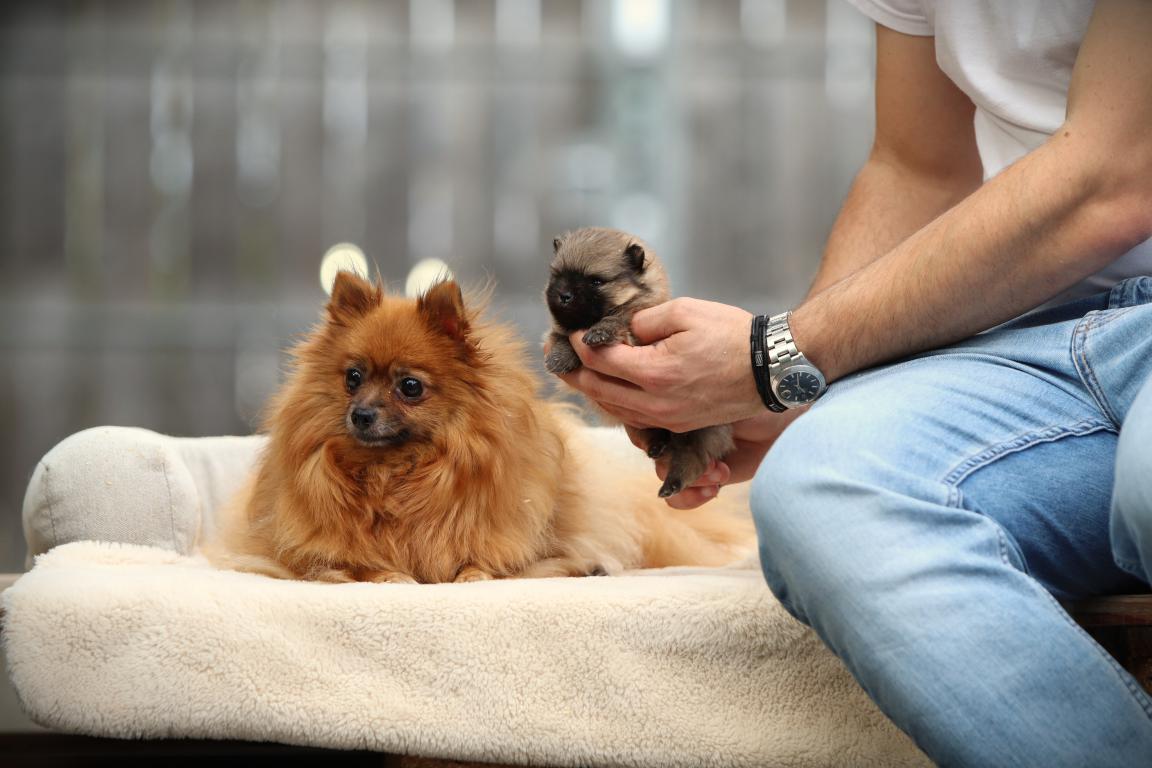
- Belgian breeder since 1990
- DNA-tested parents

Written and reviewed by Marleen Dyck, co-founder of Woefkesranch
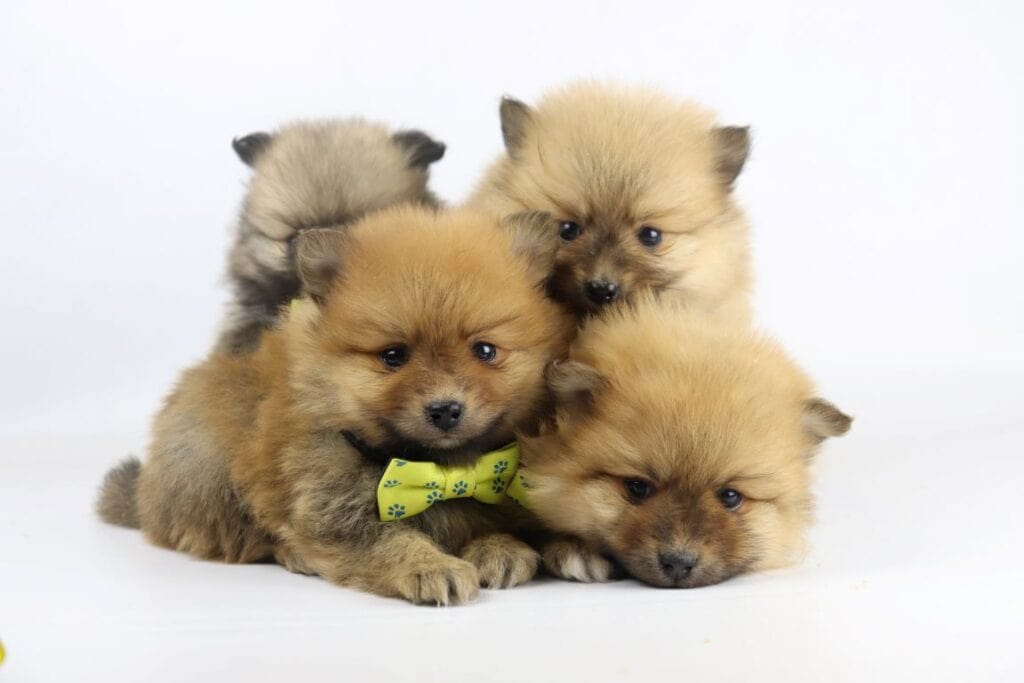
Character
A bold little dog with a very big coat
Playful, attentive and cooperative, and it learns new things quickly. It is vocal and it does not seem to know how small it is, so early socialising and a little guidance on the barking go a long way.
What to expect
Playful
Attentive and energetic, and fits almost any size of home.
Quick to learn
Cooperative in training, and picks up tricks easily.
Vocal
Barks to warn, and needs teaching when not to.
Fearless
Does not realise how small it is around larger dogs.
Height
~24 cm
Weight
~3 kg
Life expectancy
~14 years
Origin
Germany, 18th century
Breed info
You will discover that the Pomeranian is well suited to apartment living: ~24 cm, ~3 kg, content with half an hour of walking a day, and genuinely good company. It comes from Germany, where it was bred down from larger spitz dogs, which is why it is also called the Dwarf Keeshond. The thick double coat does shed, and it needs regular work to keep the house liveable. You will need to teach it early that it does not have to announce everything, because this is a vocal breed and an alert watchdog whether you want one or not. Read on to see what this breed asks of you.
About Woefkesranch
Pomeranian Puppies at Woefkesranch
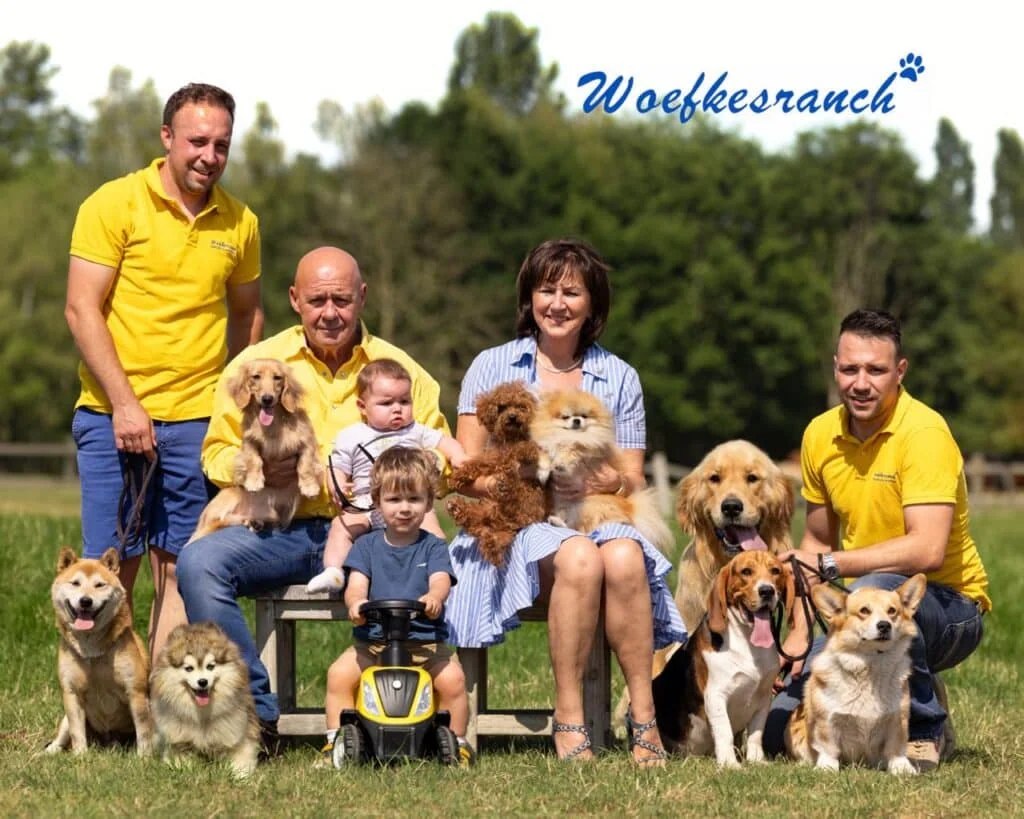
We are a recognized breeder of Pomeranian puppies in Belgium. Our puppies are raised in a family environment and are optimally socialized. Woefkesranch has been a family business since 1990 and is now in its second generation. Every puppy is born in our own kennel under permanent supervision, with no imports and no middlemen. Families are guided before the purchase and are welcome back with their questions long afterwards.
We have been a recognized family breeder in Putte, Belgium since 1990, now in our second generation: every Pomeranian puppy is born and socialized here, with no imports and no middlemen, and families are guided before the purchase and long afterwards.
What you get with our puppies:
- Puppy raised in Belgium
- Good puppies
- Initial vaccinations and microchip
- Lifetime support by phone/WhatsApp
- Available 24/7 for emergencies
Available now
There are currently no Pomeranian puppies available:
click ‘Puppy alert’ and be notified when a new litter is available.
Available Pomeranian puppies for sale

Available from 23 October
- Pomeranian
- Born: 28 August 2026
- Mother: Calimero
- Father: Billy
- 🇧🇪 Origin: our own kennel
Pomeranian
In five points
- The Pomeranian is a spitz bred down to size in Germany, which is why it is also called the Dwarf Keeshond.
- It is small, ~24 cm and ~3 kg, with a thick double coat in white, cream, orange, black, sable and more.
- It needs half an hour of walking a day, split into two, and it is suited to apartment living.
- It is vocal and alert, and teaching it when not to bark is the main piece of training.
- It tolerates cold well and handles heat badly, so summer needs managing more than winter.
History
History and Origin
The Pomeranian is a spitz, bred down in size in Germany from larger spitz dogs, and the Dutch name Dwergkees says exactly that: a dwarf Keeshond. The region of Pomerania gave the breed the name it carries in English.
It is a spitz, which is to say a type with wolf-like characteristics, and it traces back to the large sled dogs of the north. Its close relatives are the American Eskimo Dog, the Alaskan Malamute, the Siberian Husky, the Norwegian Elkhound and the Samoyed.
It has kept famous company for a long time. Michelangelo had one beside him while he painted the Sistine Chapel ceiling, Isaac Newton’s Pomeranian Diamond is said to have chewed his manuscripts, Martin Luther wrote about his Belferlein, and Mozart dedicated an aria to his Pimperl.
The first Pomeranian entered in the American Kennel Club register was a dog called Dick, in 1888.
Appearance
Physical characteristics and grooming
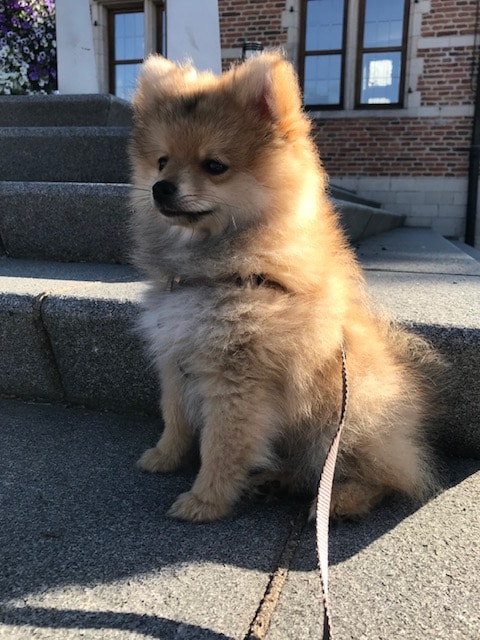
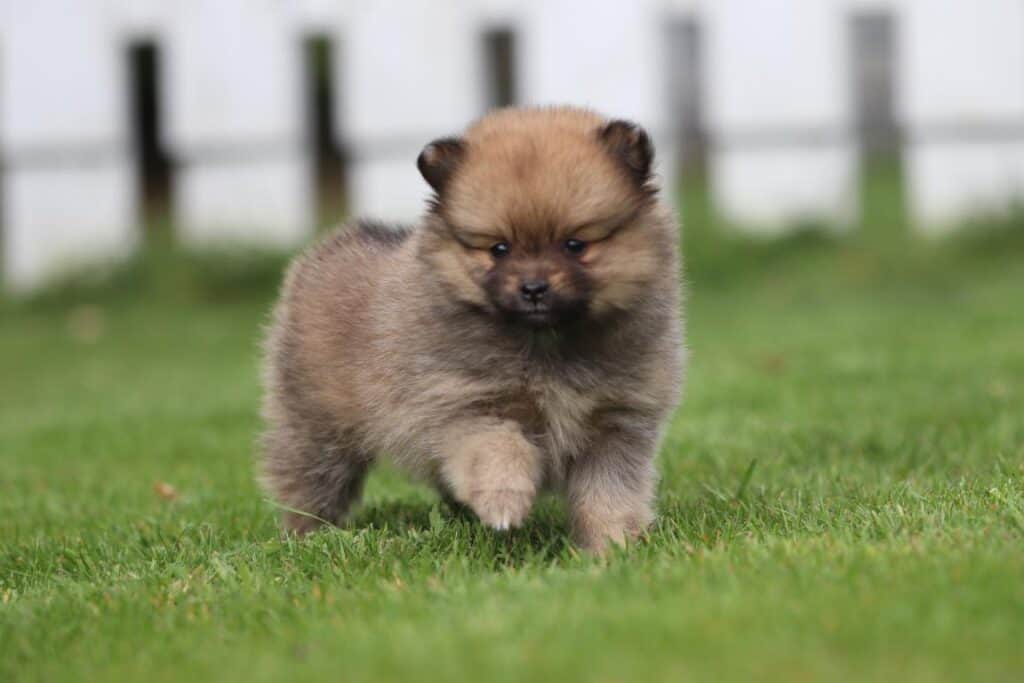
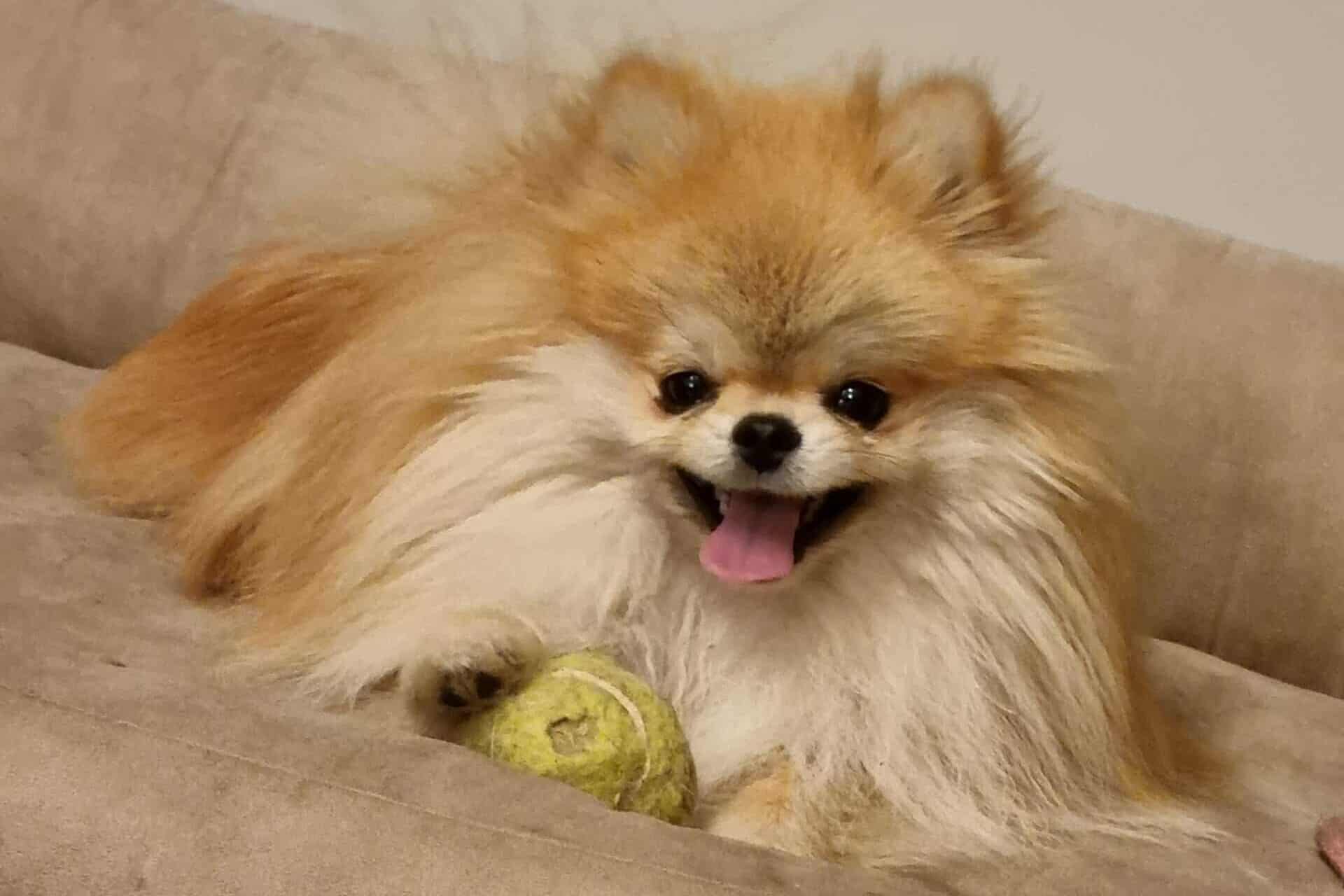
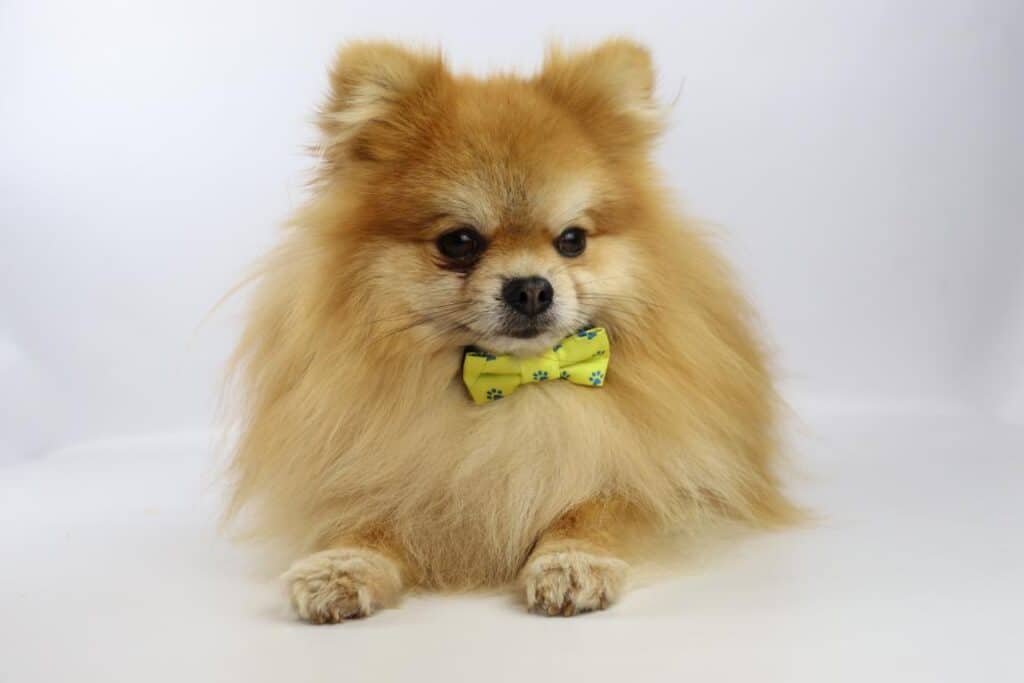
A Pomeranian is sometimes called a little lion, and the proportions explain it: a tapered, almost fox-like head, a narrow muzzle, small upright ears, and a tail set high and carried flat over the back, all buried in an enormous coat.
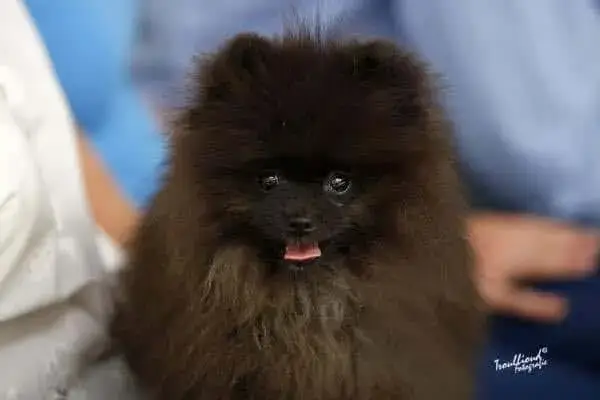
It stands ~24 cm and weighs ~3 kg. The double coat comes in white, brown, orange, black, cream, red, sable, shaded grey, chocolate, tan, brindle and lavender. It is not the heaviest shedder among small breeds, but there is a lot of coat and it does leave hair around the house.
Heights from the FCI breed standard.
Comparing the Pomeranian, the Maltese and the Pomsky
| What differs | Pomeranian | 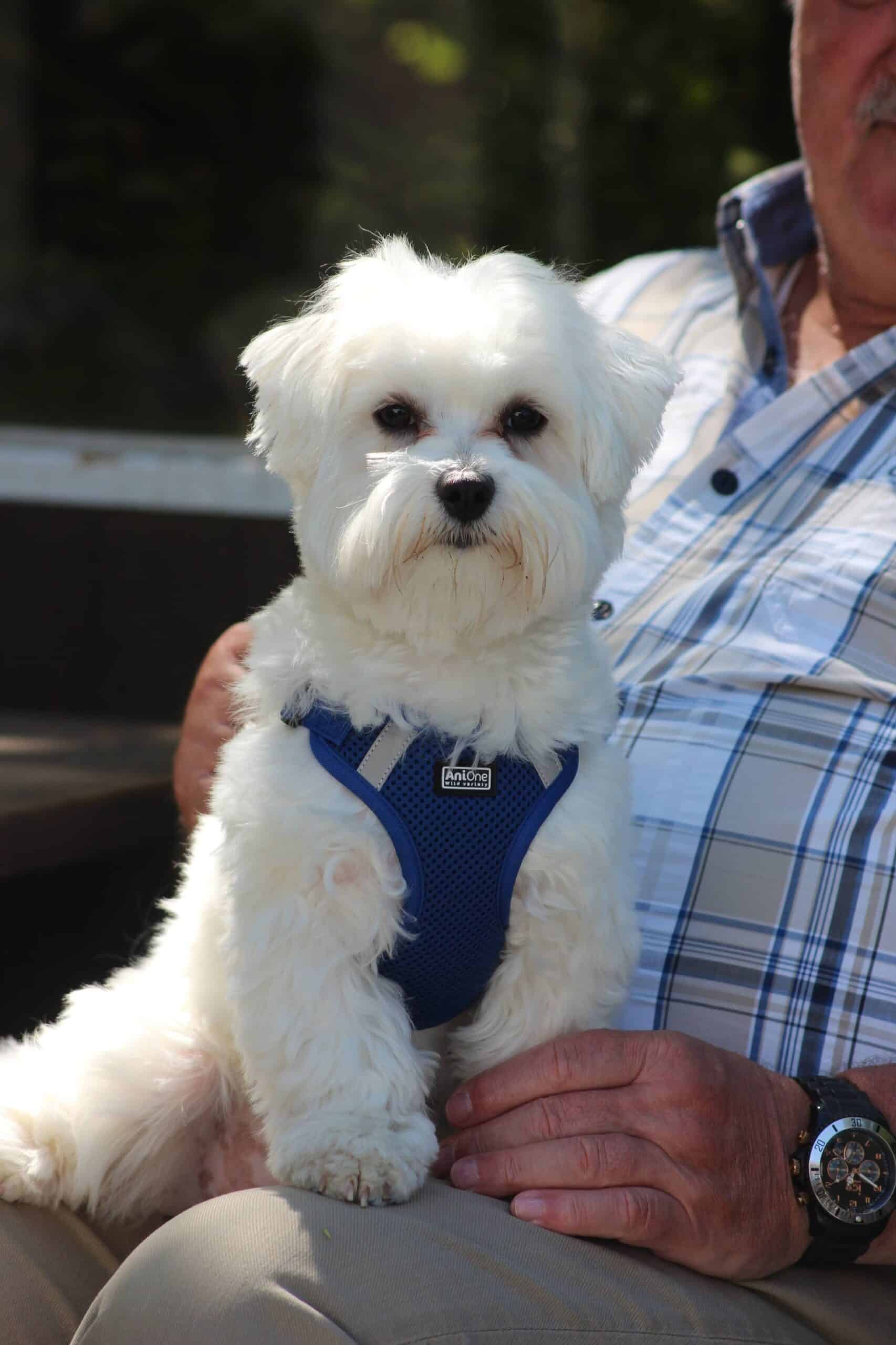 Maltese Maltese | 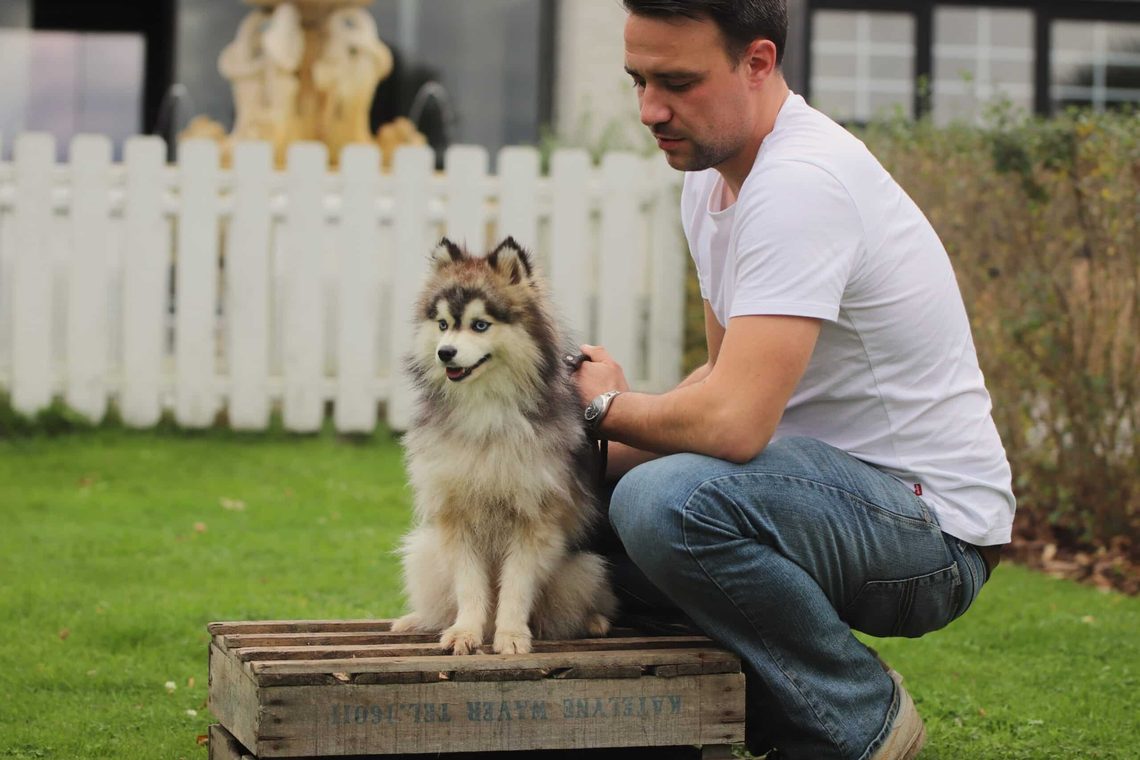 Pomsky Pomsky |
|---|---|---|---|
| Breed status | A German purebred, bred down in size from the 18th century | A purebred from Malta and Italy, with three thousand years of history | A cross of the Pomeranian and the Siberian Husky |
| Height | ~24 cm | ~23 cm | ~33 cm |
| Weight | ~3 kg | ~4 kg | ~14 kg |
| Coat | A double coat that sheds, so expect hair in the house | Long, white and silky with no undercoat, and it sheds very little | Thick, soft and silky over a dense undercoat, often with a husky’s mask |
| Exercise | Half an hour a day, split into two walks | A short daily walk | About forty minutes of walking a day |
| Temperament | Playful, vocal and fearless for its size | Affectionate and lively, happiest in the middle of the family | Energetic and loyal, and alert with strangers |
The Pomeranian and the Maltese are both lap-sized. The Pomsky is a different proposition at four times the weight of a Pomeranian, bred from a working husky, and it needs the most exercise of the three. Between the two small ones the coat decides it, because a Pomeranian sheds and a Maltese barely does.
Temperament
Personality and Temperament
This is a playful, attentive, energetic little dog that fits into almost any home. It is cooperative in training and learns commands and tricks quickly, and on Stanley Coren’s ranking of working intelligence the breed comes 23rd.
It is also vocal. A Pomeranian barks to protect you and itself, out of boredom, to join in, for attention, and at sirens and fireworks. That is manageable with guidance, and worth managing early.
It is friendly but a little reserved with strangers, and too little socialising turns that caution into suspicion that shows up every time you have guests. With other dogs it is sociable and completely unaware of its own size, so it will challenge something far bigger. It does well with older children who know how to be around a small dog, and it can live happily with a cat it grew up with.
Health
Health and Nutrition
A Pomeranian lives ~14 years. The conditions to ask a breeder about are patellar luxation, tracheal collapse and hypothyroidism.
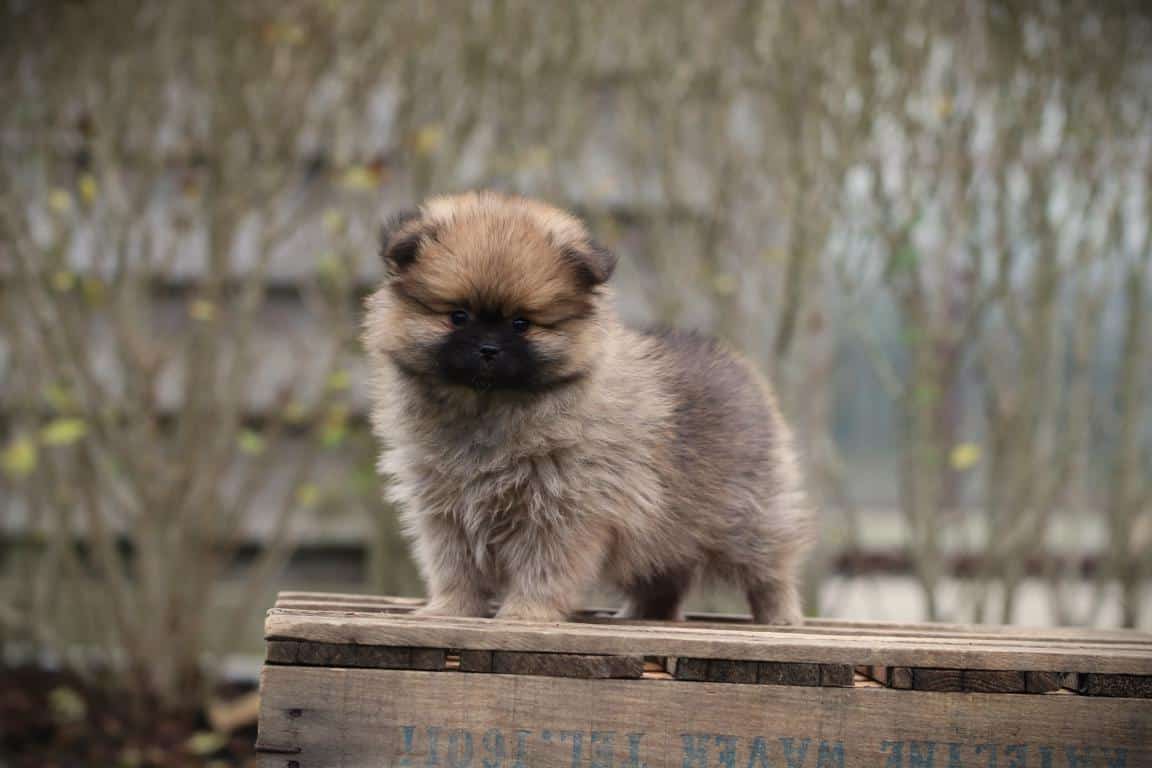
Two practical points are worth adding. Puppies have a fragile skeleton and break bones easily, so a fall from a sofa or a child’s arms is a real risk. And this breed does not tolerate heat: it is comfortable in cold and wintry weather and needs active management through a hot summer.
It can swim by instinct but has nothing like the strength to keep it up. A Pomeranian dropped into a pool out of its depth can exhaust itself, so introduce water slowly and never force it.
Training
Training and Exercise
Training a Pomeranian is not difficult. These dogs are cooperative and receptive and they pick things up quickly, so the work is consistency rather than effort.
An adult needs no more than half an hour of walking a day, split into a morning and an evening walk. For a puppy the rule of thumb is two to five minutes for every month of age, so a four-month-old gets eight to twenty minutes.
A Pomeranian can be left for six to eight hours once it has been taught to, and that teaching has to happen young. Skip it and the breed is prone to separation anxiety, which makes every absence harder than it needs to be.
Choosing
Choosing and caring for your Pomeranian
Is this the right breed for you?
A Pomeranian suits a small home, including an apartment, and an owner who will put in the grooming and teach it when not to bark. It is a reasonable first dog if you prepare for those two things, and it is at its best with older children.
Essential daily care
Caring for a Pomeranian means committing to a daily routine that addresses their grooming, feeding, exercise and health needs.
For optimal daily care, focus on these key points:
Coat
The double coat sheds. Brush it through regularly and expect hair in the house, more when the coat changes.
Exercise
Half an hour a day, split into a morning and an evening walk. A puppy gets two to five minutes per month of age.
Heat
This breed does not cope with high temperatures. Shade, water and the walk moved to the cool end of the day in summer.
Barking
Teach it early what is worth announcing. Left alone, the habit sets and it is harder to undo than to prevent.
Regular veterinary visits are essential to monitor health, contributing to a longer lifespan for your Pomeranian. If you are considering getting a puppy, it is important to recognize a good breeder.
How getting your puppy works
- Come and meet them. Make an appointment to see the puppies and their mother.
- Reserve your puppy. Choose your puppy and reserve it.
- Collect from 8 weeks. Your puppy leaves microchipped, vaccinated, dewormed and with its European passport, and we register it in your name in DogID together.
- We stay close. You take home care instructions and the guarantee certificate, with lifetime support by phone or WhatsApp.
Frequently Asked Questions
Frequently Asked Questions
Can a Pomeranian live in an apartment?
It is well suited to an apartment. It is active and playful but needs very little space, and half an hour of walking a day covers its exercise.
Does a Pomeranian bark a lot?
Yes, and it can be taught not to. The breed barks to warn, out of boredom, for attention and at outside noise. Guidance early keeps it in hand; left alone the habit sets.
Is a Pomeranian good with children?
With older children who know how to behave around a small dog, yes. Very young children are a poor match, less because of the dog than because a Pomeranian puppy’s skeleton is fragile and a fall breaks bones.
Can a Pomeranian be left alone?
Six to eight hours, once it has been taught to as a puppy. Without that teaching the breed is prone to separation anxiety and long absences become difficult.
Does a Pomeranian shed?
Yes. It is not among the heaviest shedders, but there is a great deal of coat and it leaves hair around the house. Regular brushing is the answer, and more of it when the coat changes.
Can a Pomeranian swim?
It has the instinct but not the strength to keep going. Introduce water slowly, stay within its depth, and never force a dog that does not want to.
Come and see
Make an appointment
Do you want to visit our puppies? You can also make an appointment.
- 100% Belgian puppies
- Professional statutory warranty
- 24/7 service after sale
- Puppies have all necessary vaccines
- Puppies are dewormed multiple times
- Chipped and with Belgian/European passport
- DNA-tested parents
Keep reading