Golden Retriever puppies & breed info
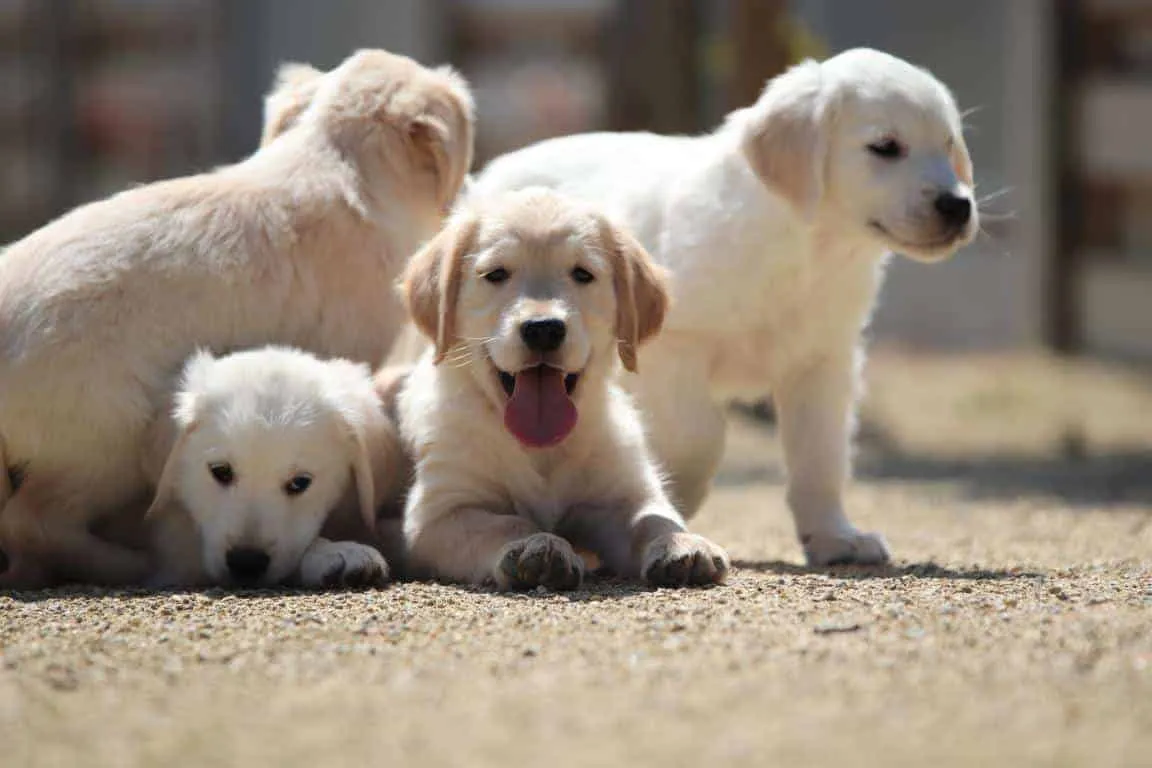
Available Golden Retriever puppies for sale
Click ‘Puppy alert’ to stay up to date on new Golden Retriever litters.
Golden Retriever price
How much does a Golden Retriever puppy cost? At Woefkesranch every puppy is born on the ranch and grows up with its mother, whom you always see when you visit. We have the parents tested for hereditary conditions, and every puppy leaves socialised, vaccinated, dewormed, microchipped, with a European passport and a 1-year guarantee. After the purchase we stay reachable by phone or WhatsApp, around the clock for urgent matters. That is why a Golden Retriever puppy costs €1,500 to €2,500.
Woefkesranch has been a recognised Belgian family kennel since 1990. Puppies that cost much less often come from the Eastern European supply, with inhumane practices and serious health problems. Some sellers offer these puppies as if they were bred in Belgium. Learn more about the risks in the Pano report (VRT, in Dutch), for which the team also filmed at our ranch: De Oost-Europese puppybusiness.
Our usual process
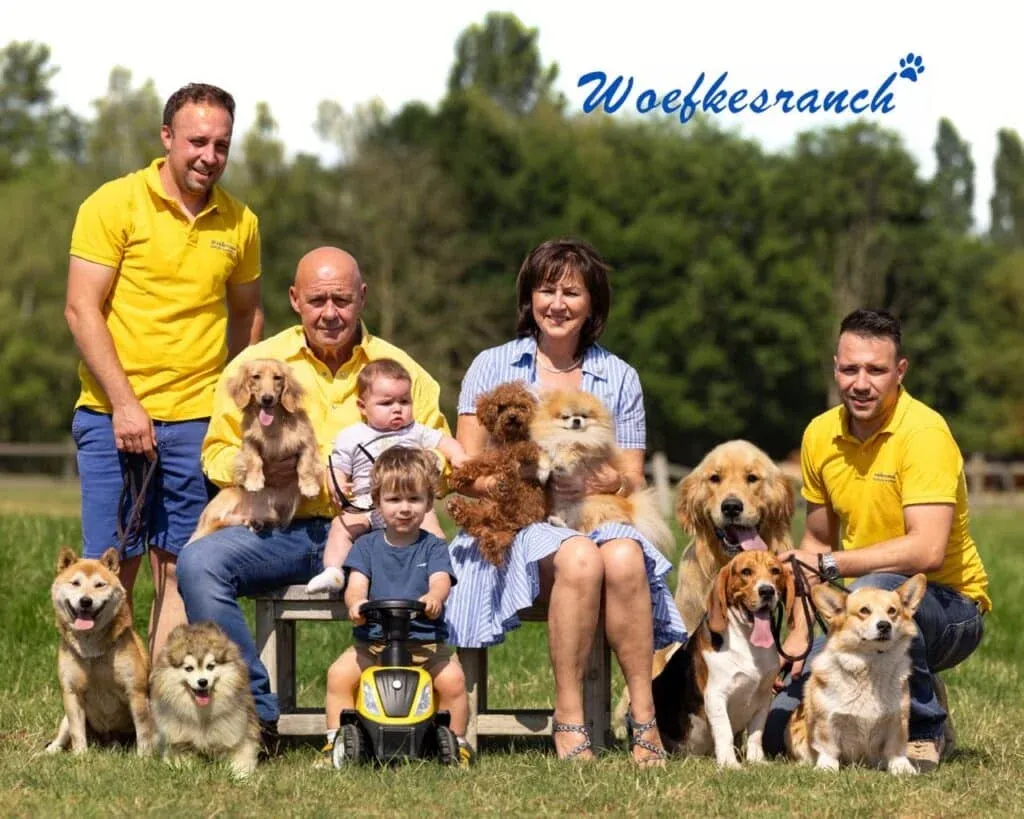
Buying a Golden Retriever puppy from Woefkesranch – Belgian breeder since 1990
How it works:
- Meet the puppies (optional). Make an appointment to see the puppies with their mother, and to work out together which puppy suits your family.
- Reserve your puppy (optional). You can reserve online (24/7) or by phone on +32 (0)15 75 59 42. After reserving, you receive photos on request. If a puppy is already 8 weeks old, you can also take it home at your visit.
- Collection from us or home delivery. You can collect your puppy from 8 weeks old. It leaves microchipped, vaccinated, dewormed and with its European passport, and we register it in your name in DogID together. If you have no transport, someone from Woefkesranch brings your puppy to your home, within 250 km of our ranch in Putte (including the Netherlands, France, Luxembourg and Germany).
- 1-year guarantee. Every puppy has a 1-year guarantee on hereditary conditions and hidden congenital defects. We remind you about the first booster vaccination and deworming.
- Lifelong support. We remain available by phone or WhatsApp, also for training tips and health questions. For urgent matters we can be reached 24/7.

Written and reviewed by Marleen Dyck, co-founder of Woefkesranch
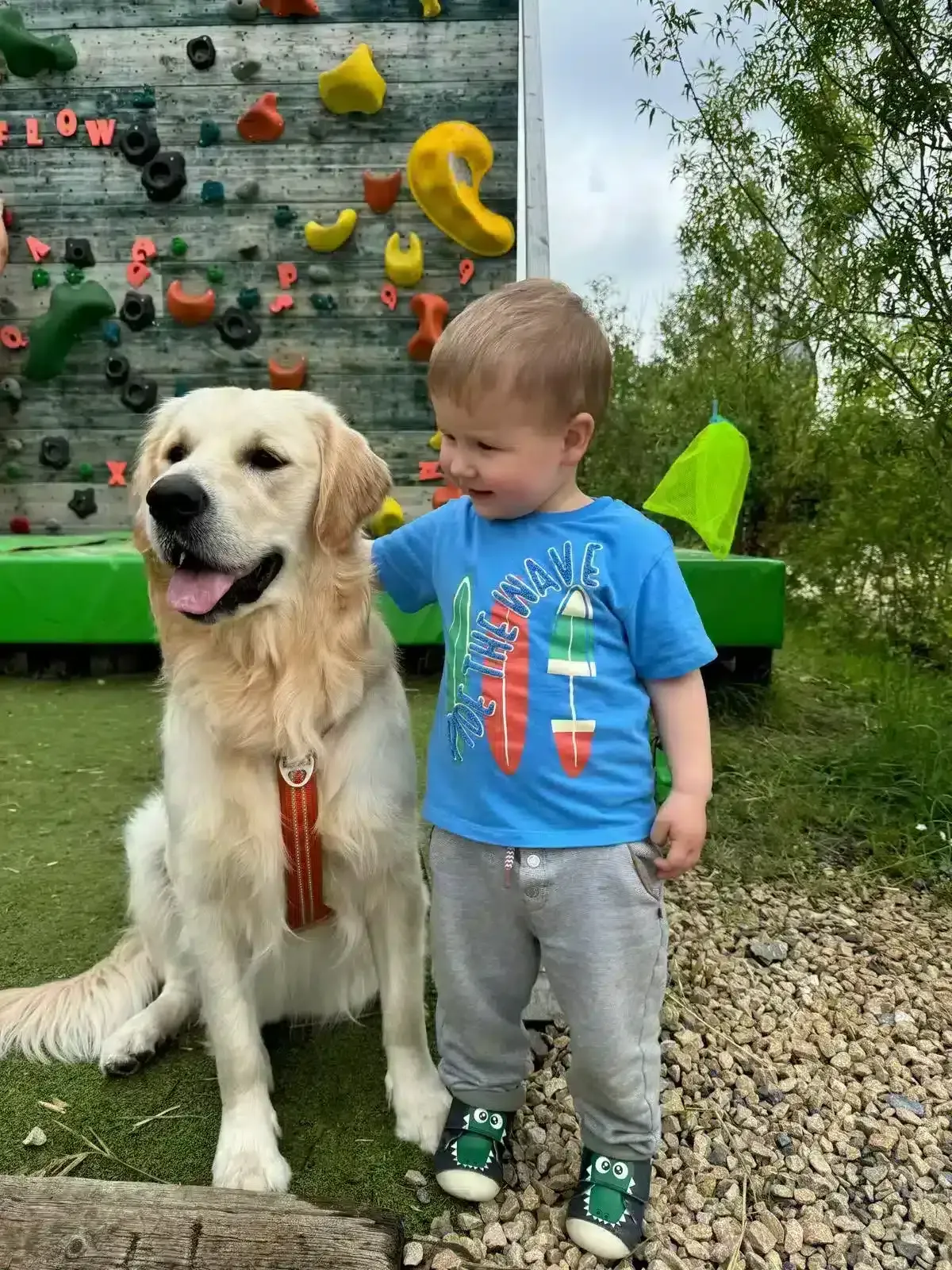
A gentle family dog that wants to please you
Friendly, gentle and eager to please, and excellent with children. The breed is widely used as a therapy, assistance and rescue dog, and it needs a task and daily exercise.
What to expect
Friendly
Gentle with everyone, and excellent with children.
Eager to please
Highly trainable, and widely used as a service dog.
Sociable
Needs company and daily contact with its family.
Active
Out properly twice a day, whatever the housing.
Height*
~56 cm
Weight*
~29.5 kg
Life expectancy
~11 years
Origin
Scotland, 1860s
*The sizes above are based on the FCI breed standard. Woefkesranch aims for them, but the health of the dogs always comes first.
Breed summary
You will discover that the Golden Retriever began as a Scottish gundog: one yellow retriever put to a Water Spaniel at Guisachan in the 1860s, four puppies with a talent for game birds, and a breed registered in England by 1903. What came out of it is friendly, gentle, highly trainable and very attached to its people. You will need to brush that double coat two or three times a week, watch the weight, and take a breed prone to hip, elbow, eye and heart conditions to a breeder who tests for them. Read on to see what this breed asks of you.
In five points
- The breed began at Guisachan in Scotland, where a yellow retriever was put to a Water Spaniel and the four resulting puppies founded the line.
- The Golden Retriever was registered in England in 1903 and first shown in 1908, after crosses with Red Setters, Bloodhounds and Springer Spaniels shaped it.
- Males stand ~58.5 cm and weigh ~31.5 kg, females ~53.5 cm and ~27 kg, which makes it a substantial dog.
- The thick, water-repellent double coat needs brushing two to three times a week, and rather more than that through the two seasonal moults.
- This breed is prone to hip and elbow dysplasia, eye and heart conditions, so the health tests done on the parent dogs matter.
History and Origin
The breed was simply called the golden or yellow Retriever before Lord Harcourt gave it the name it has now. At the start of the last century there was still confusion about where it came from: black Retrievers with wavy coats were known in southern Scotland, while yellow ones were hardly seen outside noble circles.
Sir Dudley Marjoribanks kept a studbook from 1835 at Guisachan, his estate in Scotland near Glen Affric, recording the name and origin of every dog. The founding cross is in it: Nous, a yellow retriever with a wavy coat, put to Belle, a Water Spaniel of a breed that has since died out.
Those four puppies showed real talent for hunting game birds and became the foundation of a breeding programme that drew in Red Setters, Bloodhounds, the St. John’s water dog and Springer Spaniels. The Golden Retriever was first accepted for registration in England in 1903 and first shown in 1908.
Physical characteristics and grooming
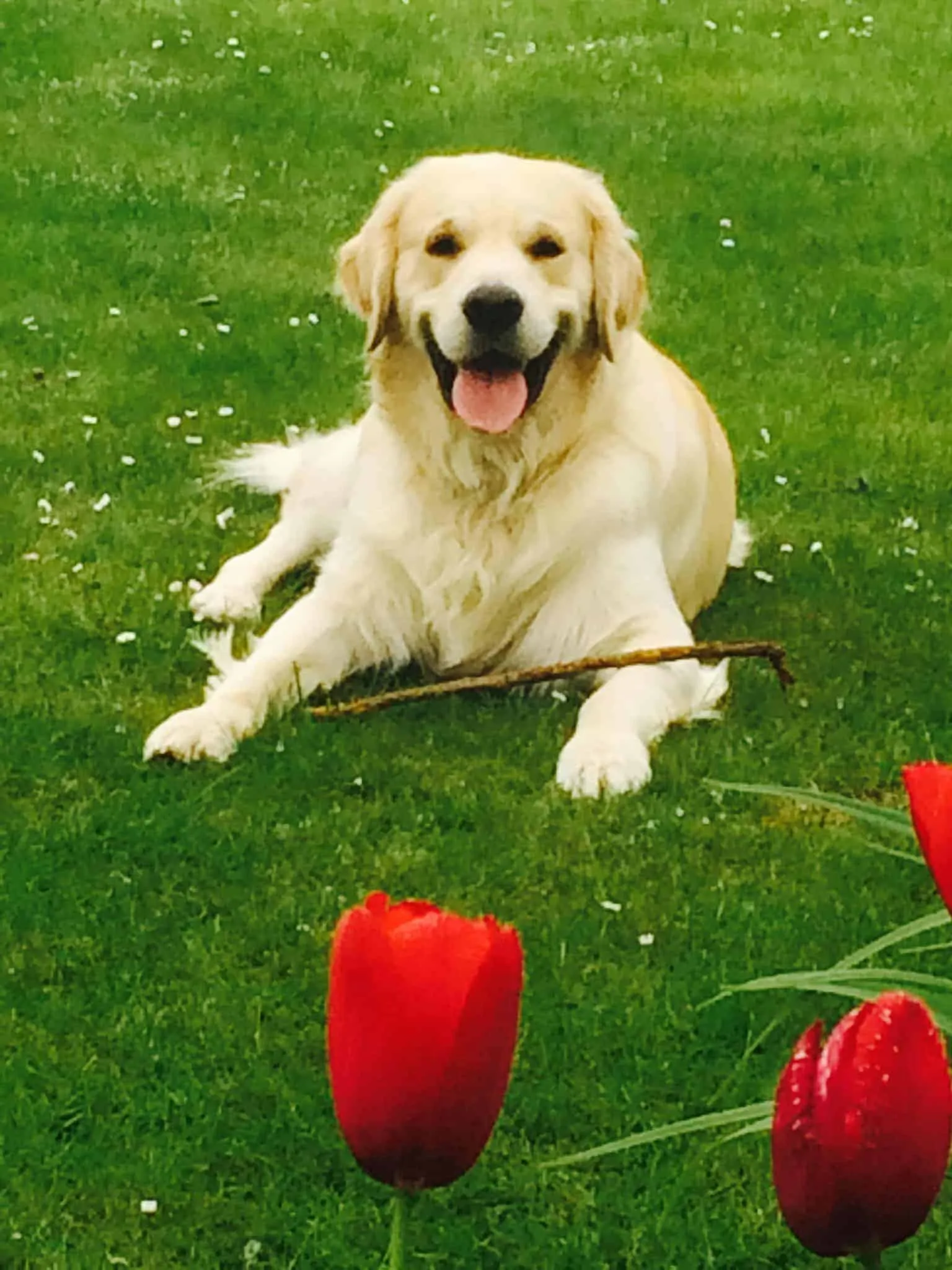
A Golden Retriever is a substantial dog. Males stand ~58.5 cm and weigh ~31.5 kg; females stand ~53.5 cm and weigh ~27 kg. The coat is the breed’s signature: thick, water-repellent and double, which is what the dog was built with and what its owner then has to look after.
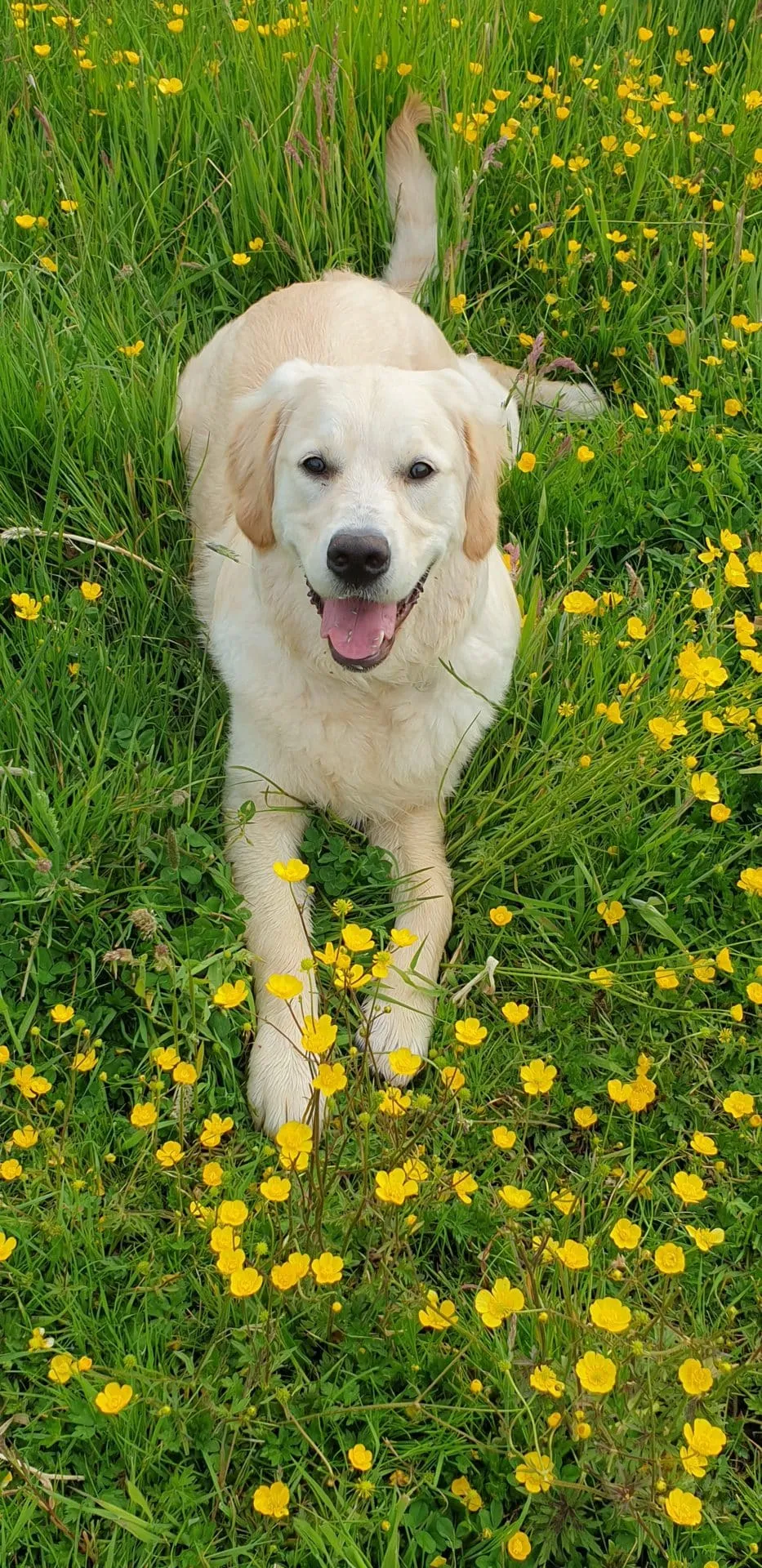
The coat may be any shade of gold or cream, but not red or mahogany; a few white hairs are allowed only on the chest.
Brush that coat two to three times a week to clear tangles, matting and the loose undercoat, and expect more during the two seasonal moults. Check and clean the ears to stop earwax building up, and look at the nails now and then, since they usually wear down by themselves but not always.
This is a breed that gains weight easily, and the double coat hides it well. Feed to the dog rather than to the bag, and judge condition with your hands rather than by eye.
| Characteristic | Male | Female |
|---|---|---|
| Height | ~58.5 cm | ~53.5 cm |
| Weight | ~31.5 kg | ~27 kg |
Heights from the FCI breed standard; weights from the American Kennel Club.
Comparison of the Golden Retriever and the English Cocker Spaniel
| What differs | Golden Retriever | 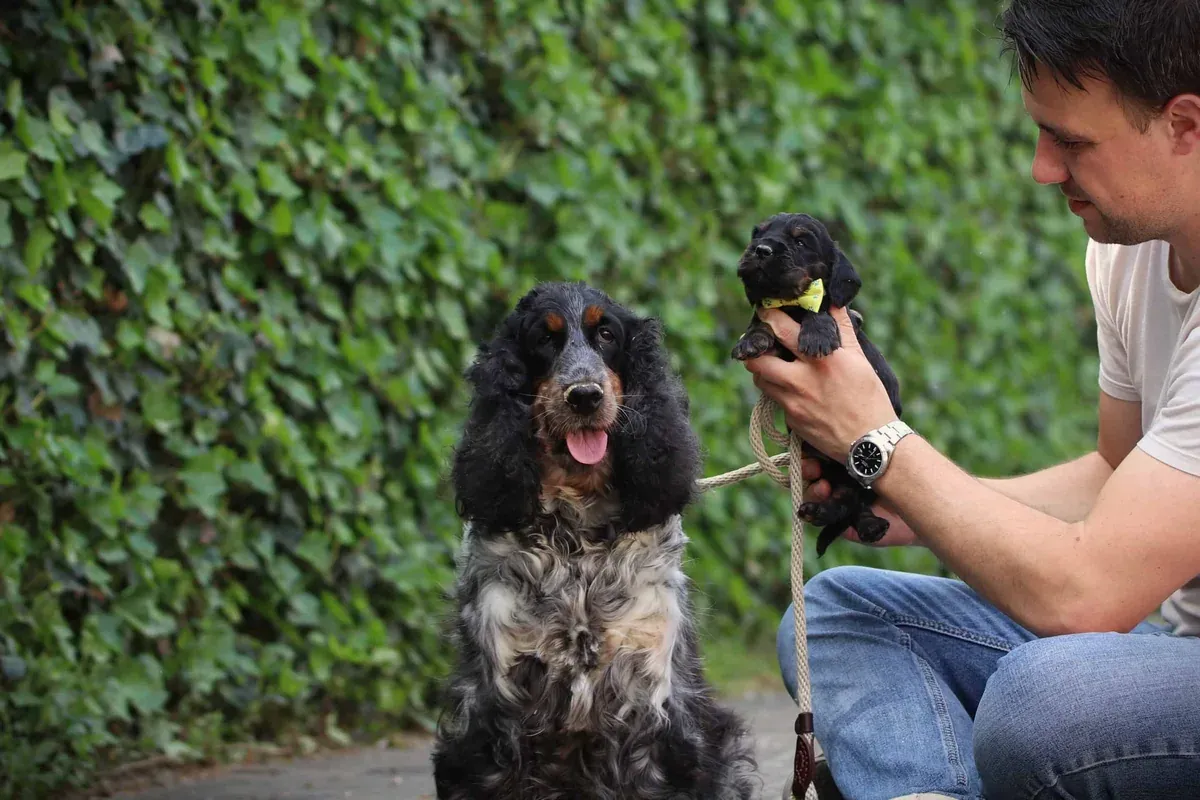 English Cocker Spaniel |
|---|---|---|
| Bred for | Bred in Scotland to bring back shot game from water and field | Bred in England to flush birds from the undergrowth and bring them back |
| Size | Large: ~56 cm and ~29.5 kg | Medium: ~39 cm and ~14 kg |
| Coat and grooming | Thick, double and water-repellent. Brushing two to three times a week, more often during the two moults | Silky and medium-length, with feathering. Brushing one to two times a week and the groomer a few times a year |
| Exercise | At least an hour a day, spread over two proper outings | One good walk a day |
Both are friendly, intelligent family dogs that like to be given a task. Besides the walk, they need mental work, such as training games or scent games.
Personality and Temperament
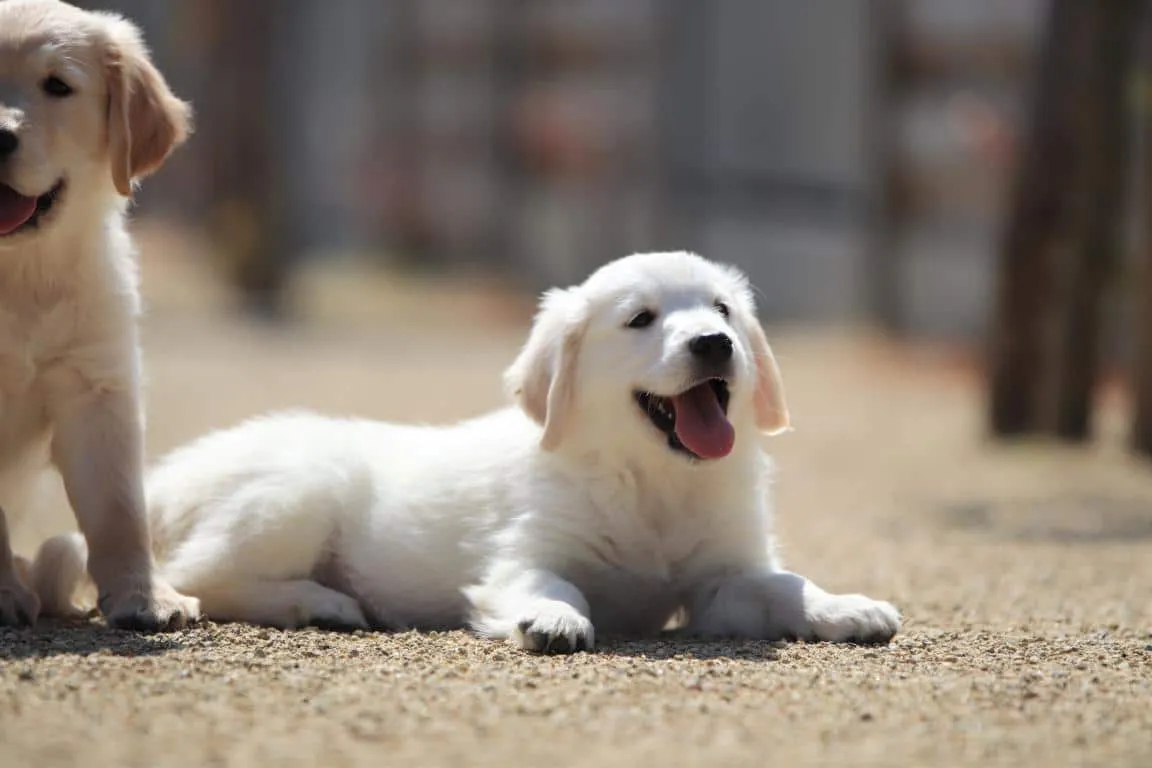
The Golden Retriever is friendly and gentle, and it is popular for exactly that reason. These are intelligent dogs, loyal, playful and openly affectionate with their families, and they are excellent with children.
They are also very trainable and genuinely eager to please, which is why the breed turns up so often as a therapy dog, an assistance dog and a search and rescue dog. A Golden wants a job and a person to do it with.
The other side of that sociability is that this is not a dog built to be left alone for long stretches. A Golden Retriever that is bored and on its own will find something to do, and you will not like the something it finds.
Health and Nutrition
Golden Retrievers are susceptible to a number of genetic conditions, and the honest list is: hip dysplasia, elbow dysplasia, eye conditions, heart conditions and certain cancers. Regular health checks and responsible breeding are what reduce those risks, and a breeder who selects parent dogs carefully is doing most of that work before a puppy is born.
Overweight is a problem in its own right in this breed and contributes to conditions such as bloat, which is why a balanced diet matters more here than in a breed that stays lean by itself. Feed good quality food matched to age, size and activity level.
Keep vaccinations and worming up to date. Goldens are very active dogs that need plenty of exercise: they can live in a flat, but only if they go out properly at least twice a day.
Training and Exercise
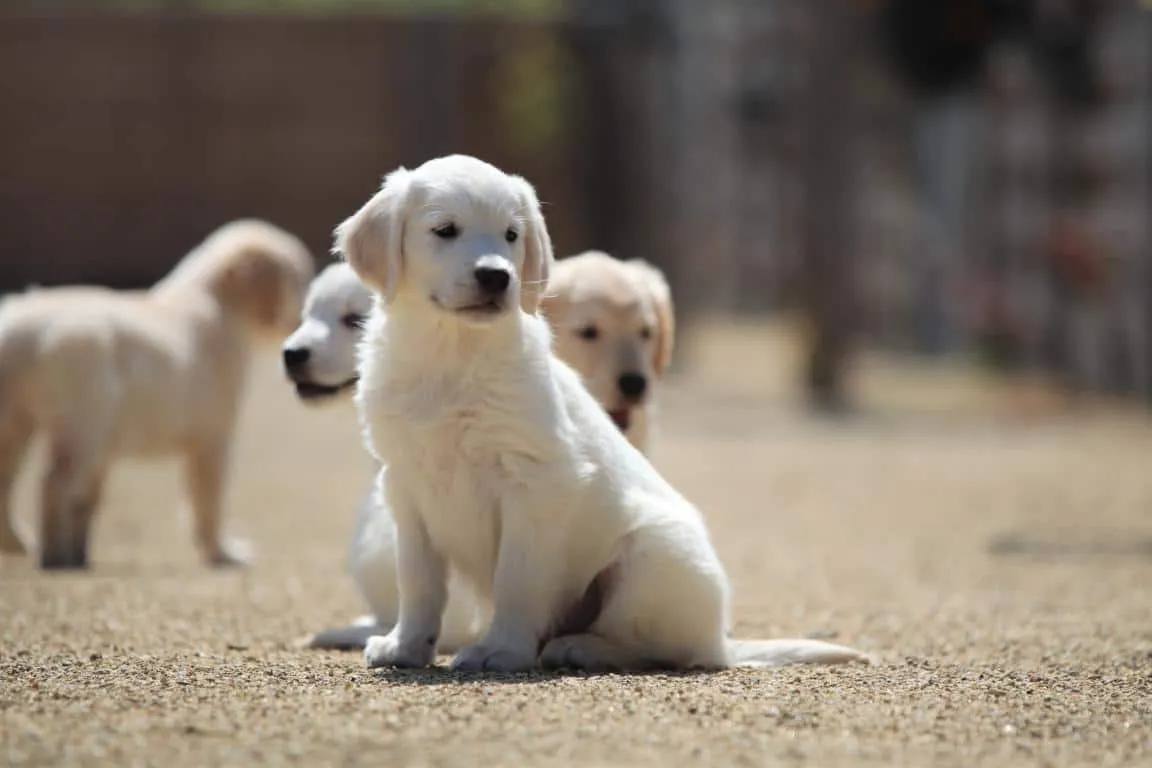
A Golden Retriever is intelligent and eager to please, which makes it easy to train and easy to spoil. Start socialisation early, ideally between eight and sixteen weeks, so the puppy gets used to different people, animals and situations while it is still forming its opinions about them.
One caution on that: avoid contact with unfamiliar dogs until the rabies vaccination at twelve weeks. Socialisation in those first weeks means controlled, deliberate introductions rather than the dog park.
Beyond basic obedience, give this breed something to think about. Regular walks, play sessions and mental work such as puzzle toys or training games keep a Golden happy and well adjusted, and mental work makes more difference to this breed than extra walking does.
Choosing and caring for your Golden Retriever

Choosing the right breed and breeder
A Golden Retriever is an active family dog, patient and gentle with children and friendly to everyone, other dogs included. It needs to be around people to be happy, which makes it a poor match for a household where it would be alone for long stretches. It will let you know when a stranger is on its territory, but it is not a protective breed.
Finding a reliable, responsible breeder is the most important step in buying a Golden Retriever. A good breeder puts the welfare of the dogs and of the breed first, and will gladly tell you about the health, the background and the temperament of both the puppies and their parents.
Ask friends and your vet for recommendations, and then go and visit in person. Look at the conditions the dogs actually live in and at how the puppies are being raised, because that is the part no website can show you.
Taking the time over this is what gets you a healthy, well-socialised puppy. With a breed this prone to hip, elbow, eye and heart conditions, the breeder’s choices carry a great deal of weight.
Essential daily care
Caring for a Golden Retriever means committing to a daily routine that addresses their grooming, feeding, exercise and health needs.
For optimal daily care, focus on these key points:
Coat
Thick, double and water-repellent. Brush it two to three times a week, and more through the two seasonal moults.
Weight
This breed gains weight easily and the coat hides it. Judge condition with your hands, not by eye.
Food
Good quality, matched to age, size and activity level. Overweight contributes to bloat in this breed.
Exercise
Out properly at least twice a day, plus something to think about. A bored Golden finds its own job.
Regular veterinary visits are essential to monitor health, contributing to a longer lifespan for your Golden Retriever. If you are considering getting a puppy, it is important to recognize a good breeder.
Recognised family business since 1990, now in its second generation
We are a recognized breeder of Golden Retriever puppies in Belgium. Our ranch is in Putte (near Mechelen), between Brussels and Antwerp, about 40 kilometers from Brussels, 30 kilometers from Antwerp and 80 kilometers from Ghent. Our puppies are socialized on the ranch through contact with our caretakers and with other dogs and puppies. Woefkesranch has been a family business since 1990 and is now in its second generation. Every puppy is born in our own kennel under permanent supervision, with no imports and no middlemen. Families are guided before the purchase and are welcome back with their questions long afterwards.
Delivery to your door in and around Brussels, Cologne, Amsterdam, Rotterdam, Düsseldorf, Essen, The Hague…
If you have no transport, someone from Woefkesranch brings your puppy to your home, up to 250 km from Putte. Approximately: Hasselt 60 km, Charleroi 80 km, Mons 100 km, Liège 110 km, Bruges 120 km, Rotterdam 120 km, The Hague 150 km, Düsseldorf 180 km, Amsterdam 190 km, Cologne 190 km, Essen 220 km.
Frequently Asked Questions
Are Golden Retrievers good with children?
Yes. The breed is known for a friendly, patient character and has a long record as a family dog. As with any dog, interactions with young children are supervised rather than assumed.
How much exercise does a Golden Retriever need?
At least an hour a day, and it should include more than walking. These are active dogs that also need something to think about, so play sessions and training games count towards the hour.
How often should I brush a Golden Retriever?
Two to three times a week, and more during the two seasonal moults. The double coat mats and holds loose undercoat, and brushing is what keeps both under control.
Which health problems should I ask the breeder about?
Hip dysplasia, elbow dysplasia, eye conditions, heart conditions and certain cancers. Ask what the parent dogs were tested for and ask to see the results.
When should socialisation start?
As early as possible, ideally between eight and sixteen weeks. One caution: avoid contact with unfamiliar dogs until the rabies vaccination at twelve weeks, so early socialisation means controlled introductions rather than the dog park.
Can a Golden Retriever live in a flat?
Yes, provided it goes out properly at least twice a day. The size is less of an obstacle than the energy level: a Golden that is under-exercised and left alone will find something to do with itself.
Come and see
Make an appointment
Do you want to visit our puppies? You can also make an appointment.
- 100% Belgian puppies
- Professional statutory warranty
- 24/7 service after sale
- Puppies have all necessary vaccines
- Puppies are dewormed multiple times
- Chipped and with Belgian/European passport
- DNA-tested parents