Everything about the breed
Maltese
From its origin to character and care.
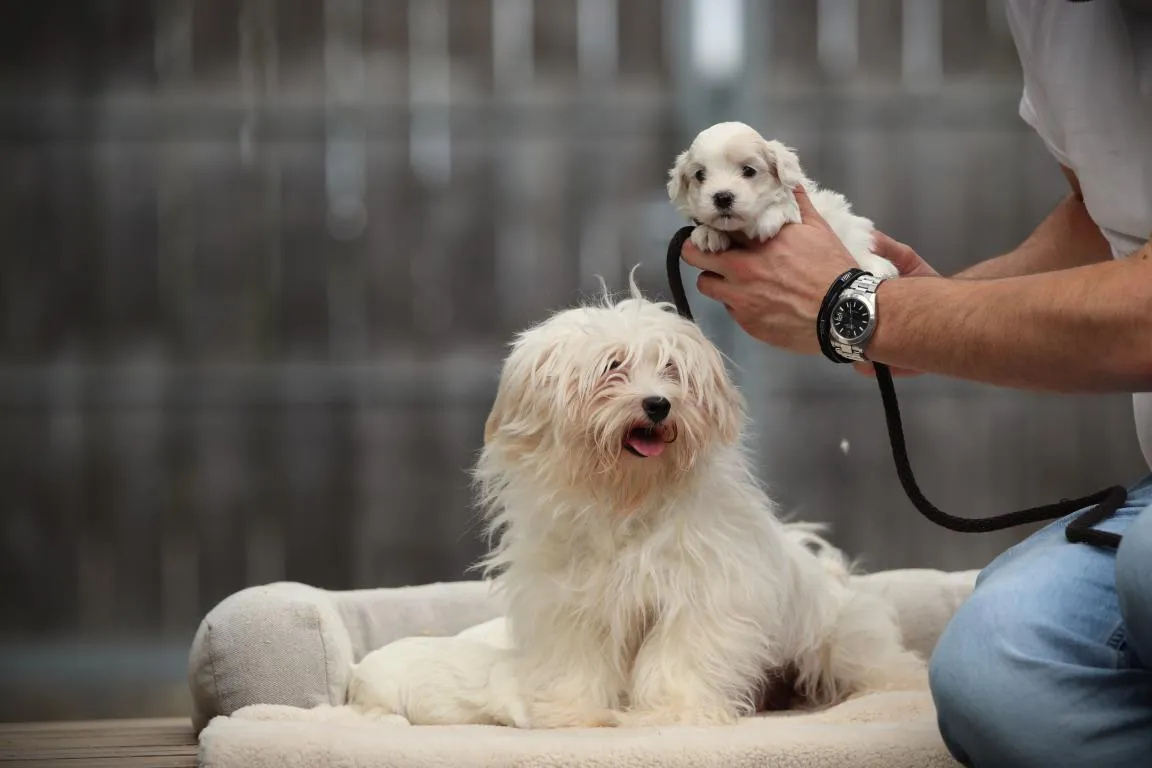
- Belgian breeder since 1990
- DNA-tested parents

Written and reviewed by Marleen Dyck, co-founder of Woefkesranch
Character
A cheerful little dog that wants to be with you
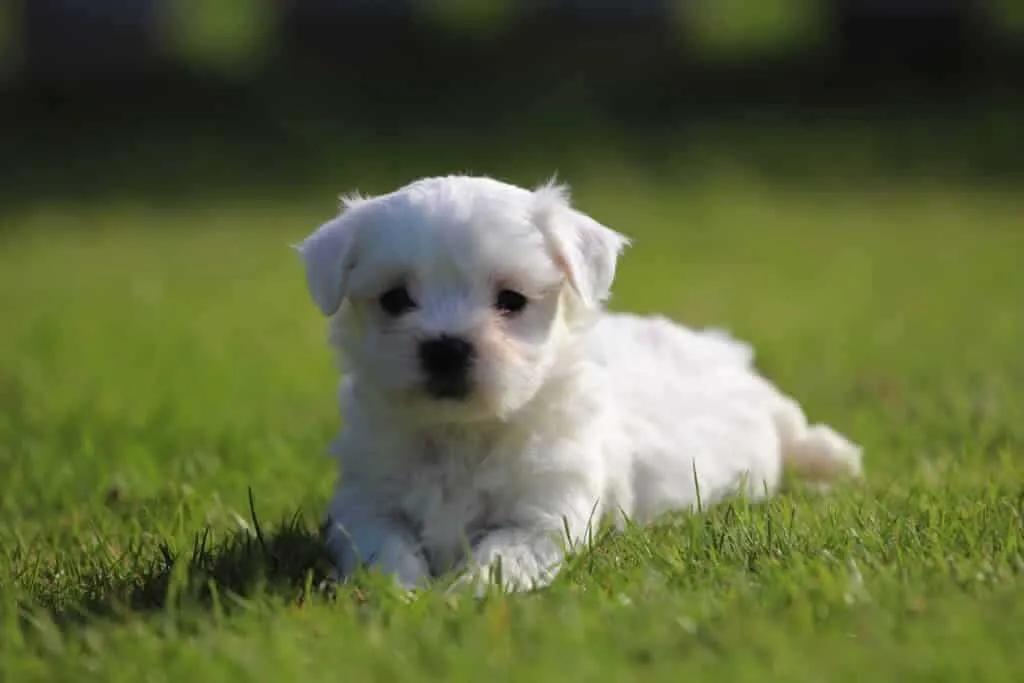
Bright, lively and very social, happiest at the centre of the family. It adapts to almost any household and learns quickly, and it is sensitive to the tone of your voice, so gentle handling works best.
What to expect
Affectionate
Deeply attached to its own family.
Lively
Playful and curious, and content with a short daily walk.
Quick to learn
Adapts easily, and responds to a gentle voice.
Low-shedding
Almost no shedding, which suits allergy sufferers.
Height
~23 cm
Weight
~4 kg
Life expectancy
~14 years
Origin
Italy and Malta, antiquity
Breed info
You will discover that the Maltese is a companion dog first: bright, lively and happiest in the middle of the family. It comes from Malta and Italy, with a small dog’s appetite for company and a history that runs back three thousand years. The long silky coat has no undercoat and sheds very little, which is why the breed suits allergy sufferers, and it is also what asks most of you: combing every week and a trim once or twice a year. You will need to keep an eye on the eyes and the ears, which are this breed’s sensitive points. Read on to see what this breed asks of you.
About Woefkesranch
Maltese Puppies at Woefkesranch
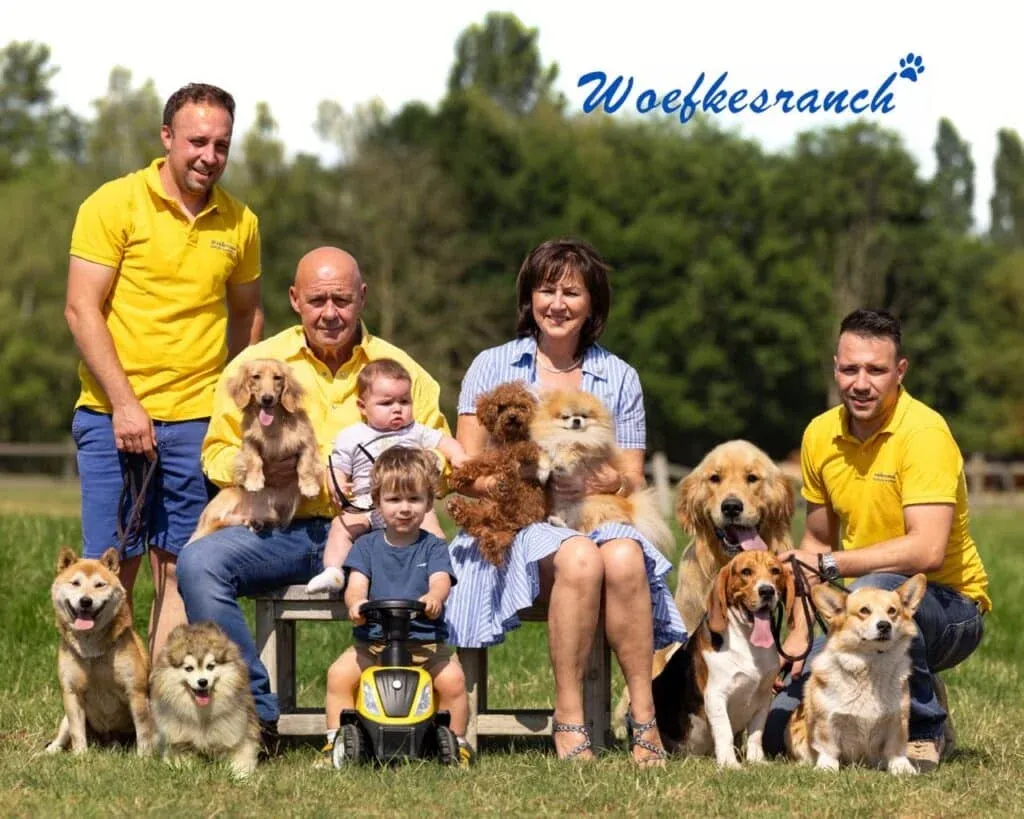
We are a recognized breeder of Maltese puppies in Belgium. Our puppies are raised in a family environment and are optimally socialized. Woefkesranch has been a family business since 1990 and is now in its second generation. Every puppy is born in our own kennel under permanent supervision, with no imports and no middlemen. Families are guided before the purchase and are welcome back with their questions long afterwards.
We have been a recognized family breeder in Putte, Belgium since 1990, now in our second generation: every Maltese puppy is born and socialized here, with no imports and no middlemen, and families are guided before the purchase and long afterwards.
What you get with our puppies:
- Puppy raised in Belgium
- Good puppies
- Initial vaccinations and microchip
- Lifetime support by phone/WhatsApp
- Available 24/7 for emergencies
Available now
Available Maltese puppies for sale
There are currently no Maltese puppies available:
click ‘Puppy alert’ and be notified when a new litter is available.
Maltese
In five points
- The Maltese comes from Malta and Italy, and its ancestors appear on Egyptian figurines from the 14th century BC.
- The coat is long, white and silky with no undercoat, so it sheds very little and the breed suits allergy sufferers.
- Grooming takes regular work: combing every week, a trim once or twice a year, regular baths and the beard wiped after meals.
- It needs little exercise but enjoys a daily walk, and it is comfortable in an apartment or a garden.
- Eyes, teeth and gums are the points to watch, and keeping on top of them is what gets a Maltese to ~14 years.
History
History and Origin
The Maltese is one of the oldest dog breeds in the world. Figurines found in the tomb of Pharaoh Ramses II show its ancestors were already fashionable in Egypt in the 14th century BC, and ten centuries later the same small white dogs reappear in the Greece of Aristotle and in ancient Rome.
The Greek philosopher Theophrastus described it as the Melita breed, an archaic name for Malta, and it was developed further in Italy with miniature spaniel and poodle blood. Merchants carried it along the Silk Road to Asia in the first century BC, which is why a number of experts believe Tibetan dogs contributed to it.
It reached Europe in the 15th century and appears on tapestries and paintings of the late Middle Ages and the Renaissance, among them La Dame a la Licorne in the Musee de Cluny in Paris, and in work by Memling, Durer, Brueghel and Goya. From 1520 it established itself in England, after Mary Stuart imported a few from Lyon and made them her favourite.
Appearance
Physical characteristics and grooming
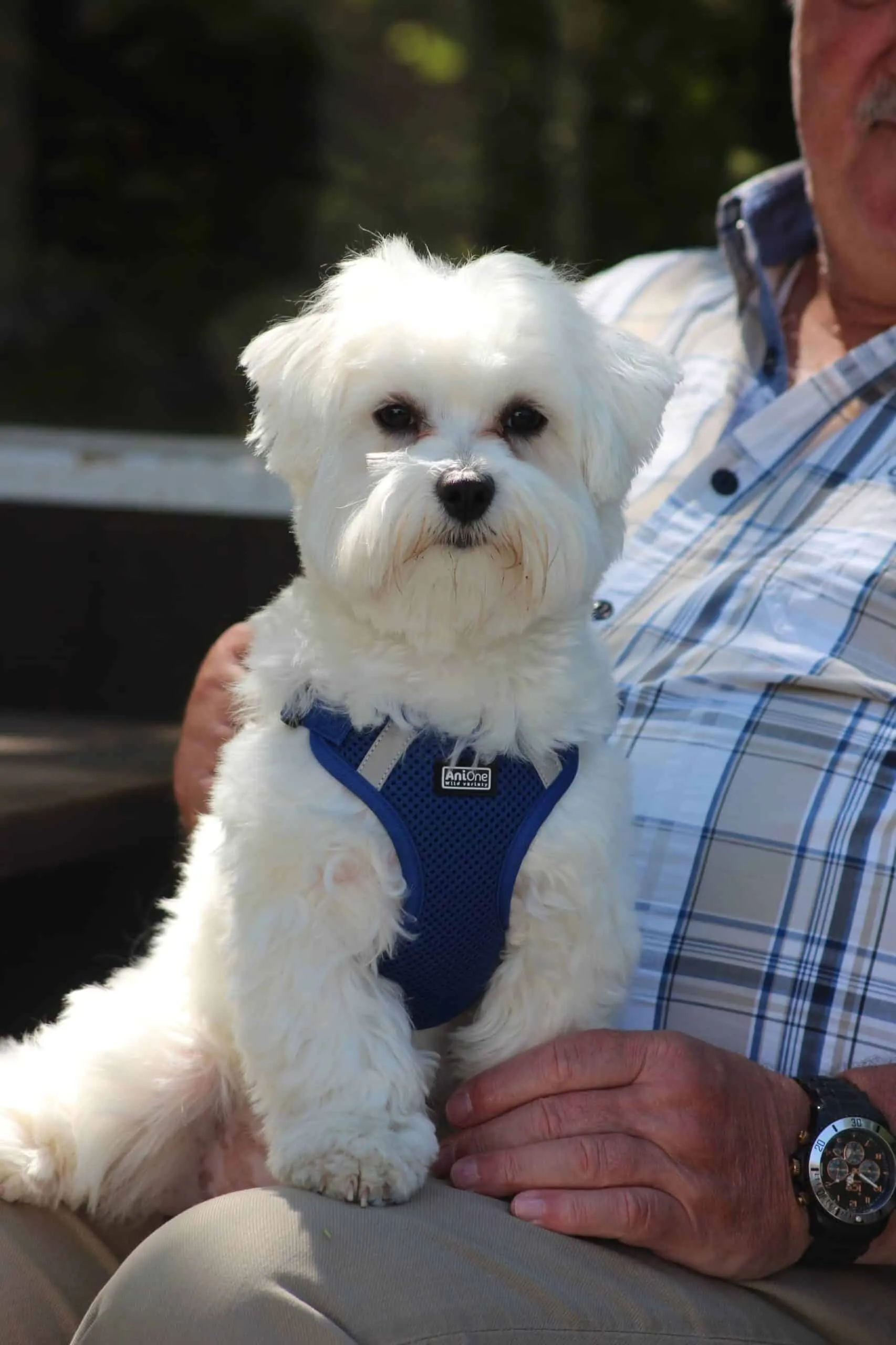
The Maltese is a small, elongated dog with the withers set slightly above the topline, a straight back and a long, slightly sloping croup. The legs are short and sturdy, the paws round, and the tail is thick at the base and curls forward over the back.
The head is rather large with a flat skull, a prominent nose and fairly large dark eyes, and the skin underneath the white coat is pigmented with dark spots. The coat itself is long, white and silky, parted along the back, with no undercoat, and that is what makes the breed’s floating trot look as though the dog is rolling forward.
| Characteristic | Male | Female |
|---|---|---|
| Height | ~23 cm | ~22 cm |
| Weight | ~4 kg | ~3 kg |
Hypoallergenic: all breeds at Woefkesranch
A purebred coat is known in advance, while a cross can take after either parent. The low shedding depends on the coat being kept up, so grooming is needed whichever you choose. Where an allergy is a real concern, spend time with the individual puppy before deciding.
| Characteristic | Maltese | Lagotto Romagnolo | Labradoodle | Cockapoo | Maltipoo | Miniature Poodle |
|---|---|---|---|---|---|---|
| Height | ~23 cm | ~45 cm | ~49 cm | ~36.5 cm | ~28 cm | ~32 cm |
| Weight | ~4 kg | ~14 kg | ~21 kg | ~10 kg | ~5 kg | ~7 kg |
| Hypoallergenic | Always | Always | Not always, depends on the parents | Not always, depends on the parents | Usually, both parent breeds are low-shedding | Always |
| Coat care | Comb weekly, trim once or twice a year | Brush twice a week, trim every 6 to 8 weeks | Brush several times a week, groomer every 8 to 12 weeks | Brush daily, trim every 8 to 10 weeks and never shorter than 5 cm | Brush weekly, professional trim every 6 to 8 weeks | Comb regularly, professional trim every 6 weeks |
| Breed origin | Purebred, from Malta and Italy | Purebred, from Italy | Labrador Retriever and Poodle | Cocker Spaniel and Poodle | Maltese and Miniature Poodle | Purebred, from France |
Heights from the FCI breed standard.
Comparing the Maltese, the Miniature Poodle and the Maltipoo
| What differs | Maltese | 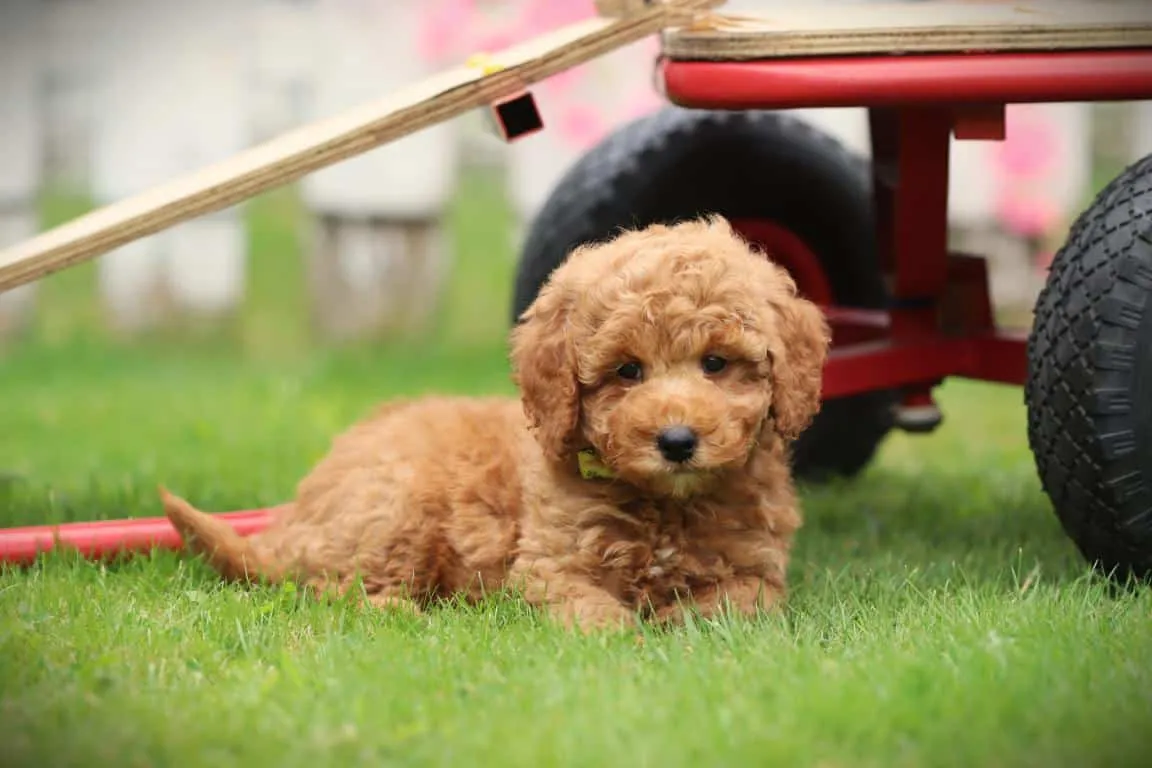 Miniature Poodle |  Maltipoo |
|---|---|---|---|
| Breed status | A purebred from Malta and Italy, with a history running back three thousand years | A purebred, the smallest of the poodle sizes | A cross of the other two, bred in the United States from the 1990s |
| Height | ~23 cm | ~32 cm | ~28 cm |
| Weight | ~4 kg | ~7 kg | ~5 kg |
| Coat | Long, white and silky, with no undercoat | Dense and curled, and it sheds no hair | Medium length and curling, between the two |
| Grooming | Comb it through weekly, trimmed once or twice a year | A professional trim roughly every six weeks | Brush it through every week |
| Life expectancy | ~14 years | ~14 years | ~12 years |
All three are small companion dogs that want to be with their people, and all three shed very little. The difference is what you can count on: the two purebreds give a coat and a size that are known in advance, one asking for weekly combing and the other for a trim every six weeks, while a Maltipoo can take after either parent.
Temperament
Personality and Temperament
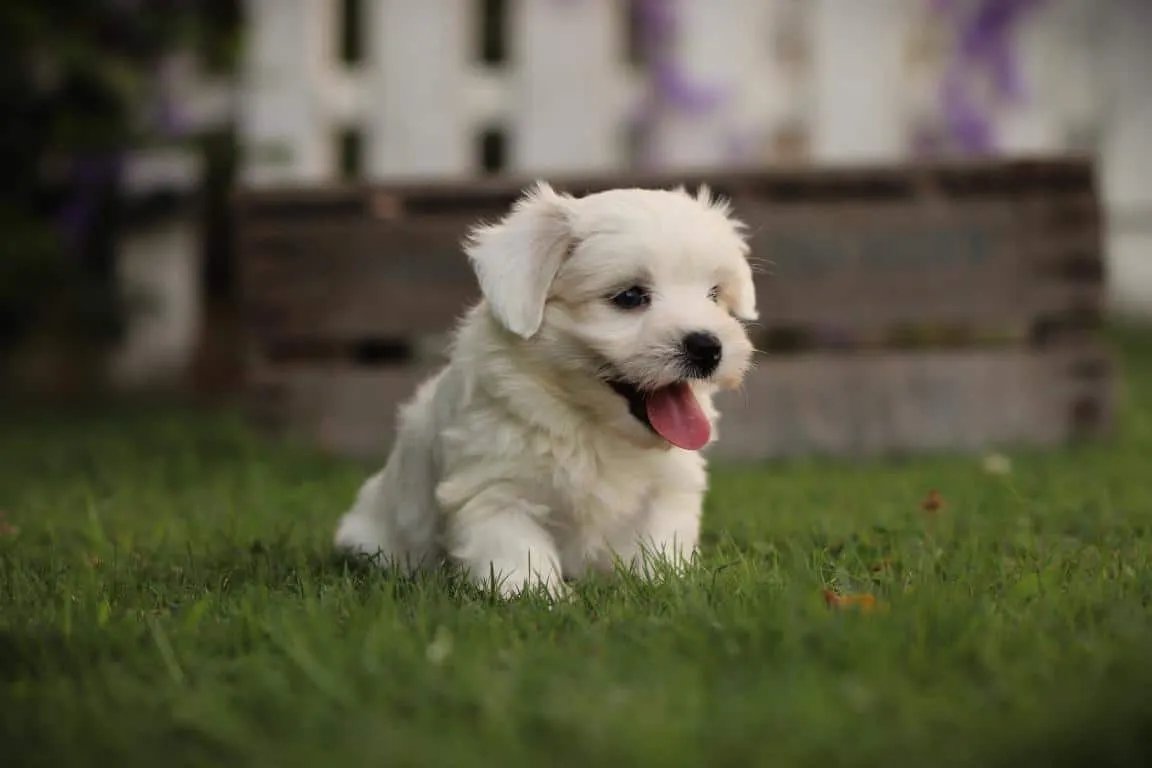
The Maltese is bright, lively, playful and very social, and it is at its happiest when it is with its family or the centre of attention. It is a classic companion dog, affectionate with everyone in the household and deeply loyal to its owner.
Training is not difficult, because the breed adapts to almost any situation, but it should never be handled harshly: these dogs are sensitive to the tone of a voice, and a sharp tone sets the training back.
Health
Health and Nutrition
Despite its size the Maltese is a sturdy dog that is rarely ill, and it lives ~14 years. Cancer, old age and heart disease are the most common causes of death.
The sensitive points are the eyes and the teeth and gums, which need more attention in this breed than in most. A handful of conditions have been recorded in the breed: patellar luxation, hydrocephalus, a congenital portosystemic shunt, shaker dog syndrome, trichiasis and a persistent ductus arteriosus. Ask a breeder what the parent dogs were tested for and ask to see the results.
Care is part of health here. Daily detangling and weekly combing, a trim once or twice a year, regular baths with thorough drying, and the ears and eyes checked as a matter of routine.

Training
Training and Exercise
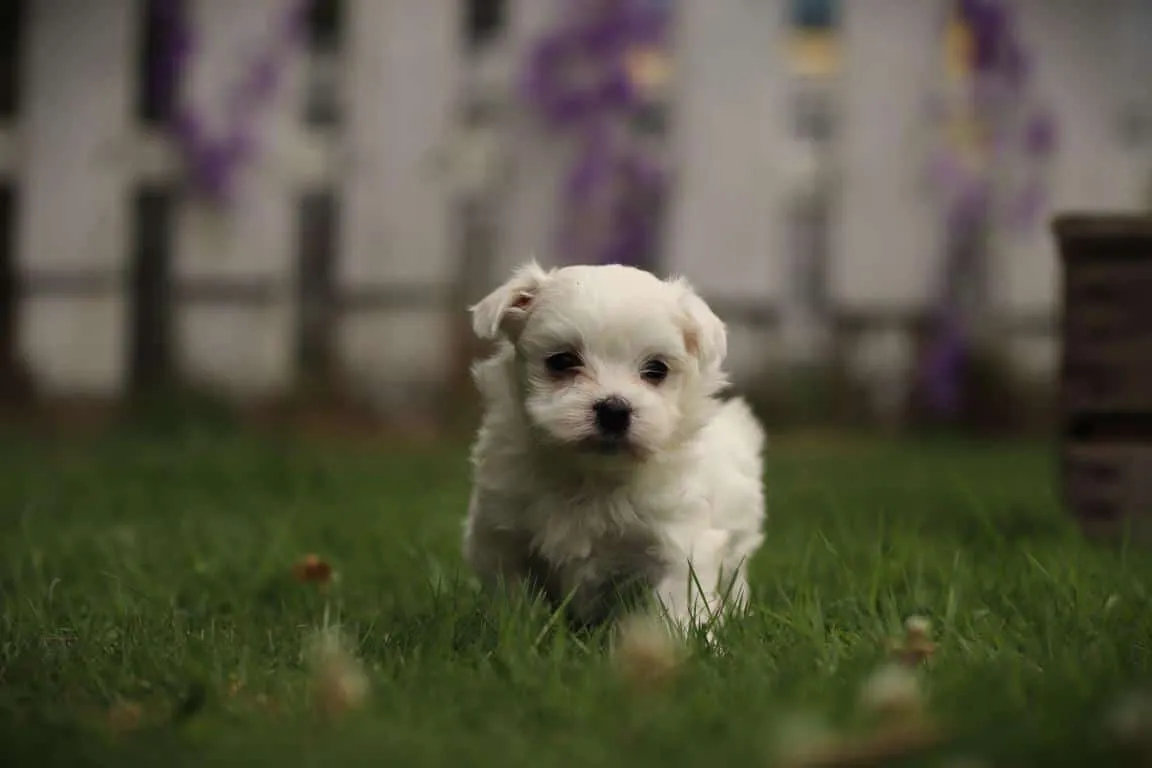
Maltese puppies adapt effortlessly to circumstances, which makes training fairly straightforward. Keep sessions short and positive: these dogs are easily distracted and they respond to reward rather than correction.
This breed thrives on attention and stimulation rather than distance. Short daily walks satisfy its curiosity, puzzle toys and hidden treats occupy the mind, and simple obedience work strengthens the bond more than it teaches commands.
It is a social dog, so playdates with other dogs and dog-friendly outings are worth arranging. Small agility obstacles in the garden suit it, and on a wet day indoor games and a warm resting place are enough.
Choosing
Choosing and caring for your Maltese


Is this the right breed for you?
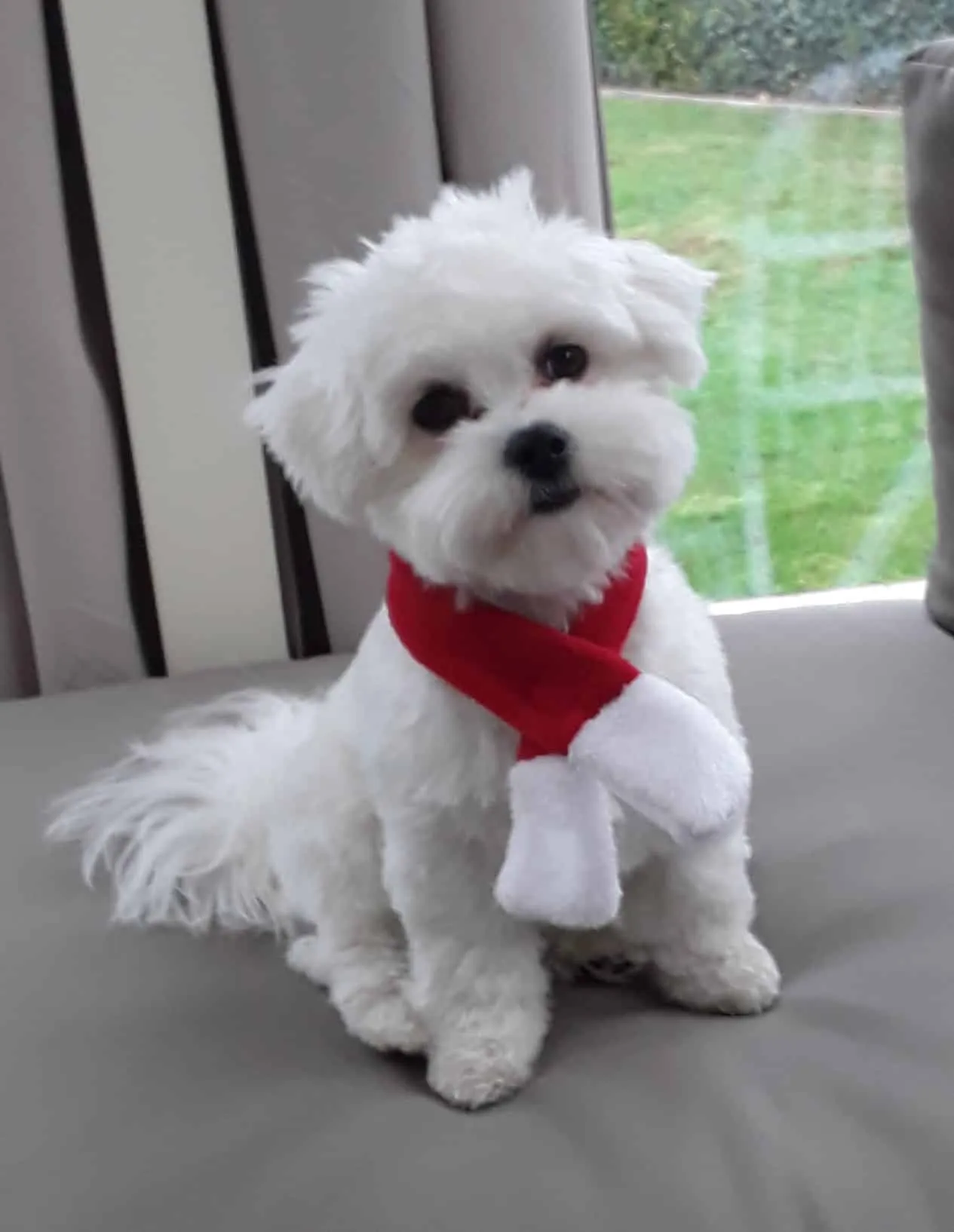
A Maltese suits a household that wants the dog indoors with them and is willing to take on the coat. It is small and fine-boned, so it is at its best with older children who understand that.
Essential daily care
Caring for a Maltese means committing to a daily routine that addresses their grooming, feeding, exercise and health needs.
For optimal daily care, focus on these key points:
Coat
Comb it through every week and have it trimmed once or twice a year. Cut short is a fair choice if weekly combing is more than you want.
Eyes
Clean them when tear stains show, and trim any hairs growing into the corner of the eye before they irritate it.
Ears
Check and clean them regularly, and wipe the beard after meals so the coat around the mouth stays clean.
Exercise
A short daily walk is enough, and it will happily take a longer one. Indoor games cover a rainy day.
Regular veterinary visits are essential to monitor health, contributing to a longer lifespan for your Maltese. If you are considering getting a puppy, it is important to recognize a good breeder.
How getting your puppy works
- Come and meet them. Make an appointment to see the puppies and their mother.
- Reserve your puppy. Choose your puppy and reserve it.
- Collect from 8 weeks. Your puppy leaves microchipped, vaccinated, dewormed and with its European passport, and we register it in your name in DogID together.
- We stay close. You take home care instructions and the guarantee certificate, with lifetime support by phone or WhatsApp.
Frequently Asked Questions
Frequently Asked Questions
Does a Maltese shed?
Very little. The coat is long and silky with no undercoat, which is why the breed is one of the few that suits allergy sufferers. No dog sheds nothing at all, but this one comes close.
How much grooming does a Maltese need?
Combing through every week, a trim once or twice a year, and regular baths with thorough drying afterwards. Clean the eyes when tear stains show and wipe the beard after meals. Cutting the coat short is a reasonable choice if weekly combing is more than you want.
How much exercise does a Maltese need?
Little. A short daily walk covers it, and the breed will happily take a longer one. It is comfortable indoors and in a garden, and it adapts to its owner’s pace.
Is a Maltese good with children?
It is affectionate and social with everyone in the household. It is also small and fine-boned, so it is at its best with older children who handle it carefully.
How old does a Maltese get?
The breed lives ~14 years. It is a sturdy little dog that is rarely ill, with the eyes and the teeth and gums as its sensitive points.
Where does the Maltese come from?
Malta and Italy. It is the oldest of the five breeds the FCI classes as bichons, and its ancestors appear on Egyptian figurines from the 14th century BC.
Come and see
Make an appointment
Do you want to visit our puppies? You can also make an appointment.
- 100% Belgian puppies
- Professional statutory warranty
- 24/7 service after sale
- Puppies have all necessary vaccines
- Puppies are dewormed multiple times
- Chipped and with Belgian/European passport
- DNA-tested parents
Keep reading
Where to go next
Another breed
Characteristics, temperament, grooming and health of another breed we raise.