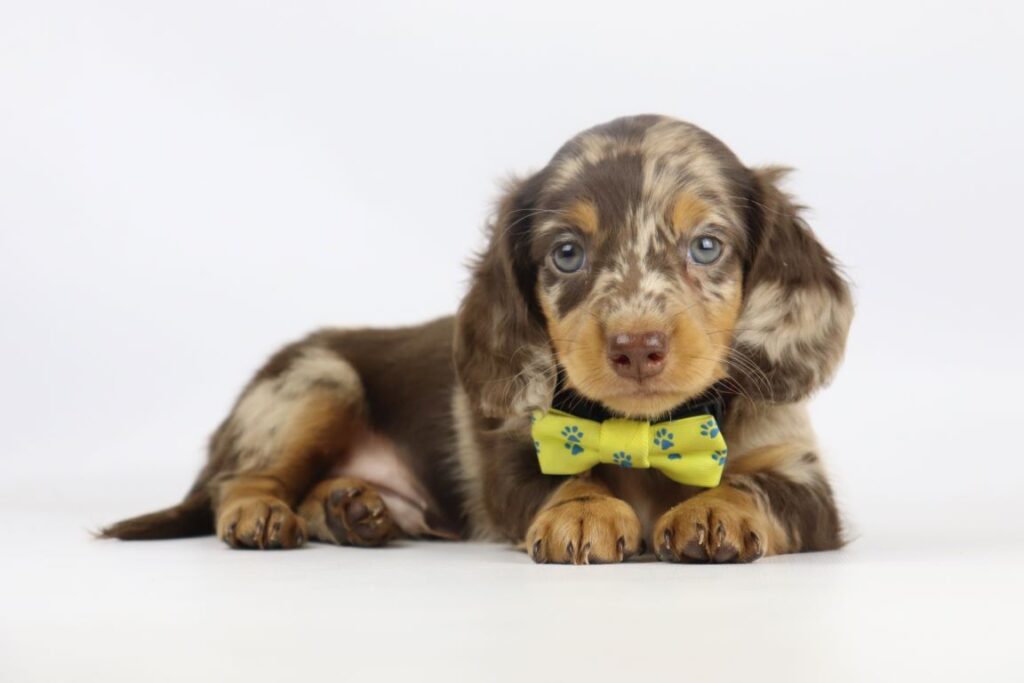
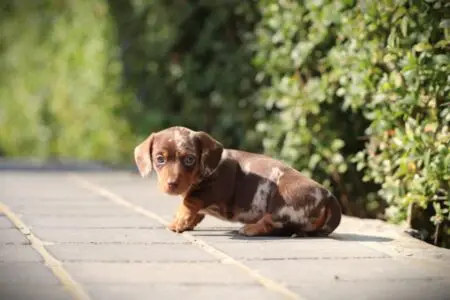
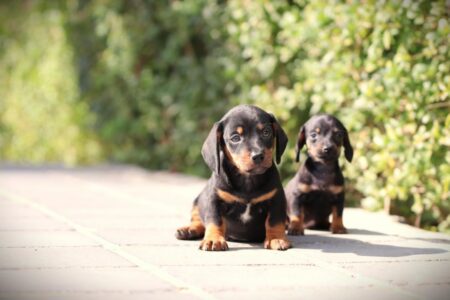
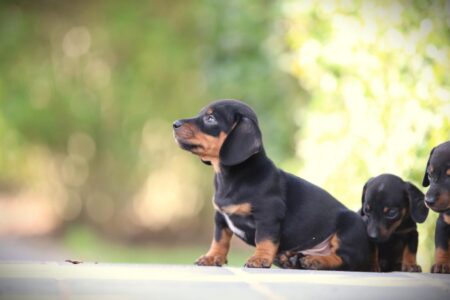
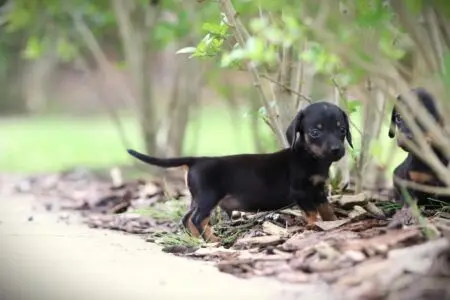
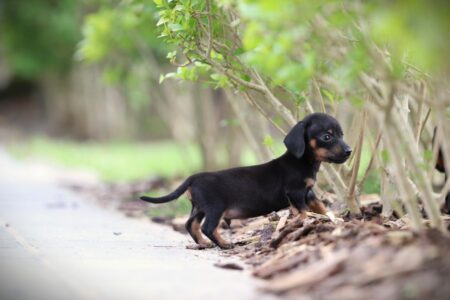

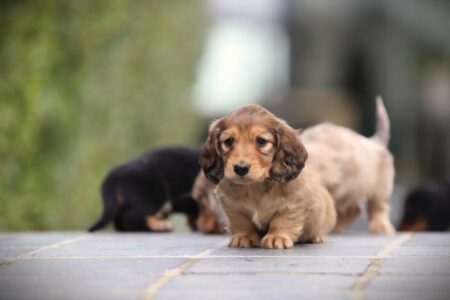
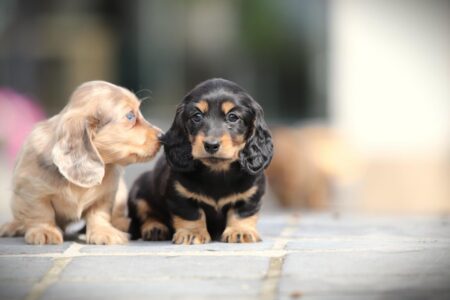
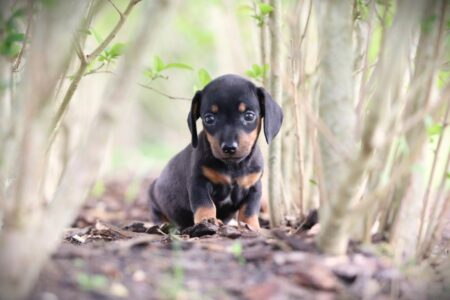
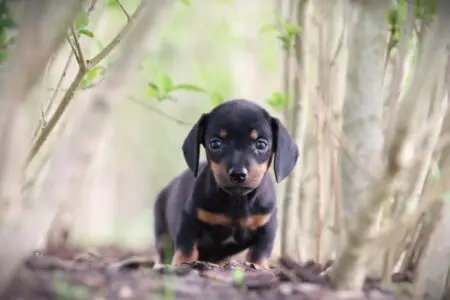
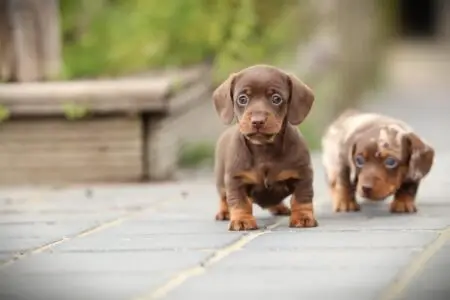
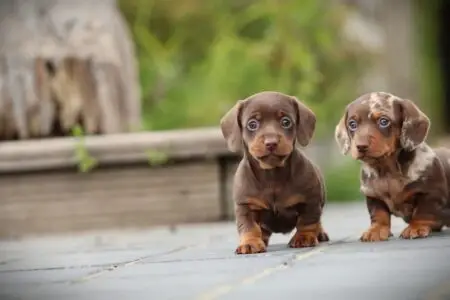
The Dachshund character is one of a robust and courageous dog. It has great endurance and a headstrong character.
The Dachshund is independent, combative, and tries to dominate other dogs.
Its habit of barking at the slightest sound makes it a good watchdog.
It is affectionate and cheerful, but demands a lot of attention and is often jealous.
The short-haired variety is the most energetic, while the wire-haired variety has a rustic character and the greatest hunting instinct. The long-haired variety is the calmest of the three. All Dachshunds should be raised consistently and patiently from a young age.
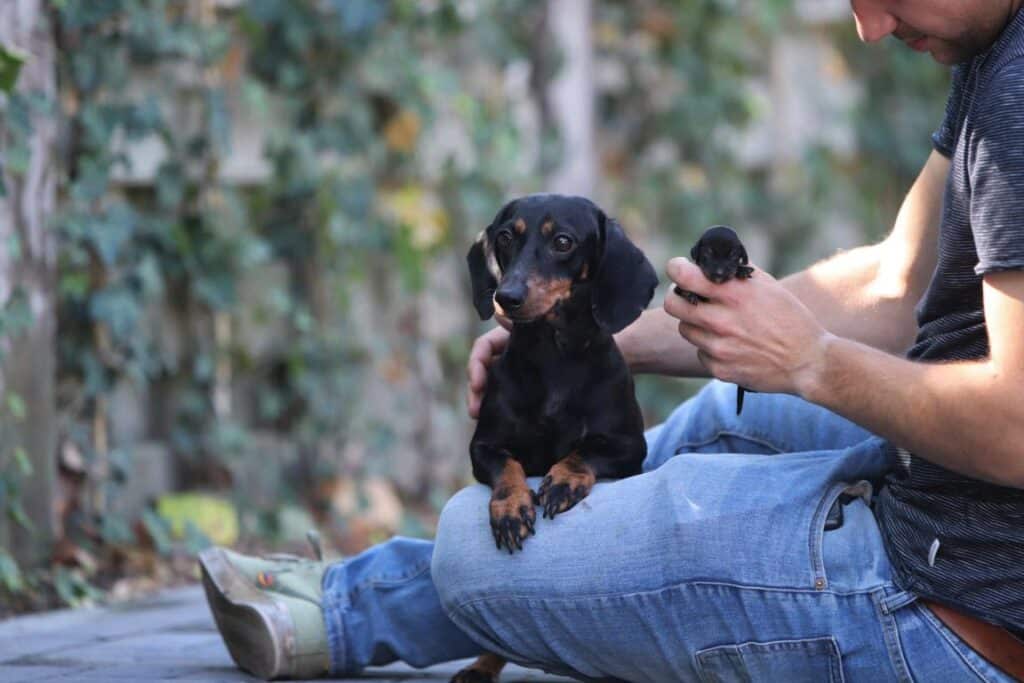
Dachshund Character: Typical Traits
Due to its origin as an independent hunting and guard dog, the Dachshund has a brave and spirited character. Brave, fierce behavior and barking were useful when Dachshunds had to face a badger or a fox underground. They also have great endurance and are intelligent and headstrong.
If given the chance, the clever Dachshund will certainly try to manipulate its owner. For example, it knows very well what it can achieve with its cute and endearing look. Additionally, it can be a bit jealous at times; you are its owner, and it is your hero.
Even though the Dachshund is a companion dog, it is not a typical lapdog. It is important to challenge it mentally and physically enough. The lively and cheerful Dachshund loves to play and is also very enthusiastic about it due to its background as a hunting dog. Walking through the woods and playing with sticks and balls, whether in the water or not, and just sniffing around and digging are good activities for these dogs. But if you want to play fetch together, you might find that this dog just keeps the stick or toy to itself. After all, it has a mind of its own.
Not only is the character of this breed unique. With its long back, it also has a unique build. You can keep a Dachshund in an apartment, but due to that long back, it is wise not to let it climb stairs.
The Three Coat Types: Character Differences in Detail
One of the most fascinating aspects of the Dachshund breed is how the three different coat types have each developed their own unique character traits. These differences are not just cosmetic – they reflect centuries of selective breeding and have led to distinctly distinguishable temperaments within the same breed.
Short-haired Dachshund: The Energetic Athlete

The short-haired dachshund is known as the most energetic of the three varieties. These dogs embody the classic dachshund traits in their purest form: brave, determined, and tireless.
Character traits of the Short-haired:
- High energy level: Short-haired dachshunds have remarkable endurance and can remain active for hours
- Direct communication: They are often the most outspoken in their behavior and clearly show what they want
- Quick learners: Their alertness and focus make them excellent training partners, provided they are approached consistently
- Social dominance: Of the three types, short-haired dachshunds often exhibit the most pronounced dominant behavior towards other dogs
- Territorial behavior: They are excellent watchdogs with a strong tendency to guard their territory
Temperament and behavior: The short-haired dachshund is the most “typical” dachshund in terms of classic hunting behavior. They have a strong prey drive and will enthusiastically chase anything that moves. Their direct, no-nonsense character makes them ideal for active owners who love adventure and outdoor activities.
Grooming and training: Their smooth, short hair requires minimal grooming – a weekly brushing is usually sufficient. However, their energetic nature does require consistent training and sufficient physical challenge. They respond best to clear, consistent commands and reward-based training.
Wire-haired Dachshund: The Robust Hunter

The wire-haired dachshund has the strongest hunting instinct and a unique rustic character that sets them apart from their smooth-haired and long-haired relatives. This variety was created by crossing with terriers, which has led to their characteristic rough coat and robust personality.
Character traits of the Wire-haired:
- Intense hunting instinct: They have the strongest drive to dig, track, and hunt
- Independent work attitude: Wire-haired dachshunds can work more independently than other varieties
- Rustic and weather-resistant: They are often less sensitive to weather conditions and outdoor work
- Moderate energy: Less hyperactive than short-haired, but with more focus and perseverance
- Loyal bond: They often form very strong, exclusive bonds with their owner
Temperament and behavior: The wire-haired character is often described as “workmanlike” – they are serious, focused dogs who prefer to have a task to perform. Their terrier heritage is evident in their courage and determination, but also in their sometimes stubborn nature. They are excellent problem solvers and will find creative ways to get what they want.
Physical characteristics and grooming: Their rough, wiry coat gives them a characteristic “wild” appearance complete with beard and eyebrows. This coat requires regular grooming – about every 6-8 weeks they should be trimmed by a professional. Their coat protects them well against weather and thorns, making them excellent outdoor dogs.
Training and socialization: Wire-haired dachshunds benefit from owners who understand and channel their work drive. They excel in activities such as tracking work, agility (adapted for their build), and other dog sports that utilize their natural talents.
Long-haired Dachshund: The Sensitive Gentleman

The long-haired dachshund is often considered the calmest and most sensitive of the three varieties. Their character reflects the spaniel influences in their genetic background, which has led to a softer, more endearing personality.
Character traits of the Long-haired:
- Calm temperament: They are generally calmer and less impulsive than their short-haired relatives
- High sensitivity: Long-haired dachshunds are often more emotionally intuitive and respond more strongly to their owner’s mood
- Social skills: They are usually better with children and other pets
- Gentle communication: They use more subtle signals than other varieties
- Strong family bond: They tend to form close bonds with all family members, not just one person
Temperament and behavior: The long-haired character is characterized by an elegant dignity combined with the typical dachshund courage. They retain their hunting instincts but express them in a more controlled manner. Their spaniel heritage is evident in their natural tendency to please and their ability to work well with people.
Sensitivity and training: Long-haired dachshunds are often more sensitive to harsh corrections and respond better to positive, gentle training methods. They may internalize stress rather than express it, so it’s important to watch for subtle signs of discomfort. Their natural desire to please often makes them easier to train, provided the training is consistent and friendly.
Grooming requirements: Their beautiful, silky coat requires the most grooming of all three varieties. Daily brushing is necessary to prevent tangles, and regular professional grooming keeps them looking their best. Their long hair can also pick up more dirt and leaves during walks.
Comparative Character Analysis
| Trait | Short-haired | Wire-haired | Long-haired |
|---|---|---|---|
| Energy level | Very high | Medium-high | Medium |
| Hunting instinct | High | Very high | Medium-high |
| Sensitivity | Low-medium | Low | High |
| Social skills | Medium | Medium | High |
| Trainability | Medium | Medium-difficult | Easy |
| Grooming | Minimal | Medium | Intensive |
| Suitable for beginners | No | No | Yes |
| Children | Medium | Medium | Excellent |
| Alertness | Very high | High | Medium-high |
Which Type Suits You?
Choose a Short-haired if:
- You have an active lifestyle
- You have experience with headstrong breeds
- You like direct, clear communication with your dog
- You want minimal grooming
- You are looking for an excellent watchdog
Choose a Wire-haired if:
- You love outdoor activities and adventure
- You are interested in dog sports or tracking tasks
- You want a robust, working dog
- You are willing to commit to regular professional grooming
- You appreciate a unique, characterful appearance
Choose a Long-haired if:
- You are looking for a family dog that is good with children
- You love an elegant, beautiful dog
- You want a sensitive, intuitive companion
- You have time for daily grooming
- You are a beginner dog owner
Socialization and Training of Dachshunds
The headstrong nature of dachshunds makes early and consistent socialization crucial for a balanced adult dog. Their natural courage can develop into overconfidence or even aggression if not properly guided during their puppyhood.
Puppy Training Specific to Dachshunds
The critical socialization period (8-16 weeks) is essential for dachshunds. During this period, they should have as many positive experiences as possible with:
- Different people (children, adults, seniors)
- Other dogs of different sizes
- Different sounds and environments
- Car rides and public transport
- Different surfaces and textures
House rules from day one are extra important for dachshunds due to their tendency towards dominance. Consistency in rules such as where they can sleep, what they can and cannot do, and who is in charge prevents power struggles later on.
Interaction with Other Pets
Dachshunds naturally have a strong prey drive, which can complicate their relationship with other pets. With cats they can live well if they grow up together from puppyhood, but strange cats can trigger their hunting instinct.
With other dogs dachshunds often show a “big dog in a small body” mentality. They are not afraid to challenge dogs much larger than themselves. Therefore, it is important to:
- Teach them when play becomes too intense
- Monitor their territorial behavior
- Reward them for calm, friendly behavior towards other dogs
Small pets such as rabbits, guinea pigs, or hamsters are often not suitable for households with dachshunds due to their strong hunting drive.
Children and Dachshunds
Although dachshunds can generally get along well with children, this does require attention and training from both sides. Long-haired dachshunds are often the most patient with children, while short-haired varieties may need more boundaries.
Important rules for children:
- Always lift carefully (supporting chest and rear)
- Do not run or shout around the dachshund
- Respect the dog when it is resting or eating
- No rough play or pulling on ears and tail
Common Behavioral Problems and Solutions
Excessive barking is a common complaint among dachshund owners. This behavior stems from their original function as a watchdog, but can become problematic in urban environments.
Solution: Teach the “quiet” command by first allowing barking (3 times), then giving the command “quiet” and rewarding when they stop. Also, provide sufficient mental stimulation to prevent boredom.
Digging is another natural behavior that can cause problems in gardens. Solution: Create a designated digging spot in the garden where it is allowed, and redirect the behavior there.
Stubbornness during training often stems from their independent character. Solution: Use positive reinforcement, keep training sessions short (5-10 minutes), and be patient and consistent.
Physical and Mental Stimulation
Despite their short legs, dachshunds have a significant need for both physical and mental challenge. Their intelligence and work drive require creative approaches to prevent boredom and destructive behavior.
Suitable Activities per Coat Type
For Short-haired Dachshunds:
- Long walks on varied terrain
- Fetching (with adjustments for their back structure)
- Agility with low obstacles
- Sniffing games in the garden
- Swimming (excellent low-impact exercise)
For Wire-haired Dachshunds:
- Tracking activities
- Earthdog trials (where allowed)
- Walks through rugged terrain
- Search games with hidden rewards
- Tunnel play with special dog tunnels
For Long-haired Dachshunds:
- Gentle forest walks
- Basic obedience training
- Gentle games like hide and seek
- Social activities in dog parks
- Rally obedience
Intelligence Games for Dachshunds
Mental stimulation is often more important than physical exertion for these intelligent dogs. Puzzle toys where they have to earn rewards, snuffle mats that satisfy their natural foraging drive, and interactive feeders that turn mealtime into a challenge are all excellent options.
DIY intelligence games can be easily made at home:
- Hiding treats in towels they have to unwrap
- Plastic bottles with holes where treats have to roll out
- Cardboard boxes with surprises inside
- Treasure hunts around the house with scent trails
Daily Exercise Needs
An adult dachshund needs 30-60 minutes of exercise per day divided into multiple sessions. This can consist of:
- Morning walk (15-20 minutes)
- Playtime in the garden or park (10-15 minutes)
- Evening walk (15-20 minutes)
- Mental challenge (10-15 minutes of puzzle games)
It is important to limit jumping and stair climbing due to their back structure, but this does not mean they cannot be active.
Practical Tips for Owners
The First Weeks at Home
The transition period when a dachshund first comes home is crucial for laying a good foundation. Routine is king – dachshunds thrive on a predictable daily schedule.
Week 1-2: Orientation
- Set a fixed eating, walking, and play schedule
- Let the dachshund explore the house under supervision
- Start with basic commands like “sit” and “come here”
- Introduce the crate as a positive place
Week 3-4: Expansion
- Gradually expand walking routes
- Carefully introduce new people and situations
- Start with short training sessions
- Establish house rules definitively
Daily Routine
A successful day with a dachshund usually looks like this:
Morning (7:00-9:00):
- Short potty break immediately after waking up
- Breakfast at a fixed time
- 15-20 minute walk
- Mental stimulation with puzzle toys
Afternoon (12:00-14:00):
- Short walk or playtime
- Rest period (dachshunds love naps!)
Evening (17:00-20:00):
- Evening walk (longest of the day)
- Playtime and social time
- Evening meal
- Relaxation and cuddle time
Seasonal Behavior
Winter: Dachshunds can be sensitive to cold, especially long-haired varieties. A dog coat may be necessary. Their activity level may decrease, so extra mental stimulation indoors is important.
Summer: Beware of overheating – dachshunds can be close to the hot ground due to their short legs. Early morning and late evening walks are ideal.
Spring/Fall: These are often the favorite seasons of dachshunds – perfect weather for longer walks and outdoor activities.
Traveling with Dachshunds
Dachshunds are generally good travel companions if well prepared:
Car ride tips:
- Use a safe car crate or seatbelt
- Plan stops every 2 hours for exercise
- Bring familiar blankets and toys
- Ensure adequate ventilation
Vacation planning:
- Find dachshund-friendly accommodations
- Pack a complete first aid kit
- Bring their regular food to prevent stomach issues
- Plan activities suitable for their physical capabilities
Frequently Asked Questions about Dachshund Character
Are Dachshunds Suitable for Beginners?
Long-haired dachshunds are the most suitable for beginner dog owners due to their calm temperament and willingness to please. Short-haired and wire-haired varieties require more experience due to their stubborn nature and strong will.
For beginners, it is recommended:
- Start with an adult dog from a rescue that is already trained
- Attend a puppy course or dog school
- Read up on the specific needs of the breed
- Ensure an experienced veterinarian familiar with dachshund-specific issues
How to Deal with Stubbornness?
Dachshund stubbornness is legendary, but there are effective strategies:
Positive approach:
- Reward desired behavior immediately and enthusiastically
- Ignore unwanted behavior (do not give attention)
- Use high-value rewards (special treats, toys)
- Keep training sessions short and fun
Consistency is crucial:
- All family members must follow the same rules
- Do not give in to “cute” manipulation
- Stay patient and persistent
Make training relevant:
- Use their natural instincts (searching, tracking)
- Vary exercises to prevent boredom
- Reward independent thinking within boundaries
Keeping Barking Under Control
Watchdog vs. nuisance – making the difference:
Acceptable barking:
- Warning of visitors
- Responding to unusual sounds
- Short communication with owner
Problematic barking:
- Continuous barking at everything that moves
- Barking out of boredom
- Demand barking (barking for attention)
Training strategies:
- The “enough” command – allow them to bark 3 times, then silence
- Distraction techniques – redirect to toy or activity
- Environmental management – limit view of triggers
- Positive reinforcement – reward silence and calmness
Historical Background and Modern Role
Origin as a Hunting Dog
The dachshund was developed in the 15th century in Germany specifically for badger hunting (Dachs = badger, Hund = dog). Their unique body structure was no accident, but a deliberate development to hunt underground in badger burrows.
Original working traits:
- Courage to work underground alone
- Ability to make independent decisions
- Endurance for long hunting days
- Strong territorial instinct
- Alertness to danger
These traits explain much of modern dachshund behavior – their courage, independence, and territorial instinct are directly inherited from their working ancestors.
Evolution to Companion Dog
In the 20th century the transition from working dog to companion dog began. This brought new challenges:
Modern adaptations:
- Less intense hunting drive (but still present)
- Better social skills with people
- Adjusted size (miniature and rabbit dachshunds)
- Improved suitability for family life
Contemporary roles:
- Family dog and companion
- Therapy dog (especially long-haired varieties)
- Show dog and breeding
- Limited working dog activities (earthdog trials)
Modern Breeds and Varieties
Today, there are three sizes recognized:
- Standard Dachshund (7-14 kg) – original size
- Miniature Dachshund (4-7 kg) – most popular size
- Rabbit Dachshund (up to 4 kg) – smallest variety
Each size retains the characteristic dachshund traits, but smaller varieties can be more sensitive and often have a higher energy level per kilogram of body weight.
Conclusion: The Perfect Dachshund Match
Choosing the right dachshund goes beyond appearance – it’s about finding a character match that fits your lifestyle and expectations. Short-haired dachshunds offer pure dachshund energy and directness, wire-haired varieties combine work ethic with robustness, and long-haired dachshunds bring elegance and sensitivity.
No matter which variety you choose, all dachshunds share the fundamental traits that make this breed so special: courage, loyalty, intelligence, and an irresistible personality. With the right upbringing, socialization, and understanding of their unique needs, your dachshund will become an unforgettable lifelong companion.
The key to success lies in respecting their heritage as brave hunting dogs while helping them find their place in the modern world. A well-raised dachshund is not just a pet, but a true family member with a personality much larger than their physical stature.
Extra
Want to know more about this breed? Read our other articles.