Long-haired Miniature Dachshund puppies & breed info
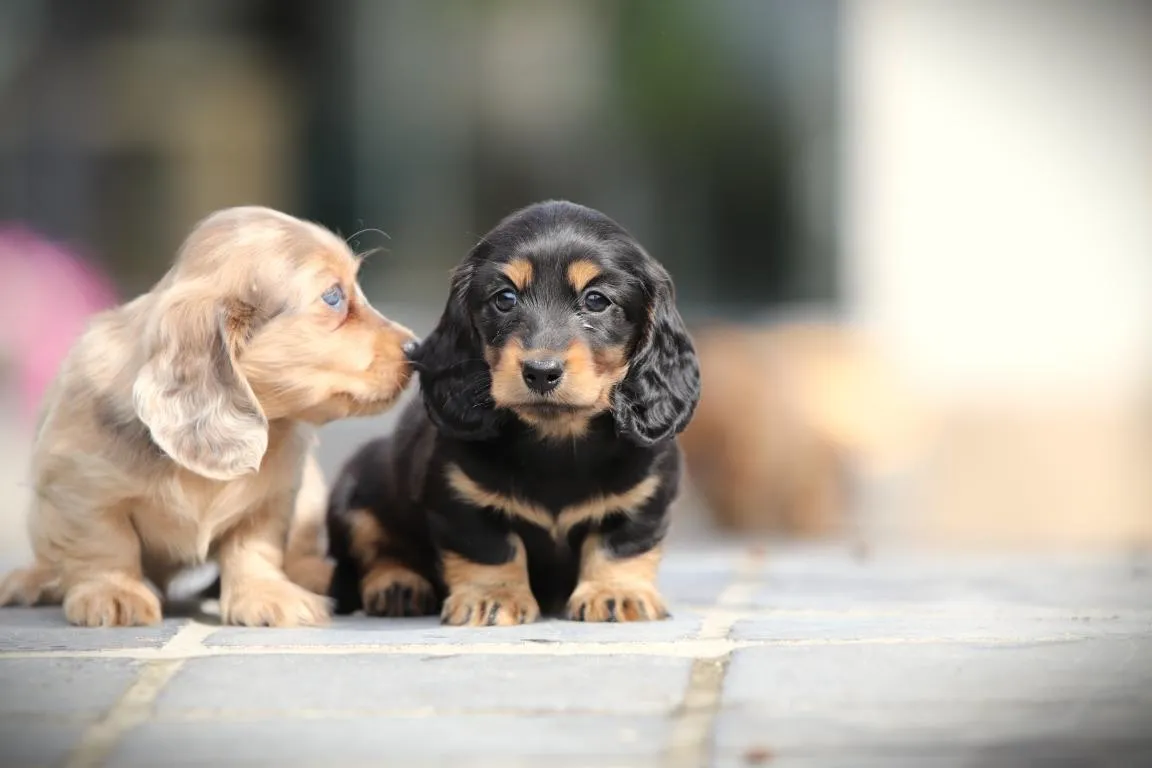
Available Miniature Dachshund puppies for sale
Click ‘Puppy alert’ to stay up to date on new Miniature Dachshund litters.
Long-haired Miniature Dachshund price
How much does a Long-haired Miniature Dachshund puppy cost? At Woefkesranch every puppy is born on the ranch and grows up with its mother, whom you always see when you visit. We have the parents tested for hereditary conditions, and every puppy leaves socialised, vaccinated, dewormed, microchipped, with a European passport and a 1-year guarantee. After the purchase we stay reachable by phone or WhatsApp, around the clock for urgent matters. That is why a Long-haired Miniature Dachshund puppy costs €1,750 to €3,000.
Woefkesranch has been a recognised Belgian family kennel since 1990. Puppies that cost much less often come from the Eastern European supply, with inhumane practices and serious health problems. Some sellers offer these puppies as if they were bred in Belgium. Learn more about the risks in the Pano report (VRT, in Dutch), for which the team also filmed at our ranch: De Oost-Europese puppybusiness.
Our usual process
Buying a Long-haired Miniature Dachshund puppy from Woefkesranch – Belgian breeder since 1990
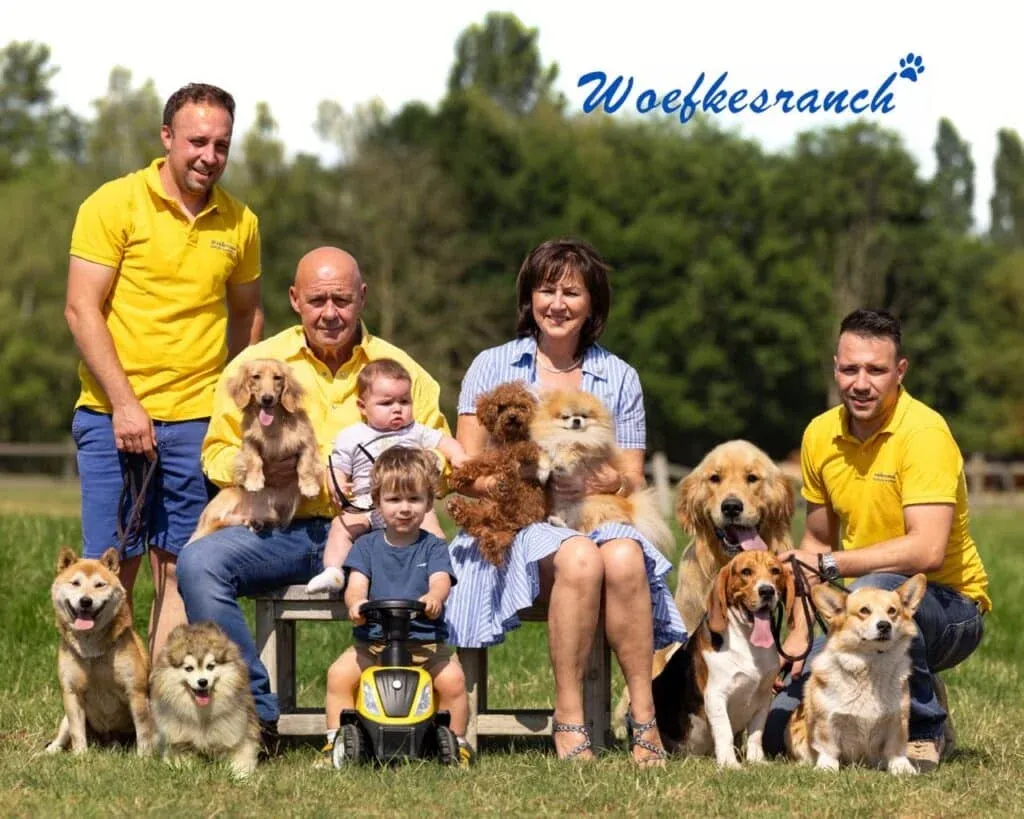
How it works:
- Meet the puppies (optional). Make an appointment to see the puppies with their mother, and to work out together which puppy suits your family.
- Reserve your puppy (optional). You can reserve online (24/7) or by phone on +32 (0)15 75 59 42. After reserving, you receive photos on request. If a puppy is already 8 weeks old, you can also take it home at your visit.
- Collection from us or home delivery. You can collect your puppy from 8 weeks old. It leaves microchipped, vaccinated, dewormed and with its European passport, and we register it in your name in DogID together. If you have no transport, someone from Woefkesranch brings your puppy to your home, within 250 km of our ranch in Putte (including the Netherlands, France, Luxembourg and Germany).
- 1-year guarantee. Every puppy has a 1-year guarantee on hereditary conditions and hidden congenital defects. We remind you about the first booster vaccination and deworming.
- Lifelong support. We remain available by phone or WhatsApp, also for training tips and health questions. For urgent matters we can be reached 24/7.

Written and reviewed by Marleen Dyck, co-founder of Woefkesranch
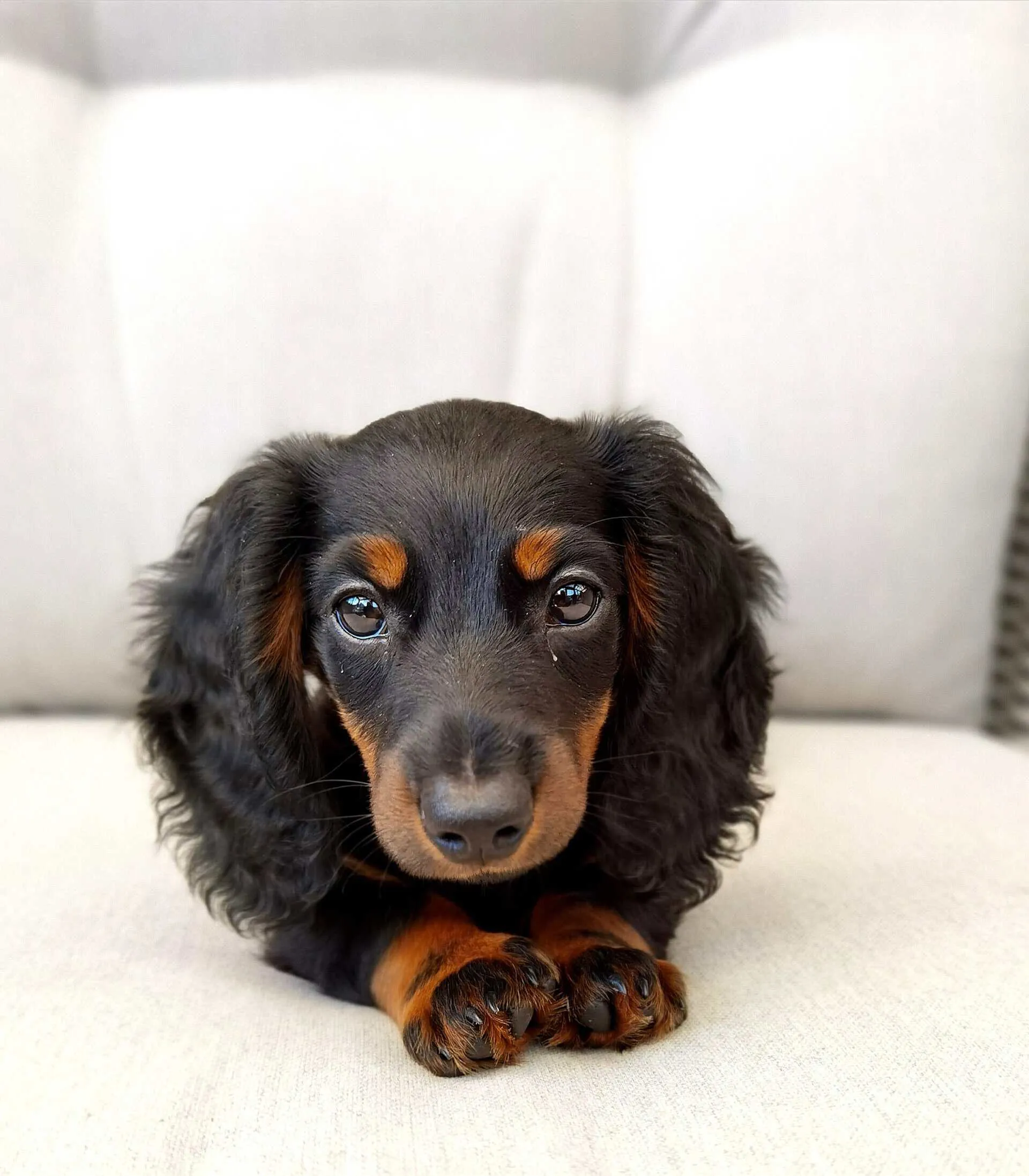
A gentle, devoted dog with a soft long coat
A sociable, devoted family dog that is quiet and gentle in the house. It has real stamina and a strong will, so it needs patient training rather than insistence.
What to expect
Devoted
Sociable with its family, and a good watchdog.
Gentle
Quiet and gentle in the house.
Independent
Bred to work alone, out of sight of its handler.
Brave
Bred to face a badger underground.
Height*
~28 cm
Weight*
~6.5 kg
Life expectancy
~14 years
Origin
Germany, 19th century
*The sizes above are Woefkesranch guidelines. The FCI breed standard defines size by chest circumference. The dogs’ health always comes first.
Breed summary
You will discover that the long-haired miniature dachshund is a quiet, gentle family dog, and that it was made on purpose: the variety came from crossing dachshunds with the Cocker Spaniel and the Stoberhund. Underneath the long coat it is still a badger dog, bred to go down a hole on its own judgement, so it is intelligent, brave and not naturally obedient. You will need to comb that coat daily, watch the long back, and train with patience rather than insistence. It comes in red or yellow, in black or brown with tan markings, and in dapple or brindle. Read on to see what this variety asks of you.
In five points
- The long-haired dachshund was made on purpose, by crossing dachshunds with the Cocker Spaniel and the Stoberhund, both of which are gentle-tempered breeds.
- This is still a badger dog, bred to go down a burrow alone and decide for itself, which is why it is brave, resourceful and not naturally obedient.
- A miniature dachshund stands ~28 cm and weighs ~6.5 kg, with a body ~45 cm long.
- The long coat needs combing or brushing every day, with most of the attention going to the feathering on the ears, chest and legs.
- The long back is the breed’s weak point, so stairs, jumping off furniture and extra weight are the three things to manage for its whole ~14 years.
History and Origin of the three coats
Short-legged dogs appear in ancient Egyptian and Greek temples and in Chinese art, and the dachshund is said to descend from the oldest German hunting breeds, the Bibarhund and the German Bracke. Illustrations from the 13th century already show its ancestors hunting badgers underground.
The breed was made to hunt and track badgers in their burrows. The short legs dug the badger out and followed it down, and the dog brought a strong nose and sharp hearing to the work. The smaller dachshunds were bred to hunt hares, and the breed will go after foxes and otters as readily as badgers.
The long-haired variety came later, and it came from a deliberate cross: smooth-haired dachshunds with the Cocker Spaniel and the Stoberhund, an old German hunting dog. The German breed association was founded in 1888 for the smooth-haired, and the first breed standard had been written in the United Kingdom eight years before that.
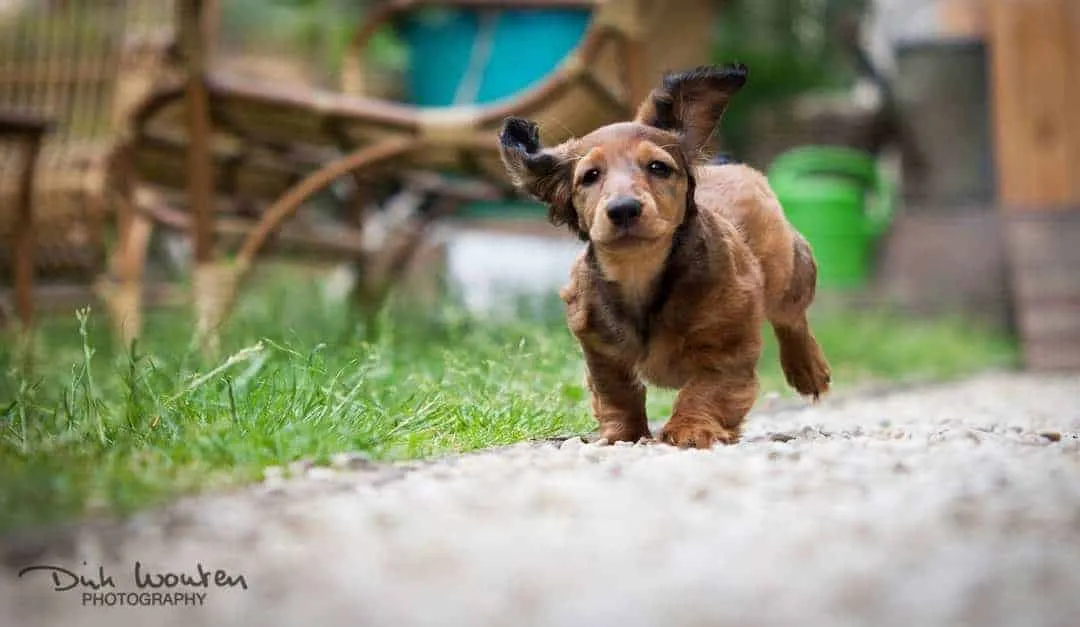
Physical characteristics and grooming
A miniature dachshund stands ~28 cm at the withers and weighs ~6.5 kg, with a body ~45 cm long. The breed is defined by that proportion rather than by its height: a long, muscular body on short legs, an elongated head carried high, and a deep chest that gave the dog the lung room for a fight underground.
One litter often holds both kaninchen and miniature dachshunds, and the size is only settled once the dog is adult. Coat and colour say nothing about size: kaninchen, miniature and standard dachshunds come in the same coats and colours.
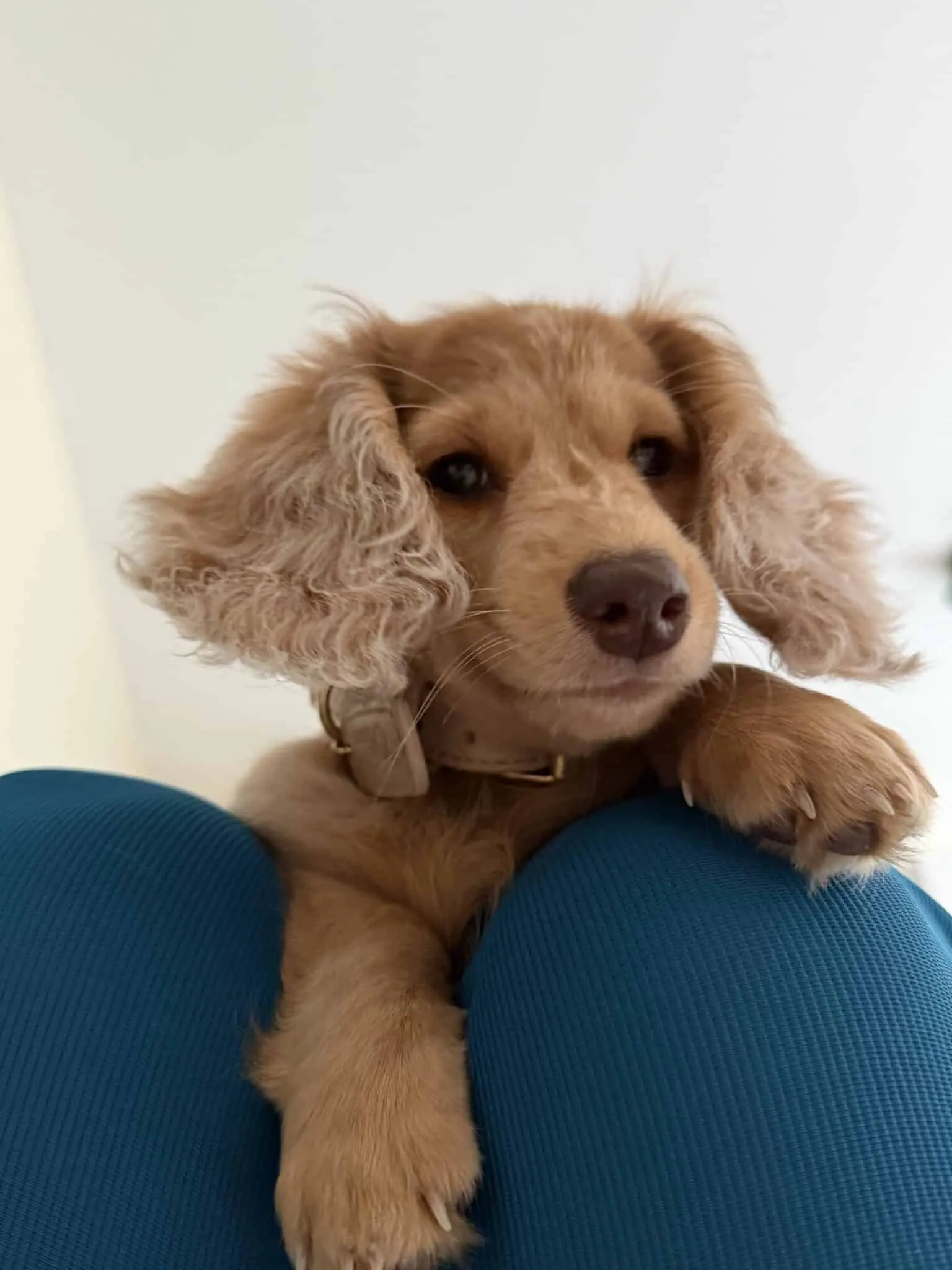
The long coat is the difference that gives this variety its name. It is soft and slightly wavy, longest on the ears, the chest, the underside of the body and the back of the legs, and it needs combing or brushing every day.
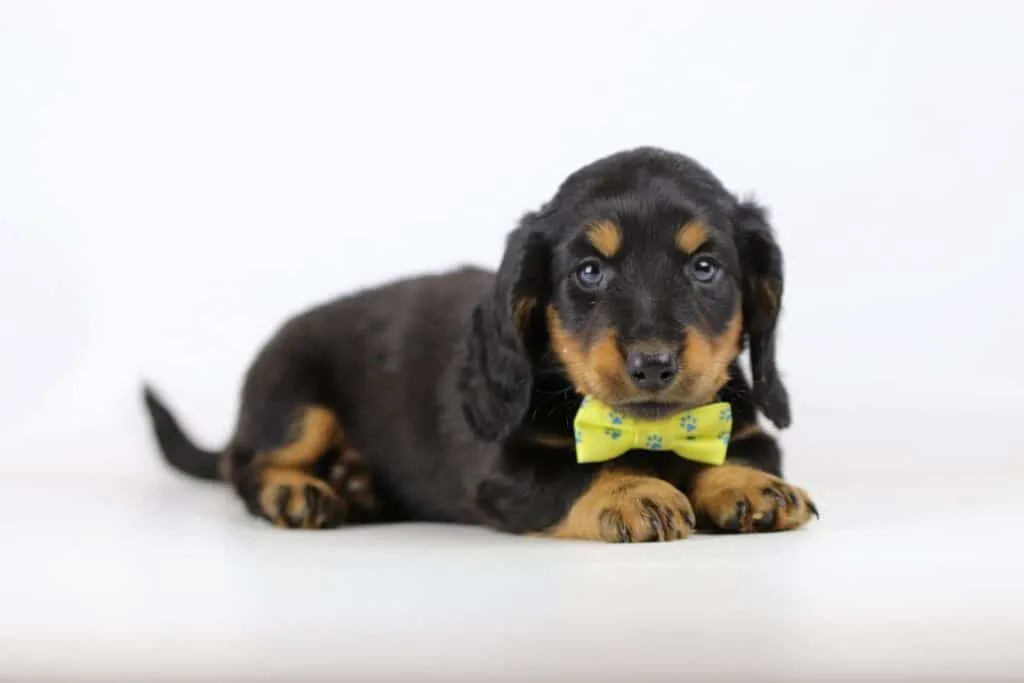
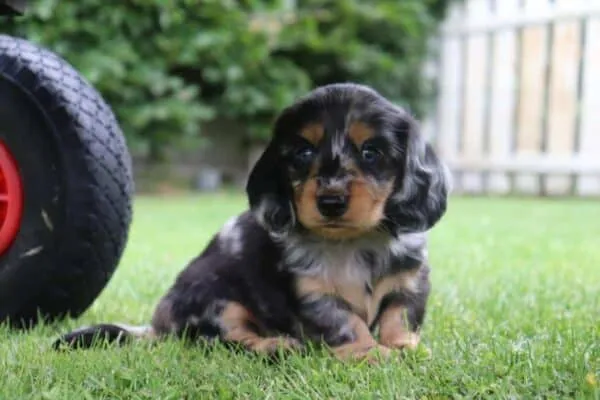
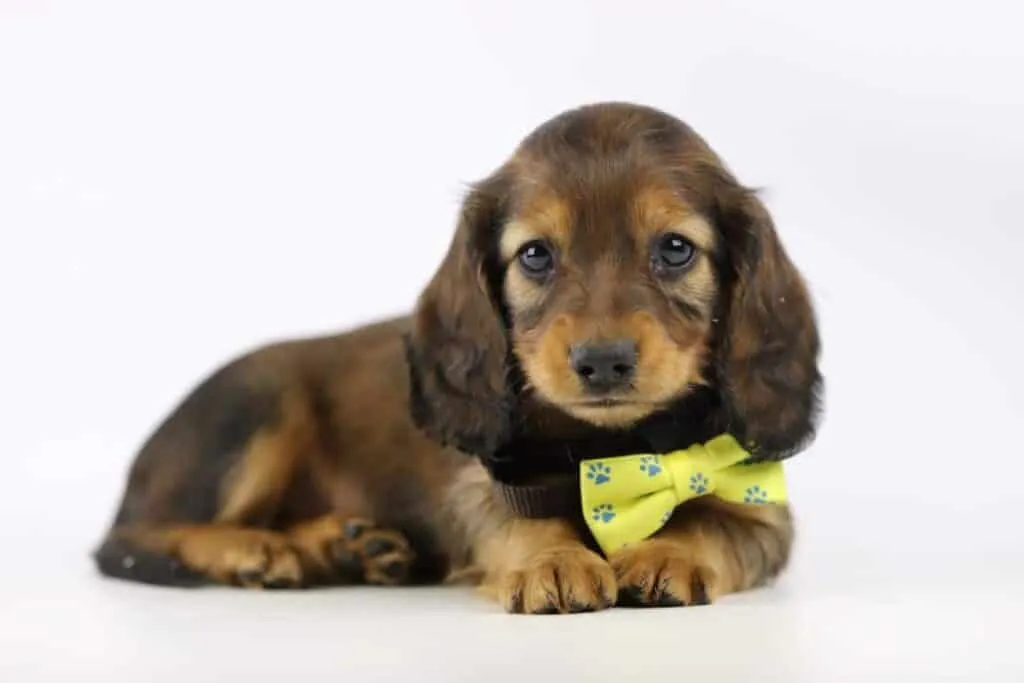
The breed standard recognises solid red or yellow, black or brown with tan markings, and dapple or brindle.
Dapple (merle) is a dark base colour with lighter patches. Two dapple parents can produce double dapple puppies, which have a high risk of deafness and eye defects, so dapple should never be mated with dapple.
The ears are long and hang against the cheeks, the eyes are oval and dark, and the teeth meet in a scissor bite with notably strong canines. The feathering on a long-haired dachshund catches burrs and mud, so the ears and the underside are worth checking after a walk through anything rough.
| Characteristic | Dwarf | Kaninchen | Standard |
|---|---|---|---|
| Chest circumference | ~33 cm | Up to 30 cm | Over 35 cm |
| Weight | ~6.5 kg | ~4.5 kg | Up to 9 kg |
Chest circumference from the FCI breed standard, measured from 15 months. The standard gives a weight only for the standard dachshund, up to about 9 kg; the other weights are Woefkesranch guidelines.
Comparison of the long-haired, the wire-haired and the short-haired miniature dachshund
| What differs |  Long-haired | 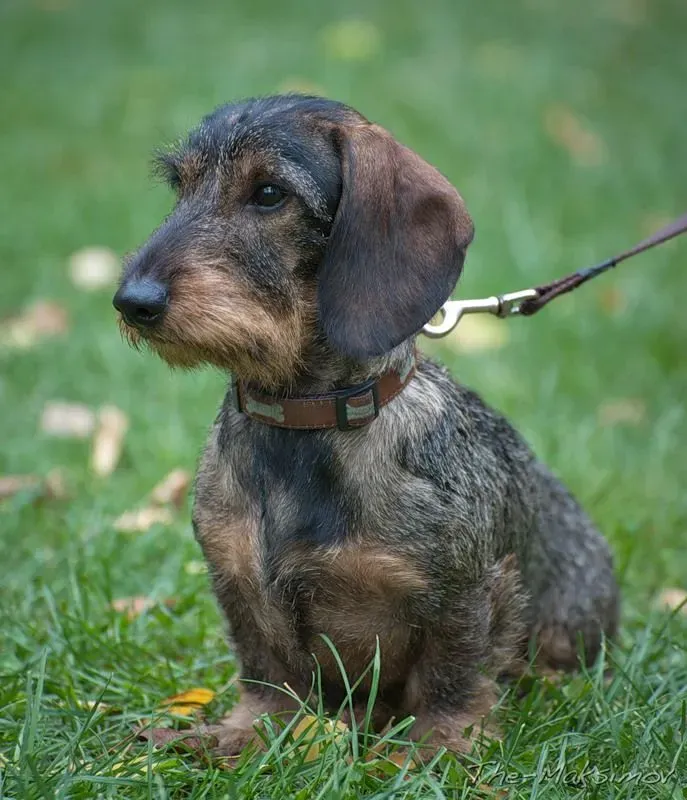 Wire-haired | 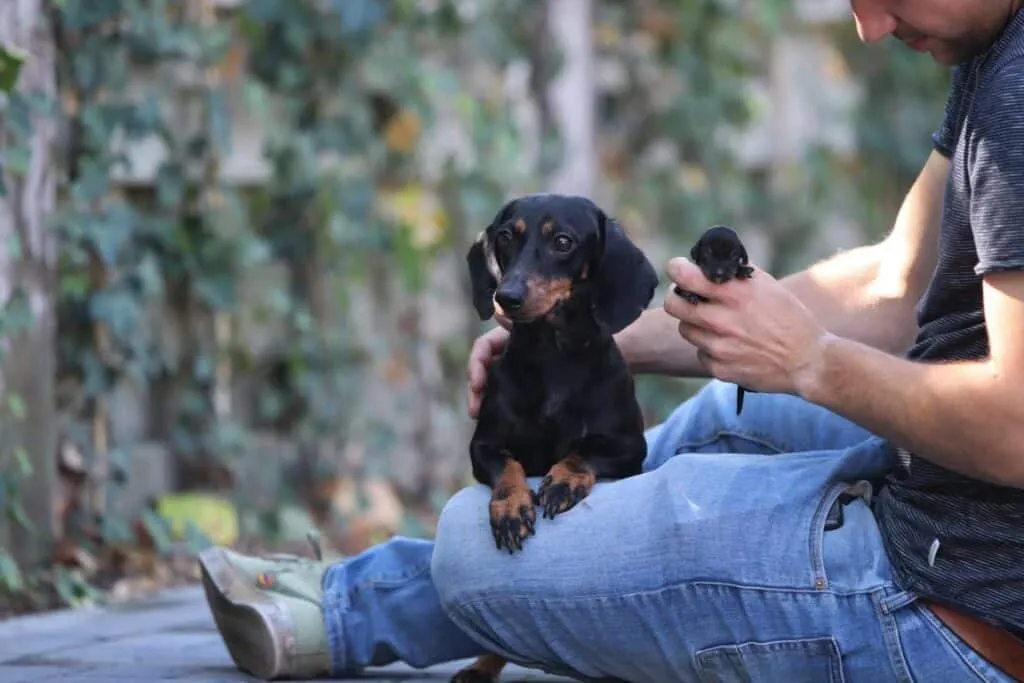 Short-haired |
|---|---|---|---|
| Origin | Created by crosses with the Cocker Spaniel and the Stöberhund | Created by crosses with the Dandie Dinmont Terrier and other terriers | The breed’s original coat, for which the German breed club was founded in 1888 |
| Coat and grooming | Long, soft and slightly wavy, with feathering on the ears, chest and legs. Combing or brushing every day, no regular trims | Hard and close-lying, with a beard and eyebrows. Brushing weekly and the groomer twice a year | Short, dense and close-lying. Brushing weekly, no trims |
| Character | Calm and gentle in the house | Spirited, energetic and outgoing | Openly affectionate with its own family |
Everything else is the same dog: the size (~28 cm and ~6.5 kg), the long back, the life expectancy and how it learns do not change with the coat. The character descriptions are Woefkesranch’s own, from years of breeding all three.
Personality and Temperament
The long-haired dachshund is a calm, gentle dog in the house, sociable with its own family and a good watchdog. The long coat came from a spaniel cross, and the temperament came from the spaniels too.
Dachshunds are sociable family dogs and good watchdogs, but they are hunting dogs with real endurance underneath that. This is not a naturally obedient breed. It is intelligent, resourceful, curious and brave, and it will work out what it wants and then work out how to get it.
They are at their best with older children and generally get on well with other pets, though they are quick to become jealous and can bite when irritated. A dachshund will act wonderfully to get its way and will deliberately seek eye contact while doing it. Grown up, it becomes a very loyal dog.
Health and Nutrition
The long back that makes a dachshund a dachshund is also its weak point. The breed is known for spinal problems, so this is not the dog for a house full of stairs, it should not be allowed to jump on and off furniture, and its weight has to be watched. A dachshund gains weight quickly and should not be overfed.
The spinal condition behind this is intervertebral disc disease (IVDD), in which a disc between the vertebrae bulges or ruptures, and up to a quarter of dachshunds are affected. Besides the back, the condition to watch is patellar luxation, a kneecap that slips out of place.
Protect the back in daily handling as well: walk it on a harness rather than a collar, give it ramps to the sofa, bed and car, and when you lift it, support both the chest and the hindquarters.
Ask a breeder what the parent dogs were tested for, and ask to see the results rather than taking the answer on trust. A long-haired dachshund also needs its ears checked regularly: the long feathering on them traps moisture and debris in a way the smooth coat does not.
A dachshund lives ~14 years, which is a long commitment for a small dog. They suit apartment living, are quite active indoors and manage without a garden, but they are active dogs with surprising endurance and they want a proper walk or a game in the park every day.
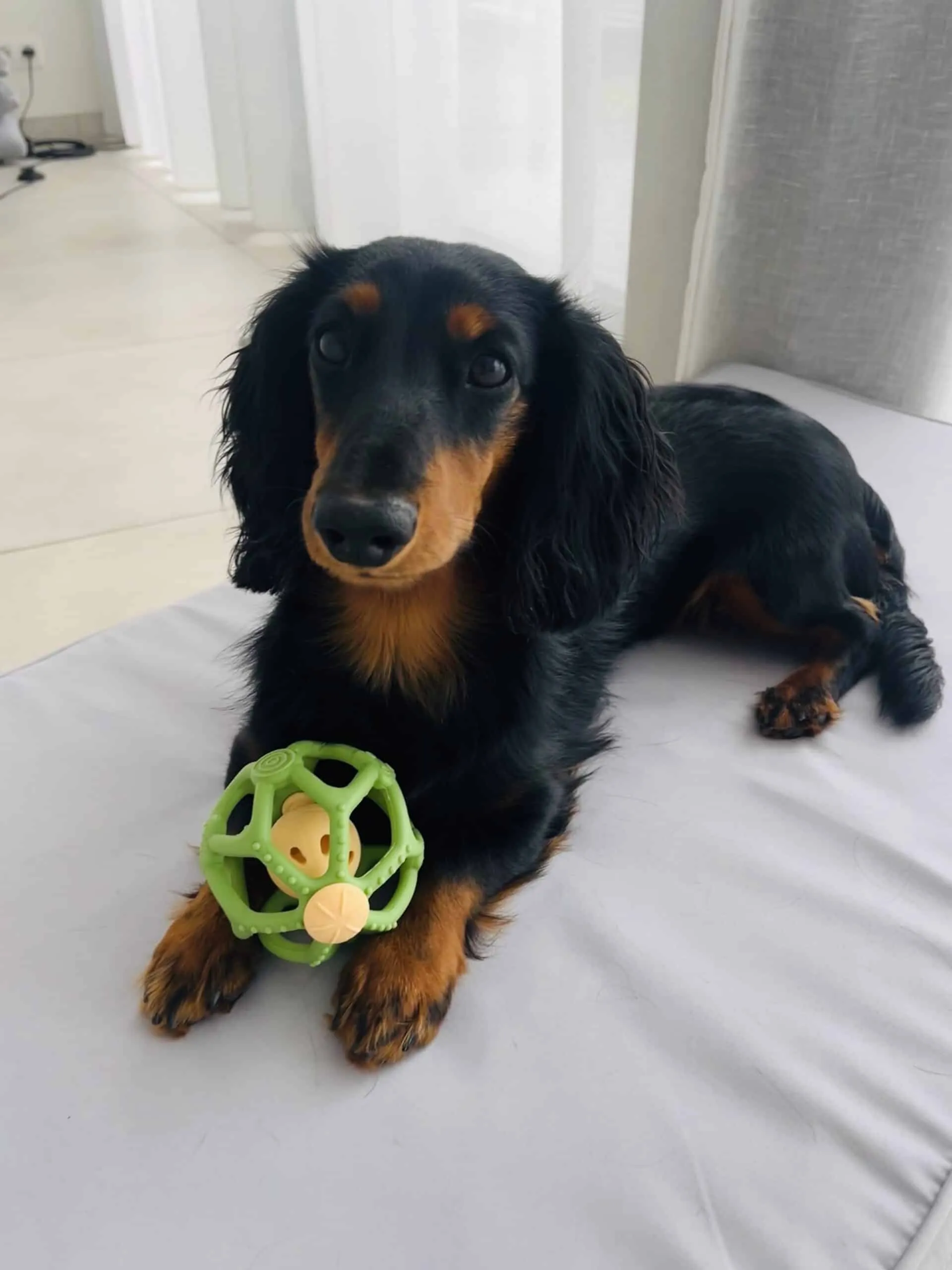
Training and Exercise
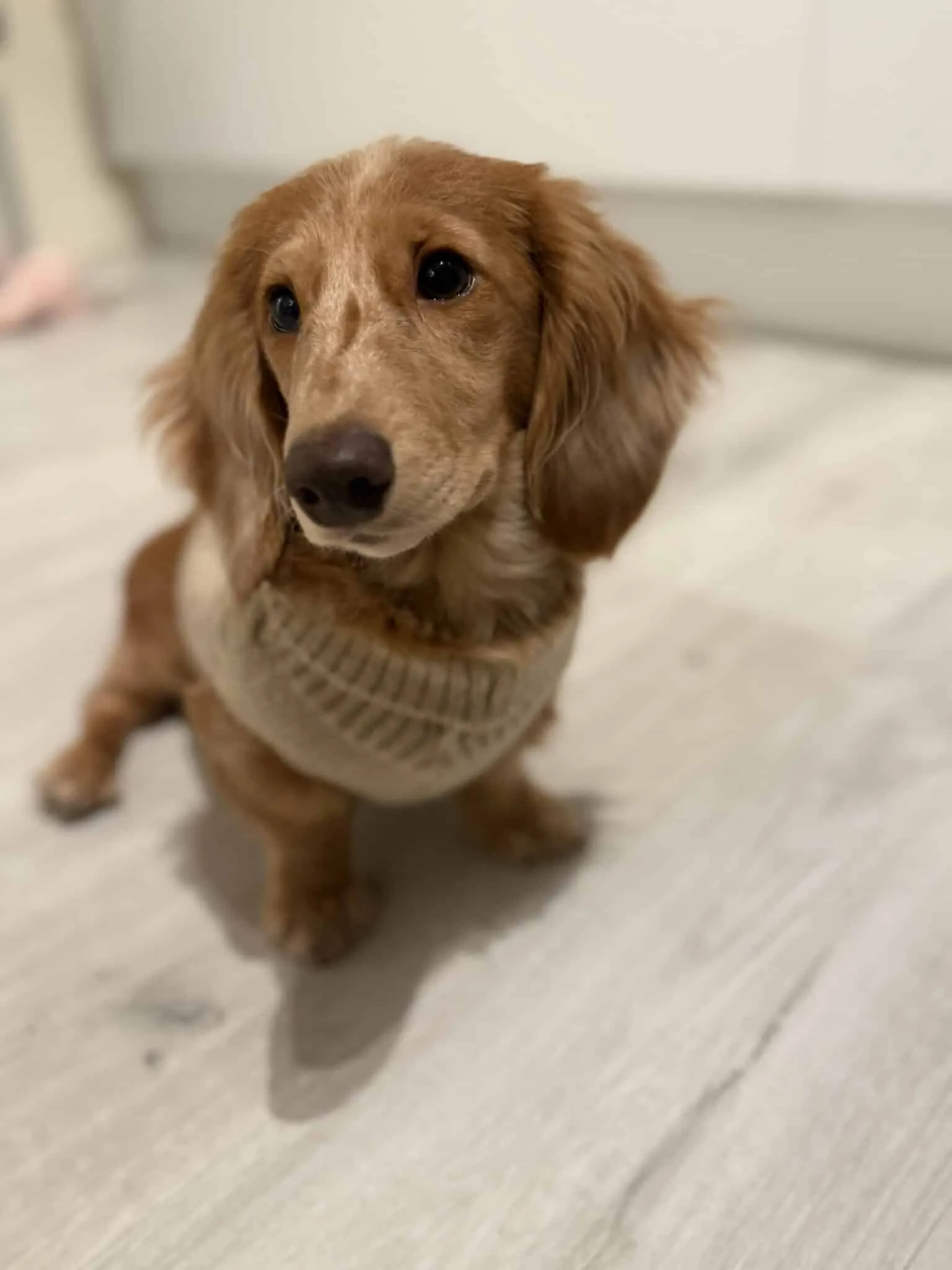
A dachshund is intelligent and perfectly trainable, and it is also not naturally obedient, which is a different thing from being stupid. It was bred to go down a hole alone and make its own decisions, and that independence is still there. Obedience training works; expecting instant compliance does not.
A puppy course is worth doing. Start early, keep sessions short, and reward what you want rather than correcting what you do not, because a dachshund that decides a session is a battle will simply out-stubborn you. Consistency from everyone in the house matters more than the length of any one session.
Socialisation counts most between about 3 and 14 weeks: let the puppy meet different people, surfaces, sounds and places in that period.
Crate training is worth the effort with this breed, both as a house-training tool and as a way of protecting the back: a crate gives the dog somewhere to settle instead of launching itself off the sofa. Choose one long enough for the dog to lie fully stretched out, which for a miniature dachshund matters more than the height.
Choosing and caring for your Long-haired Miniature Dachshund
Choosing the right breed and breeder
The long back brings spinal problems with it, which makes a dachshund a poor choice for a house with many stairs. It is worth settling that question about your own home before any other.
A dachshund is not naturally obedient, but with the right obedience training it learns well, and a puppy course is worth doing. If you are after the long coat and the calmer, gentler temperament of this variety rather than a dachshund in general, a breeder is the way to get it.
Buying a dachshund is a big step whichever of the three coats you choose. A dog from a shelter can be an option, but if you are looking for the specific characteristics of the breed, a breeder is the better route.
We choose our males as small as possible and our females not too narrow, to avoid difficult births. A puppy from one litter can therefore grow into a kaninchen or a miniature dachshund. You sometimes hear that a kaninchen dachshund is feistier or more stubborn than a miniature. There is no evidence for that: the breed standard describes the same character for every size, and with us both come from the same litters.
Essential daily care
Caring for a Long-haired Miniature Dachshund means committing to a daily routine that addresses their grooming, feeding, exercise and health needs.
For optimal daily care, focus on these key points:
Coat
Long, soft and slightly wavy. Comb or brush it every day, and check the feathering after a walk through anything rough.
Back
No stairs if you can avoid them, no jumping off furniture, and keep the weight down. The long back is the breed’s weak point.
Food
Measured meals. This breed gains weight quickly, and every extra kilo lands on that back. A quick check: you should feel the ribs easily without pressing. If you cannot, the dog is overweight. A small mouth crowds the teeth, which makes dental disease common: brush the teeth two to three times a week, or give dental chews.
Exercise
A proper walk or a game in the park every day. They manage without a garden, but not without the walk. In practice that is two walks of 20 to 30 minutes a day, without jumping or sudden turns; swimming is a good low-impact way to build the muscles that support the back.
Regular veterinary visits are essential to monitor health, contributing to a longer lifespan for your Long-haired Miniature Dachshund. If you are considering getting a puppy, it is important to recognize a good breeder.
Recognised family business since 1990, now in its second generation
We are a recognized breeder of Long-haired Miniature Dachshund puppies in Belgium. Our ranch is in Putte (near Mechelen), between Brussels and Antwerp, about 40 kilometers from Brussels, 30 kilometers from Antwerp and 80 kilometers from Ghent. Our puppies are socialized on the ranch through contact with our caretakers and with other dogs and puppies. Woefkesranch has been a family business since 1990 and is now in its second generation. Every puppy is born in our own kennel under permanent supervision, with no imports and no middlemen. Families are guided before the purchase and are welcome back with their questions long afterwards.
Delivery to your door in and around Brussels, Cologne, Amsterdam, Rotterdam, Düsseldorf, Essen, The Hague…
If you have no transport, someone from Woefkesranch brings your puppy to your home, up to 250 km from Putte. Approximately: Hasselt 60 km, Charleroi 80 km, Mons 100 km, Liège 110 km, Bruges 120 km, Rotterdam 120 km, The Hague 150 km, Düsseldorf 180 km, Amsterdam 190 km, Cologne 190 km, Essen 220 km.
Frequently Asked Questions
What is distinctive about a long-haired dachshund?
The coat and the temperament, and the two are connected. The variety was created by crossing dachshunds with the Cocker Spaniel and the Stoberhund, and both of those are gentle-tempered breeds. There are three coat varieties in the breed.
How much grooming does the long coat need?
Combing or brushing every day. The feathering on the ears, chest and legs catches burrs and mud, so it is worth checking after a walk through long grass or undergrowth.
How big does a miniature dachshund get?
~28 cm at the withers and ~6.5 kg, with a body ~45 cm long. The standard dachshund is larger at ~35 cm and up to 9 kg, and the Kaninchen is smaller again at ~25 cm and ~4.5 kg. All three come in all three coats.
Are dachshunds difficult to train?
They are intelligent and perfectly trainable, but they are not naturally obedient. The breed was made to work alone underground and decide for itself, and that independence is still there. Short sessions, rewards rather than corrections, and a puppy course all help.
What should I know about the dachshund’s back?
It is the breed’s weak point. Spinal problems are common, so avoid a house full of stairs, do not let the dog jump on and off furniture, and keep its weight down. Dachshunds gain weight quickly, and every extra kilo is carried by that long back.
Is a dachshund suitable for a flat?
Yes. They suit apartment living, are quite active indoors and do fine without a garden. What they do need is a real walk or a game in the park every day, because they are active dogs with surprising endurance.
Come and see
Make an appointment
Do you want to visit our puppies? You can also make an appointment.
- 100% Belgian puppies
- Professional statutory warranty
- 24/7 service after sale
- Puppies have all necessary vaccines
- Puppies are dewormed multiple times
- Chipped and with Belgian/European passport
- DNA-tested parents