Cockapoo puppies & breed info
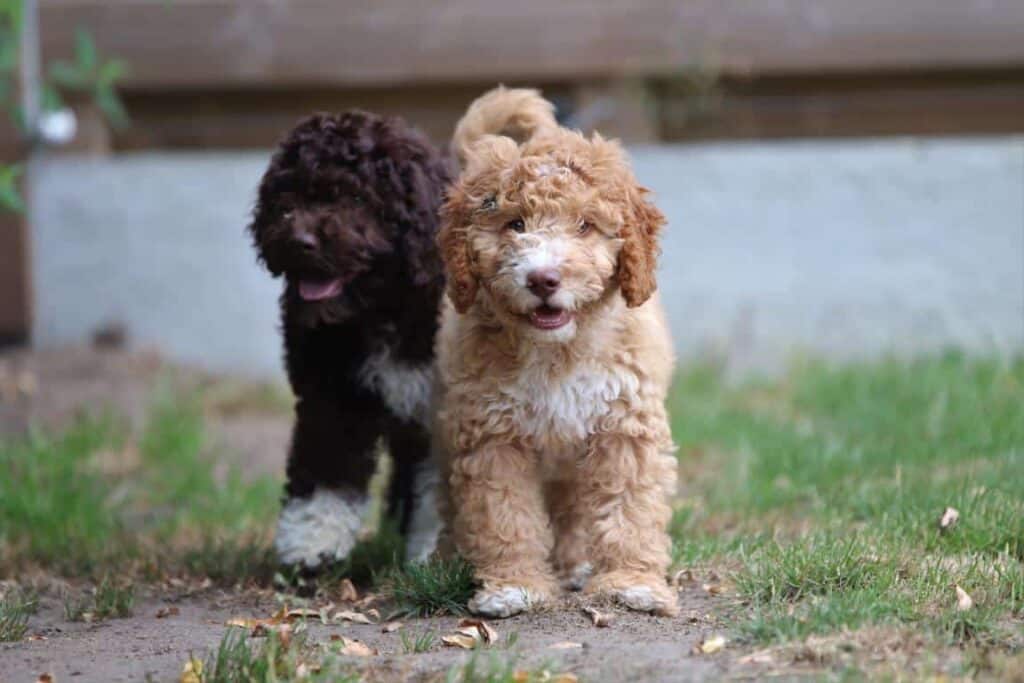
Available now
Click ‘Puppy alert’ to stay up to date on new Cockapoo and Spoodle litters.
Available Cockapoo and Spoodle puppies for sale


Available now
- Sproodle - Spoodle
- Weavy - Hypo-Allergique
- Born: 10 August 2026
- Mother: Jeanneke
- Father: Léo
- 🧬 DNA Checked
- 🇧🇪 Origin: our own kennel


Available now
- Sproodle - Spoodle
- Weavy - Hypo-Allergique
- Born: 10 August 2026
- Mother: Jeanneke
- Father: Léo
- 🧬 DNA Checked
- 🇧🇪 Origin: our own kennel


Available now
- Sproodle - Spoodle
- Weavy - Hypo-Allergique
- Born: 10 August 2026
- Mother: Jeanneke
- Father: Léo
- 🧬 DNA Checked
- 🇧🇪 Origin: our own kennel
Our usual process
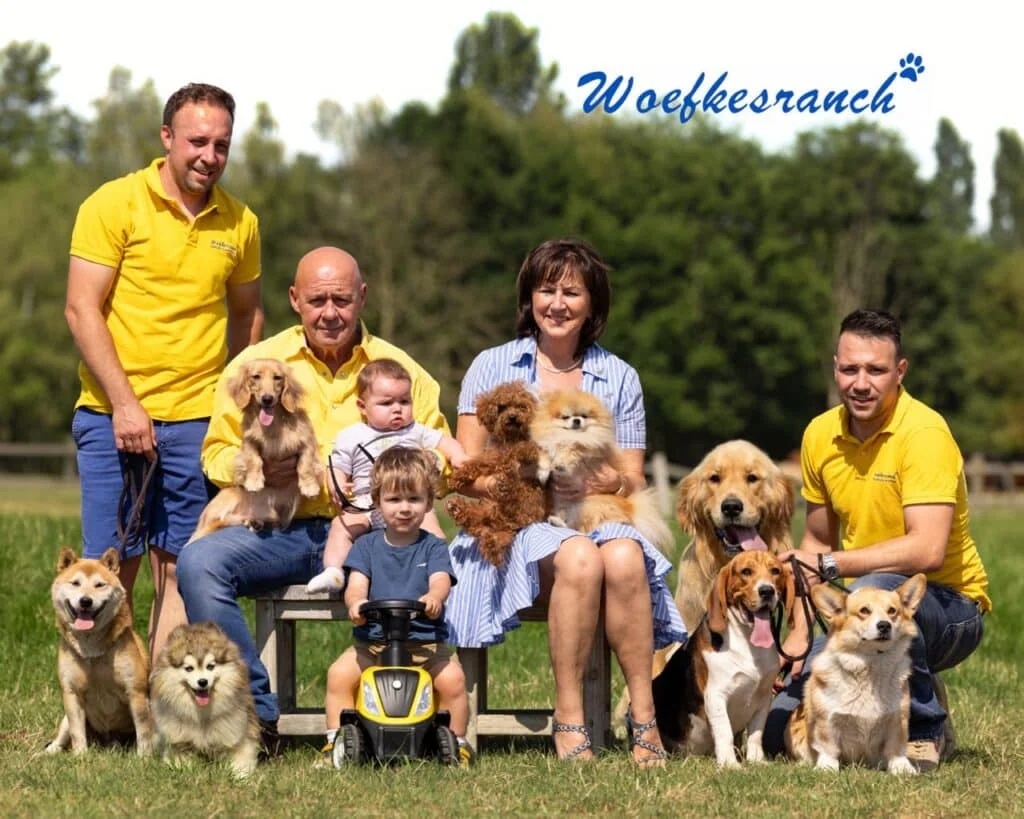
Buying a Cockapoo puppy from Woefkesranch – Belgian breeder since 1990
How it works:
- Meet the puppies (optional). Make an appointment to see the puppies with their mother, and to work out together which puppy suits your family.
- Reserve your puppy (optional). You can reserve online (24/7) or by phone on +32 (0)15 75 59 42. After reserving, you receive photos on request. If a puppy is already 8 weeks old, you can also take it home at your visit.
- Collection from us or home delivery. You can collect your puppy from 8 weeks old. It leaves microchipped, vaccinated, dewormed and with its European passport, and we register it in your name in DogID together. If you have no transport, someone from Woefkesranch brings your puppy to your home, within 250 km of our ranch in Putte (including the Netherlands, France, Luxembourg and Germany).
- 1-year guarantee. Every puppy has a 1-year guarantee on hereditary conditions and hidden congenital defects. We remind you about the first booster vaccination and deworming.
- Lifelong support. We remain available by phone or WhatsApp, also for training tips and health questions. For urgent matters we can be reached 24/7.

Written and reviewed by Marleen Dyck, co-founder of Woefkesranch
Character
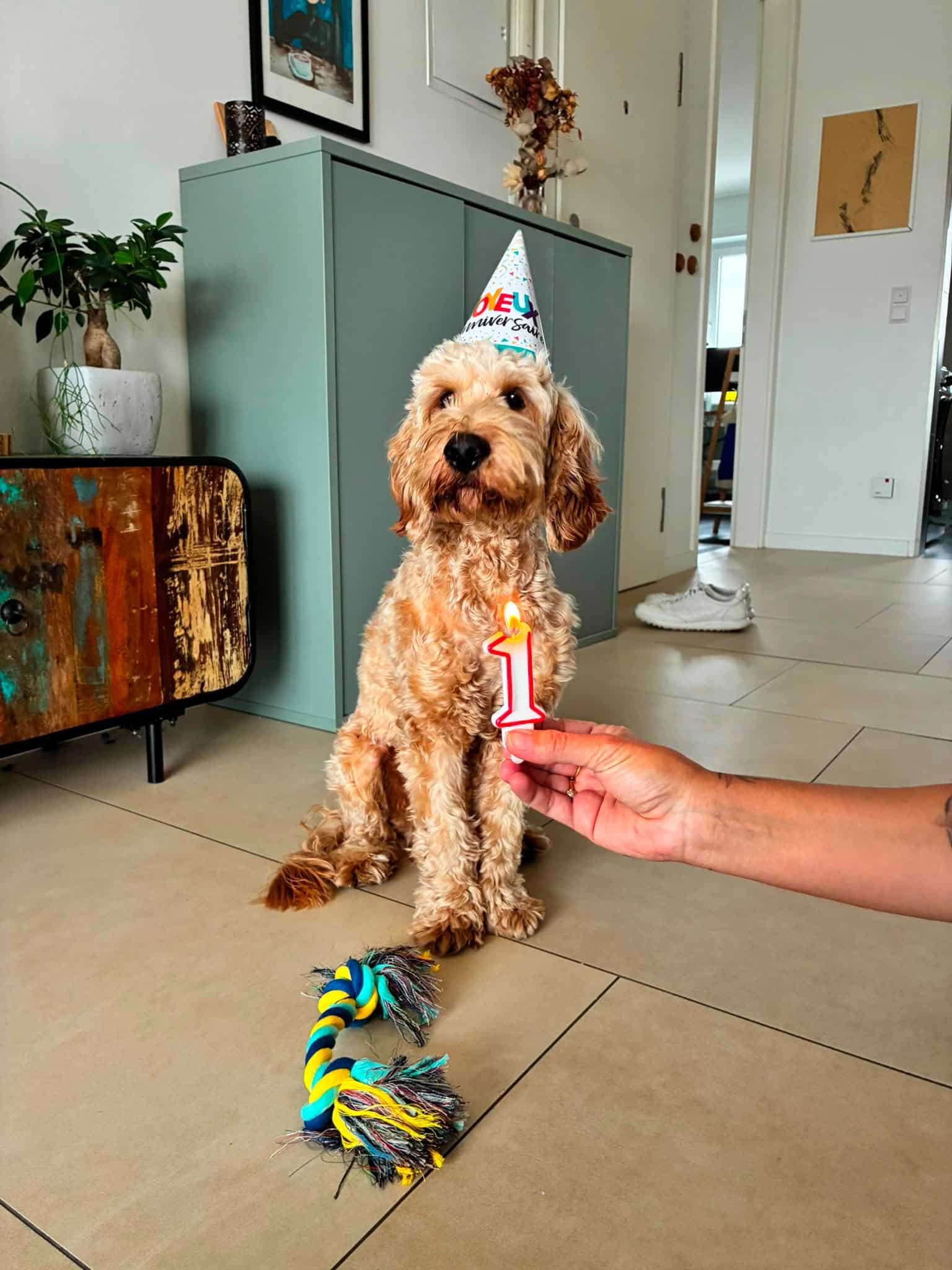
A cheerful, allergy-friendly dog that loves being with its people
Friendly, cheerful and quick to learn, with the Poodle’s intelligence and the Cocker Spaniel’s gentle nature. It gets on with almost everyone and wants company for most of the day.
What to expect
Companionable
Bred as a companion, and wants to be with you.
Quick to learn
Short training sessions with rewards work best.
Cheerful
Outgoing, and generally gets on with everyone.
Needs company
Prone to separation anxiety if left alone too long.
Height*
~36.5 cm
Weight*
~10 kg
Life expectancy
~14 years
Origin
United States, 1960s
*The sizes above are guide values for this breed. Woefkesranch aims for them, but the health of the dogs always comes first.
Breed summary
You will discover that the Cockapoo is a companion dog first, bred in the United States from the 1960s to put the intelligence of a Poodle together with the gentle nature of a Cocker Spaniel. A Spoodle is a different cross: a Poodle with a Springer Spaniel, where a Cockapoo is a Poodle with an English or American Cocker Spaniel. Because it is a cross rather than a standardised breed, the parent dogs decide more here than they would elsewhere, which is why it is worth asking a breeder what they tested for. You will need to brush the coat daily, check those long ears weekly, and accept that this is a dog that does not want to be left alone for long. Read on to see what this cross asks of you.
In five points
- The Cockapoo may be the first of the designer crosses, bred in the United States from the 1960s to put a Poodle’s intelligence together with a Cocker Spaniel’s gentleness.
- Because it is a cross and not a standardised breed, the parent dogs decide the temperament, so what a breeder tested for matters more here than in a breed with a fixed standard.
- A cross without a standard varies more than a pedigree breed does, so the figures are an average rather than a rule: ~36.5 cm and around ~10 kg.
- The single coat runs from straight to soft curls, barely sheds, and needs daily brushing plus a trim that never goes shorter than five centimetres.
- This is a dog that does not cope well with being left alone, so early socialisation and short practice absences matter from the first week.
History and origin
The Cockapoo may be the first of the designer dogs, dating back to the 1960s. The first breeding may have been accidental, but the result was a litter of intelligent, almost odourless puppies with a coat that is not prone to shedding, carrying the easygoing and affectionate temperament of the Cocker Spaniel. Those puppies became popular and the Cockapoo line began.
In the United States, efforts are still underway to establish breed standards and put the Cockapoo on the difficult path to becoming a true breed, one that produces offspring with consistent characteristics. It is one of the few designer crosses that is still not bred on a large scale.
The Cockapoo Club of America was founded in 1999 and wrote a breed standard to bring consistency to breeding. It promotes breeding multi-generational Cockapoos together rather than creating new first generations, because that helps puppies keep the traits that do not appear in every first-generation dog.
Physical characteristics and grooming
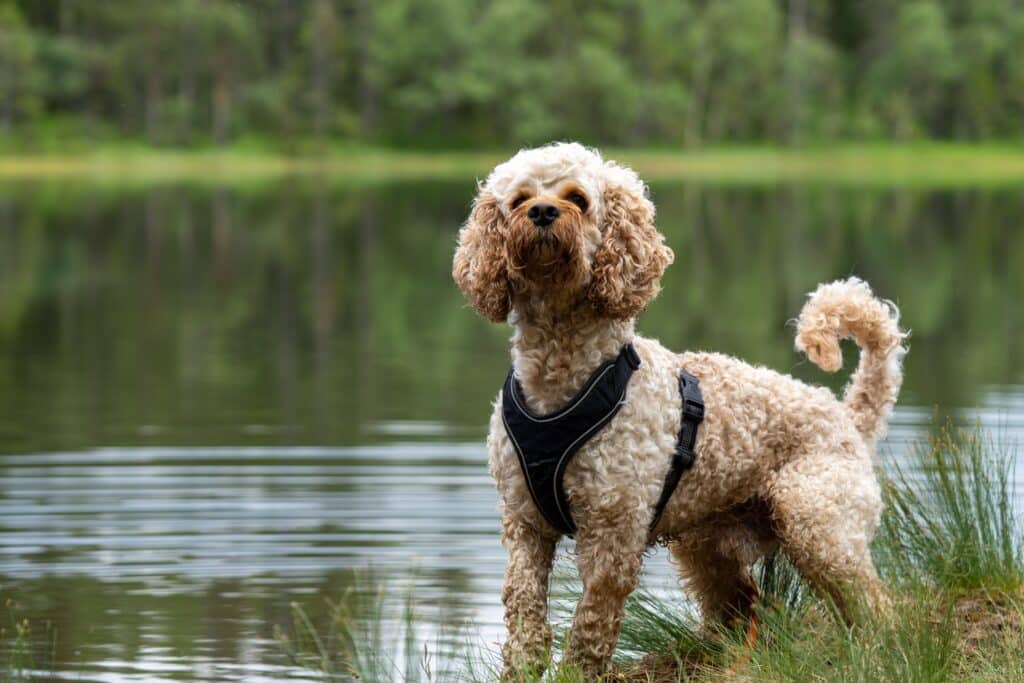
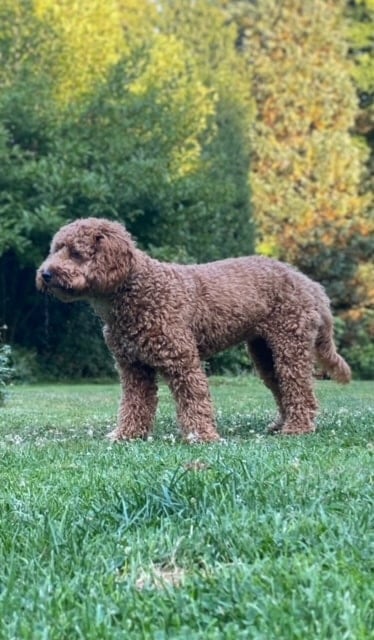
An adult Cockapoo stands ~36.5 cm and weighs ~10 kg, which places it between a miniature Poodle and a Cocker Spaniel. Because it is a cross without a standard it varies more than a pedigree breed, so treat those figures as typical rather than exact. It is a flexible dog that can live in an apartment, though the smaller ones adapt to one better.
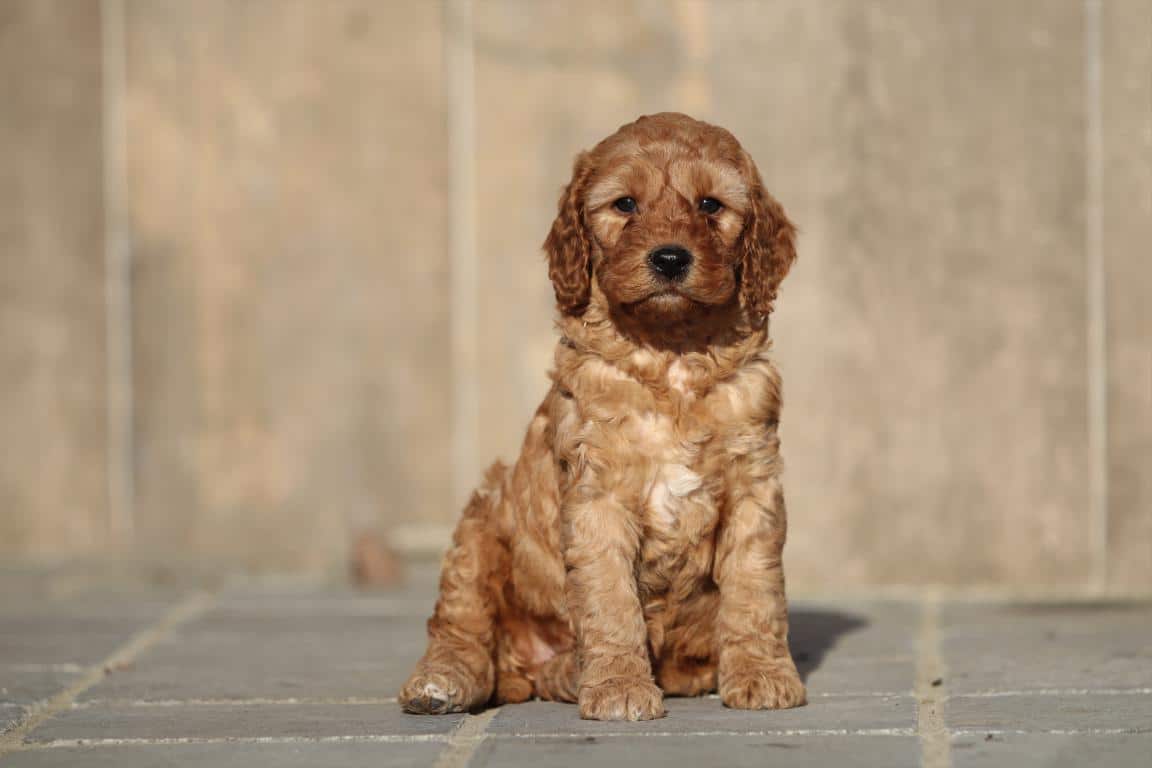
The coat is single-layered and long, ranging from straight to soft curls, and it should not be wiry. Cockapoos come in every colour and combination found in both the English Cocker Spaniel and the Poodle, a wider range of shades than most breeds offer.
The coat is usually left natural, though many owners like to trim it, and it should only be shortened to five to seven centimetres. Cut the hair around the eyes so the dog can see properly, brush the coat daily, and bathe only when it is really necessary, because bathing strips the oils the coat needs.
Because the long Cocker ears block airflow, check and clean them weekly to prevent ear infections. Wipe away only the visible earwax, with a pad soaked in a solution your vet recommends, and never put anything into the ear canal.
Hypoallergenic: all breeds at Woefkesranch
A purebred coat is known in advance, while a cross can take after either parent. The low shedding depends on the coat being kept up, so grooming is needed whichever you choose. Where an allergy is a real concern, spend time with the individual puppy before deciding.
| Characteristic | Cockapoo | Lagotto Romagnolo | Labradoodle | Maltipoo | Miniature Poodle | Maltese |
|---|---|---|---|---|---|---|
| Height | ~36.5 cm | ~44.5 cm | ~48.5 cm | ~28 cm | 28–32 cm | ~22.5 cm |
| Weight | ~10 kg | ~13.5 kg | ~20 kg | ~5 kg | 5–7 kg | ~3.5 kg |
| Hypoallergenic | Not always, depends on the parents | Always | Not always, depends on the parents | Usually, both parent breeds are low-shedding | Always | Always |
| Coat care | Brush daily, trim every 8 to 10 weeks and never shorter than 5 cm | Brush twice a week, trim every 6 to 8 weeks | Brush several times a week, groomer every 8 to 12 weeks | Brush weekly, professional trim every 6 to 8 weeks | Comb regularly, professional trim every 2 to 3 months | Comb weekly, trim once or twice a year |
| Breed origin | Cocker Spaniel and Poodle | Purebred, from Italy | Labrador Retriever and Poodle | Maltese and Miniature Poodle | Purebred, from France | Purebred, from Malta and Italy |
Comparison of the Cockapoo and the Labradoodle
| What differs | Cockapoo | 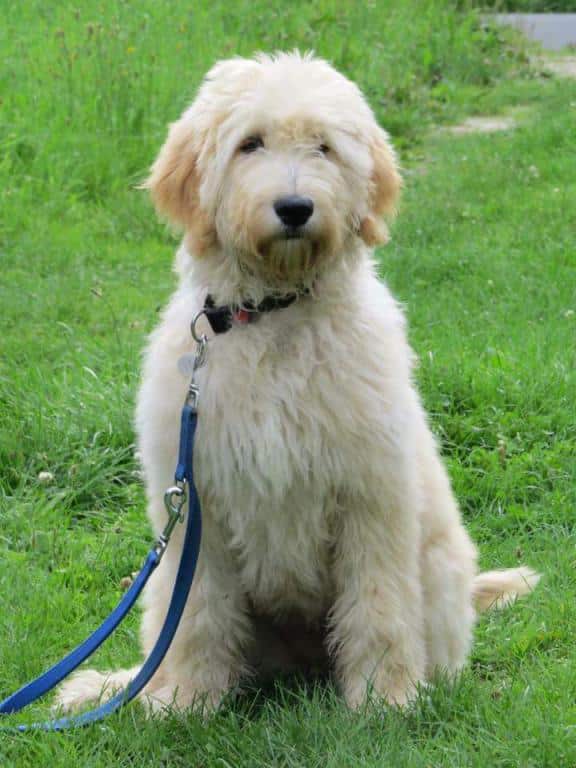 Labradoodle |
|---|---|---|
| Origin | An English or American Cocker Spaniel crossed with a Poodle, bred in the United States from the 1960s as a companion dog | A Labrador crossed with a standard Poodle, bred in Australia in 1989 as a guide dog |
| Size | Small: on average ~36.5 cm and ~10 kg | Three sizes. A mini (~39 cm, ~11 kg) is about the same size as a Cockapoo; a medium (~48 cm, ~19 kg) and a large (~58 cm, ~30 kg) are clearly bigger |
| Character and energy | Happiest close to its people. A daily walk and some play are enough for it | Happiest when it gets to do something together with its people. Needs plenty of exercise and mental work every day, such as fetching or search games |
The two are related: the English and the American Cocker Spaniel were later also crossed into the Labradoodle, the same Spaniels the Cockapoo descends from. Both are Poodle crosses without an official standard. Their coat sheds little, needs regular brushing and a trim every 8 to 12 weeks. At Woefkesranch, the parents of both are tested where needed for hips, elbows, kneecaps and eyes, and DNA-tested.
Personality and Temperament
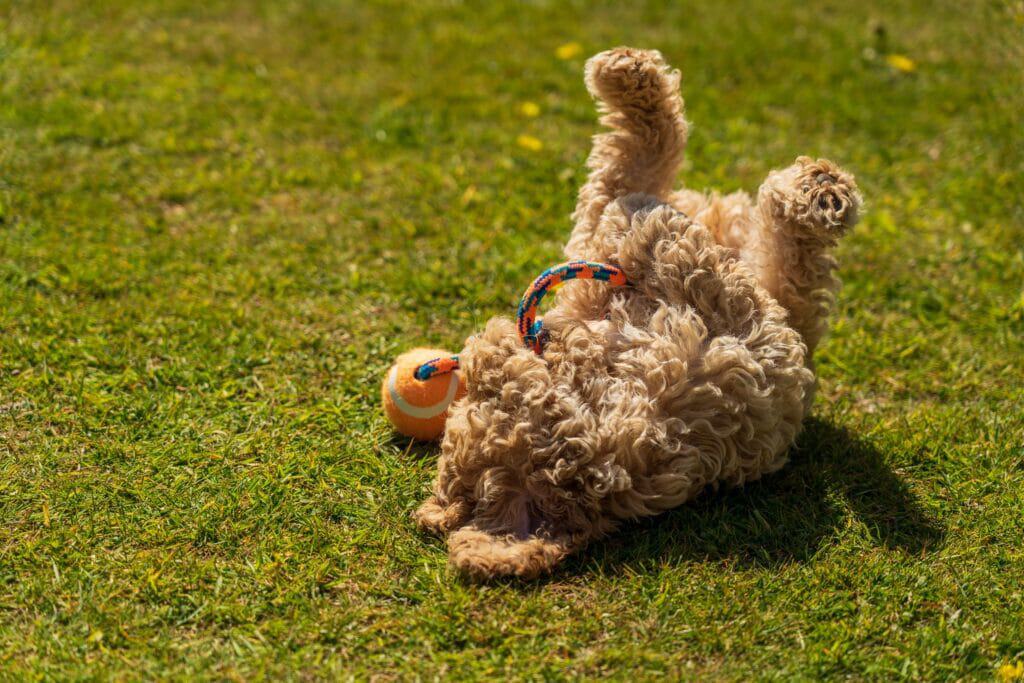
Intelligent and easy to please, the Cockapoo was developed as a companion dog. It is friendly and very cheerful, has an outgoing nature and generally gets along with everyone. Depending on its temperament it can be active, or simply curl up on the sofa next to you.
It has the intelligence of its Poodle ancestors and the gentleness inherited from its Cocker Spaniel side. If the parents do not have the affectionate quality expected of a Cockapoo, their puppies will not have it either, which is why the parent dogs matter more here than in a breed with a fixed standard.
Most Cockapoos have a moderate energy level, which does not mean they will laze around all day. They enjoy a good walk and need exercise to avoid putting on weight, and the best exercise of all is a proper play session in the garden.
They prefer to be close to their family at all times and can suffer from separation anxiety if left alone too long, which shows itself as excessive barking and destructive behaviour. Accustom a puppy to being alone regularly, in short sessions, from the start.
Health and Nutrition
A Cockapoo inherits a genetic legacy from both its parents, so the choice of breeder decides a great deal about the dog you end up with. In crosses like this, hip dysplasia, eye problems and skin allergies occur more often, and a reliable breeder tests the parents for them.
The breed also has a predisposition to ear infections, which comes from the Cocker Spaniel side and its long, airflow-blocking ears, and to patellar luxation. Good breeders screen the parent dogs for both. Ask to see which health tests the parents have had, and ask for the certificates rather than taking the answer on trust.
Keep a Cockapoo in good condition by measuring its food and feeding it twice a day rather than leaving a full bowl down. If you are not sure whether it is carrying too much weight, look at it from above for a waist, then put your hands on its back with your thumbs along the spine. You should feel the ribs without seeing them and without pressing hard.
Training and Exercise
Both of the Cockapoo’s parent breeds are intelligent, and it learns readily, but it learns in its own way: short sessions with plenty of rewards work far better than long ones. Positive reinforcement is the method that suits this cross, and with time and patience a Cockapoo reaches a high level of obedience.
Start socialising early. Take a puppy to markets, playgrounds and other dogs, so it grows into a confident adult rather than a nervous one. Early socialisation is also what prevents the separation anxiety this cross is prone to.
Professional training is usually not necessary for this breed, and experienced owners generally train a Cockapoo themselves. A few group sessions covering basic obedience and socialisation are still a good idea, particularly for a first-time owner.
Crate training is worth the effort. A crate stops accidents in the house, gives the dog somewhere of its own to nap, and makes travelling or a stay at the vet far less frightening later. It is not a place to leave a dog all day: a Cockapoo is a companion dog and belongs with its family.
Choosing and caring for your Cockapoo
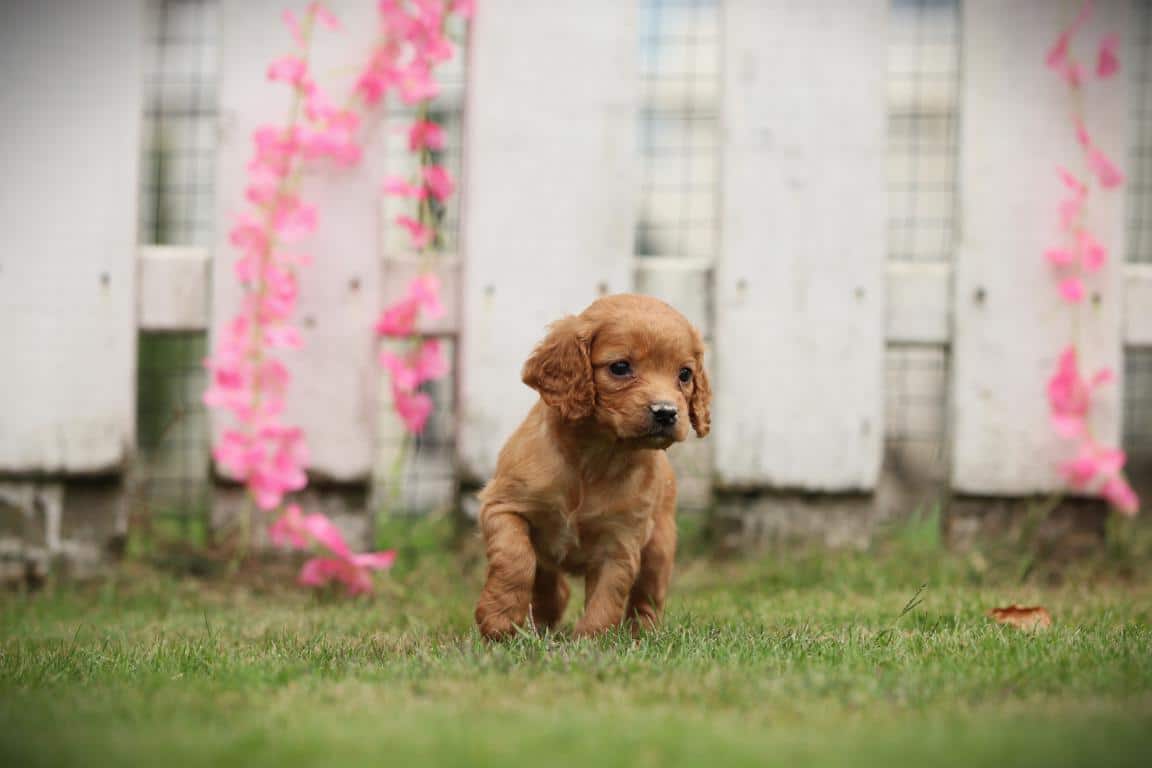

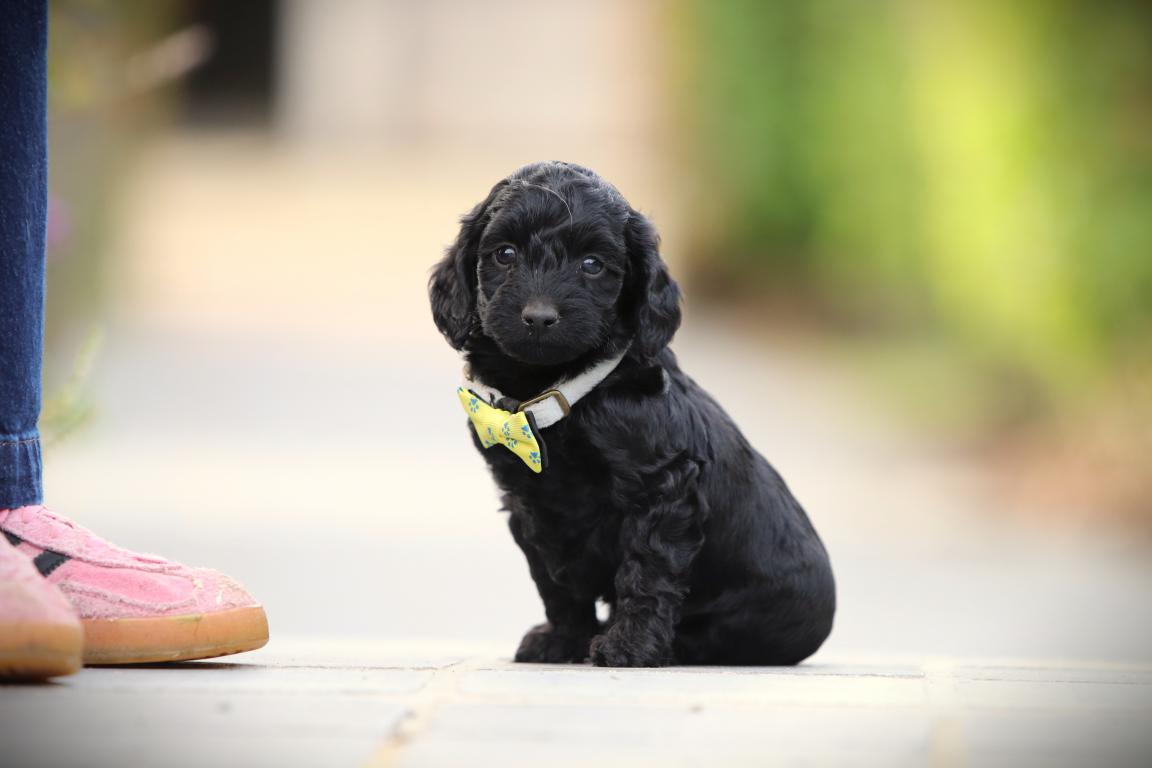
Is this the right breed for you?
The Cockapoo gets along well with children, though it generally prefers families with older, more attentive ones. It also gets along with other dogs and with other pets. We raise Spoodles alongside them. A Spoodle is also a Poodle and Spaniel cross, and it behaves the same way with children and with other pets.
As with every breed, teach children how to approach and touch a dog, and supervise any interaction between a dog and a young child, so that neither one gets bitten and no ears or tails get pulled.
Teach a child never to approach a dog while it is eating or sleeping, and never to try to take its food away. No dog, however friendly, should be left alone with a child.
Essential daily care
Caring for a Cockapoo means committing to a daily routine that addresses their grooming, feeding, exercise and health needs.
For optimal daily care, focus on these key points:
Coat
Single-layered and barely shedding, but it wants brushing daily and a trim that stops at five to seven centimetres.
Ears
Long Cocker ears block airflow. Check and clean them weekly, and never put anything into the ear canal.
Food
Measured meals twice a day rather than a full bowl left down, with the amount set by size and activity.
Company
This cross does not like being alone. Build up short absences from the first week, before it becomes a problem.
Regular veterinary visits are essential to monitor health, contributing to a longer lifespan for your Cockapoo. If you are considering getting a puppy, it is important to recognize a good breeder.
Recognised family business since 1990, now in its second generation
We are a recognized breeder of Cockapoo puppies in Belgium. Our ranch is in Putte (near Mechelen), between Brussels and Antwerp, about 40 kilometers from Brussels, 30 kilometers from Antwerp and 80 kilometers from Ghent. Our puppies are socialized on the ranch through contact with our caretakers and with other dogs and puppies. Woefkesranch has been a family business since 1990 and is now in its second generation. Every puppy is born in our own kennel under permanent supervision, with no imports and no middlemen. Families are guided before the purchase and are welcome back with their questions long afterwards.
Delivery to your door in and around Brussels, Cologne, Amsterdam, Rotterdam, Düsseldorf, Essen, The Hague…
If you have no transport, someone from Woefkesranch brings your puppy to your home, up to 250 km from Putte. Approximately: Hasselt 60 km, Charleroi 80 km, Mons 100 km, Liège 110 km, Bruges 120 km, Rotterdam 120 km, The Hague 150 km, Düsseldorf 180 km, Amsterdam 190 km, Cologne 190 km, Essen 220 km.
Frequently Asked Questions
Is a Cockapoo hypoallergenic?
No dog is. The single-layered coat sheds very little and a multi-generational Cockapoo is close to odourless, which is why the cross suits many households that react to other dogs, but every dog on the planet sheds at least a little.
How big does a Cockapoo get?
The average is ~36.5 cm at the withers and ~10 kg, which puts it between a miniature Poodle and a Cocker Spaniel. The cross has size varieties and no kennel club standard, so treat that as a range rather than a specification.
Can a Cockapoo be left alone during the day?
Not for long. This cross was bred as a companion and prefers to be near its family at all times, and left alone too long it can develop separation anxiety, which shows as excessive barking and destructive behaviour. Build up short absences from the first week.
How much grooming does a Cockapoo need?
Brush the coat daily. Trim it if you want to, but never shorter than five to seven centimetres, keep the hair around the eyes short enough to see through, and bathe only when it is really necessary, because bathing strips the oils the coat needs.
Which health problems should I ask the breeder about?
Hip dysplasia, eye conditions and skin allergies are more common in crosses like this, and the Cocker side brings a predisposition to ear infections and patellar luxation. Ask which tests the parent dogs have had and ask to see the certificates.
Is a Cockapoo easy to train?
Yes, for an owner who works in short sessions with plenty of rewards. Both parent breeds are intelligent and positive reinforcement suits the cross well. Professional training is usually unnecessary, though a few group classes covering basic obedience and socialisation are worth it for a first-time owner.
Come and see
Make an appointment
Do you want to visit our puppies? You can also make an appointment.
- 100% Belgian puppies
- Professional statutory warranty
- 24/7 service after sale
- Puppies have all necessary vaccines
- Puppies are dewormed multiple times
- Chipped and with Belgian/European passport
- DNA-tested parents