Bringing a puppy home is fun and brings a lot of life, but it also requires responsibility from the owner. Without proper training, the dog does not know what is expected of him. The puppy needs to learn to listen to basic commands, and it is important to properly toilet train him.
Toilet training is very important because dogs can be house-trained at any age, but puppies often learn faster than older dogs. Therefore, it is essential to raise your puppy well and pay attention to his toilet habits.
Although people are often more lenient with a puppy, it remains important to toilet train them on time. This helps maintain the dog’s hygiene and prevents unwanted situations in the house. Because small dogs cause small accidents and large dogs cause large accidents. Small dogs for example require different toilet training than larger breeds.
For more information about toilet training puppies and why it is so important, you can visit our website. Whether you have a Shiba Inu or a Beagle , we provide handy tips and guidelines for successful toilet training.
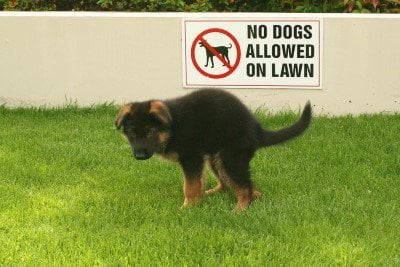
How to toilet train puppies?
Think about how the dog would see everything you do. When a puppy needs to pee or poop, it often just does it where it is. But then you come home angry because it has relieved itself inside. This can make the puppy think it needs to hold it in instead of going outside. This can lead to toilet training problems that you can prevent with good puppy potty training tips.
Understand what your puppy needs
It is important to understand when puppies need to pee or poop and only correct them at that moment. The best approach is to get a little angry, pick him up, and take him outside. By taking your puppy outside at the right time, he learns that he should pee outside.
Be careful with punishments
Some people say you should rub his nose in it, but make sure the dog doesn’t think it has to eat it. It’s important to be consistent and pay close attention to your puppy’s signals, so you can prevent accidents and solve toilet training issues. More information on the correct way to punish dogs can be found in our comprehensive guide.
Every puppy is different
Remember that every puppy is unique; what works for one dog might not work for another. If you’re unsure about potty training your puppy, ask advice from an experienced breeder or veterinarian. To find a reliable breeder, check out our tips on how to recognize a good dog breeder.
Punishment while he is doing it
You should punish your puppy while he is relieving himself, but not if you find a puddle that might have been there for 30 minutes. A puppy doesn’t understand why you’re angry because he no longer remembers it. Unless you catch the puppy in the act, punishment usually doesn’t help with accidents.
A good way to punish is to say NO to your dog. Then pick him up and put him outside. If he relieves himself outside, give him a dog biscuit or speak kindly to him. This is an important step in correcting your puppy and is part of positive reinforcement during house training.
Make sure you also create a schedule for house training to stay consistent. This helps the puppy understand when and where he is allowed to relieve himself. Remember that patience is important in this process; sometimes it may be necessary to seek advice from the vet if you have doubts about your puppy’s behavior.
Age is important when house training a puppy
The best age to house train a dog is around 8 weeks. Puppies learn to be house trained most easily at this age. Puppies of this age can never come from abroad, as dogs under 15 weeks are not allowed to be imported.
When potty training puppies, it is important to consider their age. Many toilet training issues can be prevented by starting early. Follow the steps for potty training and also consider using dog toilets if necessary. For more information on what to expect after purchase, read our puppy tips after purchase.
How long can he hold it?
A puppy usually needs to go outside soon after eating. That’s why it’s good to take a short walk after his meal; this helps him relieve himself. How long can a puppy hold it? That depends on the breed and the individual puppy, so this plays a big role in potty training.
Here is an estimate of how long you can expect your puppy to hold its bladder:
- A 4-month-old puppy can wait about 5 hours.
- A 5-month-old puppy can wait up to 6 hours.
- And a 7-month-old puppy can hold it for about 8 hours before needing to go outside.
Keep in mind that this schedule can vary depending on the puppy’s size and breed. Also, maintain good hygiene by cleaning regularly after walks.
If you notice your puppy is having trouble with potty training, look for solutions to potty training problems. It’s important to know how to handle accidents that may happen during training. Also consider using Easypets Training Pads as a convenient indoor option while working on potty training.
8 tips to potty train your puppy:
- Create a potty training schedule: A good schedule is important for training. Keep track of when your puppy eats, sleeps, and plays.
- Choose a consistent spot outside: Always take your puppy to the same spot when you go outside. The scent helps him recognize that place for relieving himself.
- Use rewards: Give your puppy a reward immediately when he goes to the bathroom outside. This can be a treat or just lots of praise. Positive reinforcement is very important.
- Watch for signals: Look carefully for signs that your puppy needs to pee, such as sniffing or circling. These are important clues.
- Be consistent: Make sure you always use the same words and follow the schedule you have made.
- Consider helpful products: Tools like Pet Remedy or CSI Urine can help clean up accidents and reduce odor, so your puppy is less likely to pee in the same spot again.
- Ask your vet for advice if needed: If training is more challenging than expected, something else might be going on. A visit to the vet can help.
- Look for information for new puppy owners: There are many resources with useful tips on potty training and raising your new pet.
1. Create a potty training schedule for puppies
Depending on the age of your puppy, meals, and activities, create a schedule for when he should normally go outside. It is good to plan at least 10-20 minutes for a walk after each meal. During this walk, he can relieve himself.
Make sure to regularly adjust this schedule for meals and activities as your puppy grows older and becomes better at house training. This not only helps in potty training your puppy but also in managing accidents that may occur. Discover more general puppy training tips for a complete approach.
2. Choose a fixed spot for the puppy’s toilet
If you consistently place the puppy in the same spot, he will eventually recognize that spot as his “toilet.” This is an important step in training your dog to pee outside. Make sure the chosen spot is quiet and easily accessible so your puppy quickly learns where he can relieve himself.
3. Focus on the things
Preferably, take the dog outside on a leash. This way, you can use off-leash time as a reward and playtime after he urinates.
4. Name the action
Always use the same phrase, such as let’s go pee outside, so the dog can associate these commands with what is happening. In this way, the dog learns after a while that he needs to go outside to relieve himself. This is important in potty training your puppy.
Also note: when does my puppy need to go outside? Make sure you are consistent with the phrases you use so you can teach him to pee on command. By communicating clearly, you make it easier to potty train your dog.
5. Use a crate during potty training
Puppies usually do not want to be near their own waste, so a crate can help with potty training. A small room often doesn’t work because they can pee in one corner and sleep in another.
During crate training, it is important to pay close attention to your puppy. If your puppy hasn’t peed after 15 minutes, put him in the crate for 15 minutes. If he does go then, it happens inside the crate and cleaning up is easier.
The benefits of crate training are significant: it not only helps with potty training but also rewards good behavior and creates a safe space for your puppy. Also consider other puppy training products that can complement this method.
Wondering when a puppy is potty trained? Every dog is different, but consistency and patience are very important!
6. Watch for the signals
Pay close attention to your puppy’s signals. Dogs sniff around as if they’re searching for a good spot. This sniffing is an important clue to know when to take him outside. Then pick him up and take him outdoors. This way he learns that the right place to do his business is outside.
7. Clean up accidents
If your puppy has an accident inside, clean it up as quickly as possible to prevent unpleasant odors. Otherwise, the smell may linger and your puppy might struggle with house training. Be careful when using bleach for cleaning; it is not safe. Puppies cannot tolerate that smell and may urinate inside again to mask the scent. Instead, choose mild, puppy-friendly cleaners that effectively remove odors and stains.
8. Roll up the newspaper
If your puppy is still urinating inside, it probably means you are not adequately meeting its needs. This may be a sign that your house training is not working properly. Take a rolled-up newspaper and give yourself a gentle tap on the head. Just like puppies, owners also need to learn. If your puppy continues to misbehave, it might be time to change your approach and try different training methods.
When teaching house training, it is important to be consistent and give clear signals. Also, remember to include urinating on command in your puppy training.
Frequently Asked Questions
How do I house-train my puppy?
House training your puppy involves setting up a schedule, choosing a specific spot outside, and using specific commands. Take your puppy outside quickly after eating and observe their signals to teach them when to go.
At what age can I start house training?
You can start potty training as soon as your puppy is 8 weeks old. Puppies learn faster, so the earlier you start, the better! For specific breeds like Beagle puppies potty training we have separate guides available.
What should I do if there are accidents inside the house?
If your puppy has an accident, do not punish them afterwards. Clean up the accident quickly to prevent odor and do not use bleach as it can be harmful to the puppy.
How often should I take my puppy outside?
Puppies need to go outside soon after eating. The holding time varies by age: about 5 hours at 4 months, 6 hours at 5 months, and up to 8 hours at 7 months. For certain breeds like Shiba Inu pups potty training there may be special considerations.
What are effective tips for potty training?
Maintain a consistent schedule, choose a specific spot outside, use a crate for quick lessons, and observe your puppy’s signals. Correct unwanted behavior with a rolled-up newspaper.
How can I adjust my training if my puppy keeps making mistakes?
If your puppy keeps making mistakes, it’s important to review your training method. Make sure you are consistent and that your puppy has enough opportunities to go outside. Also consider learning how to teach your dog to be alone as part of a broader training strategy.