Lagotto Romagnolo puppies & breed info

Available now
Available Lagotto Romagnolo puppies for sale
Click ‘Puppy alert’ to stay up to date on new Lagotto Romagnolo litters.
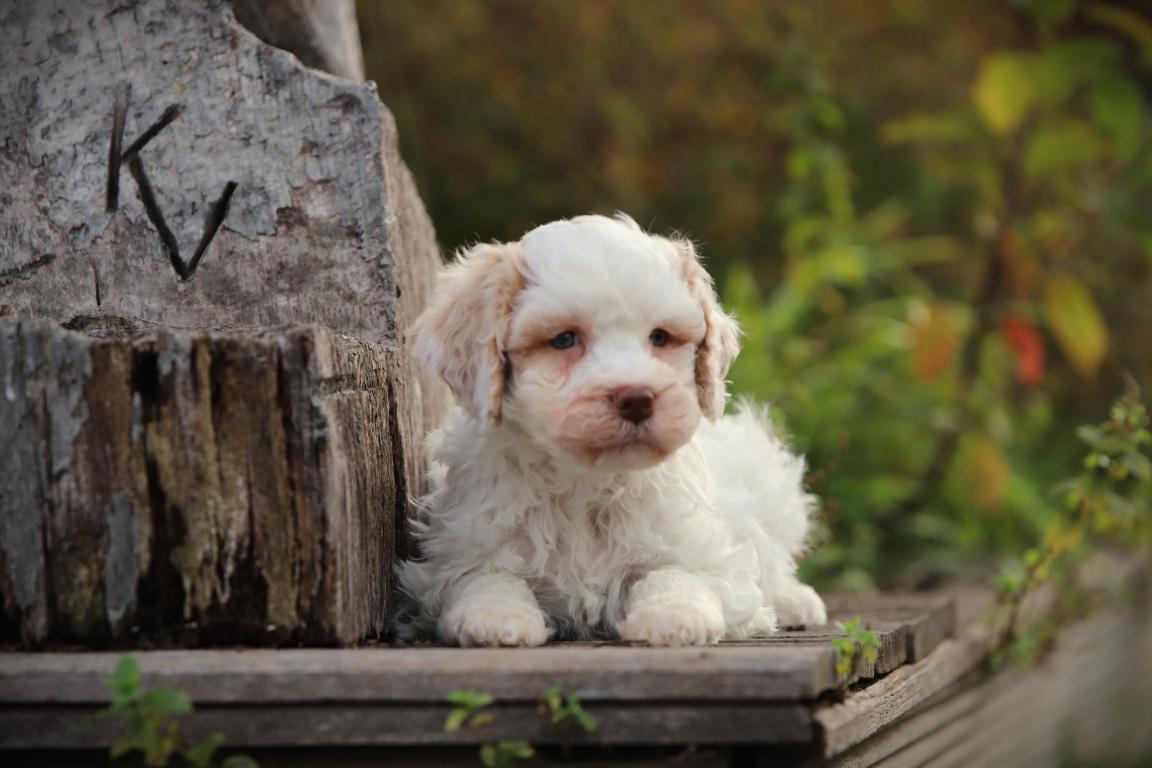
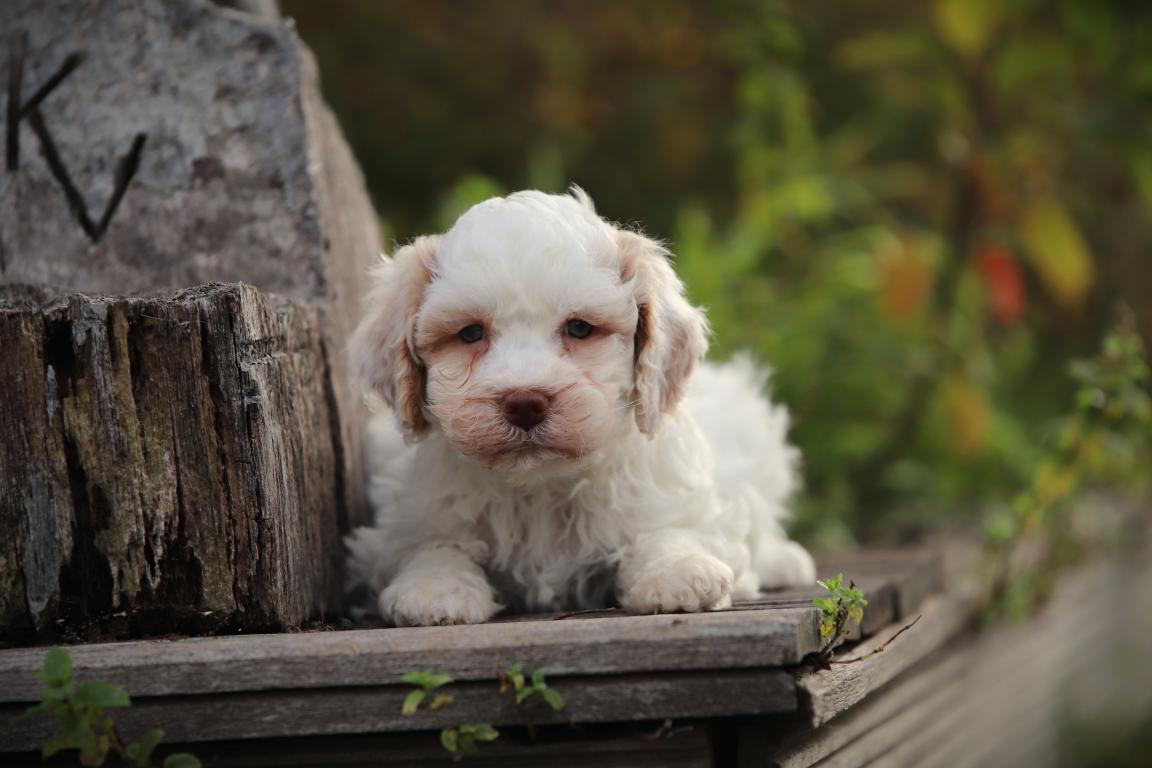
Available from 26 October
- Italian Waterdog
- Hypo-Allergique
- Born: 30 August 2026
- Mother: Lady
- Father: Rollo
- 🧬 DNA Checked
- 🇧🇪 Origin: our own kennel
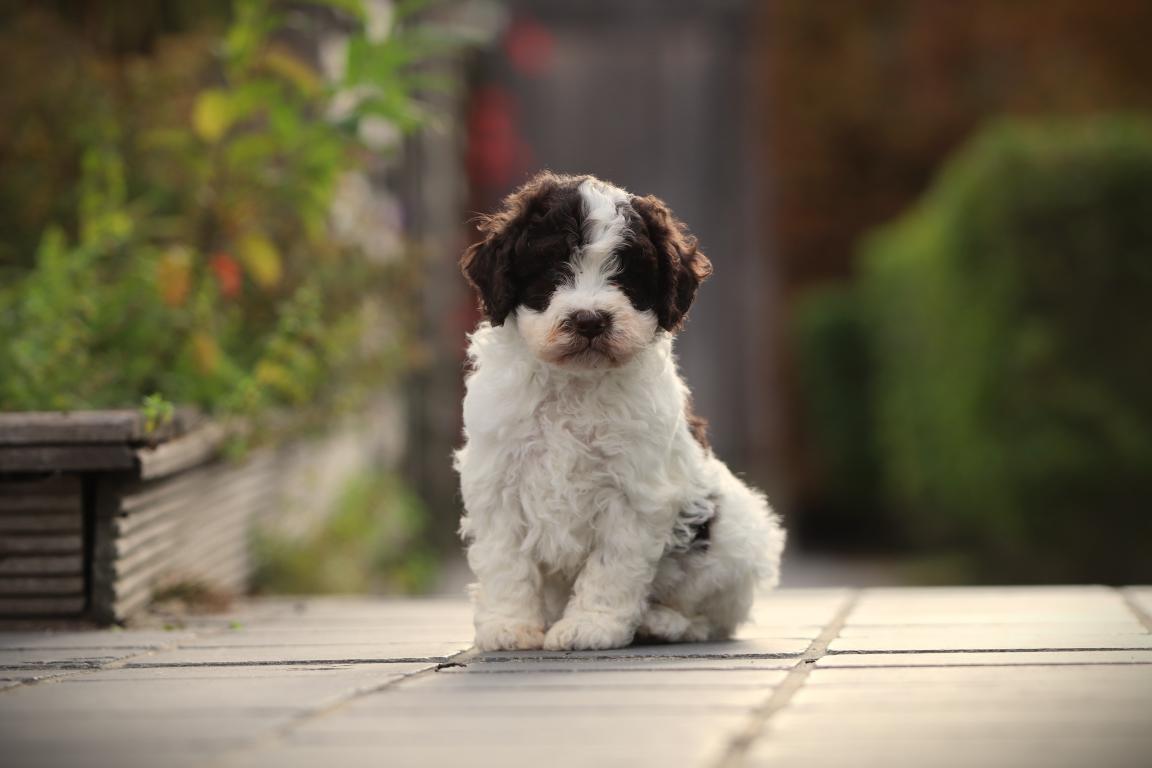
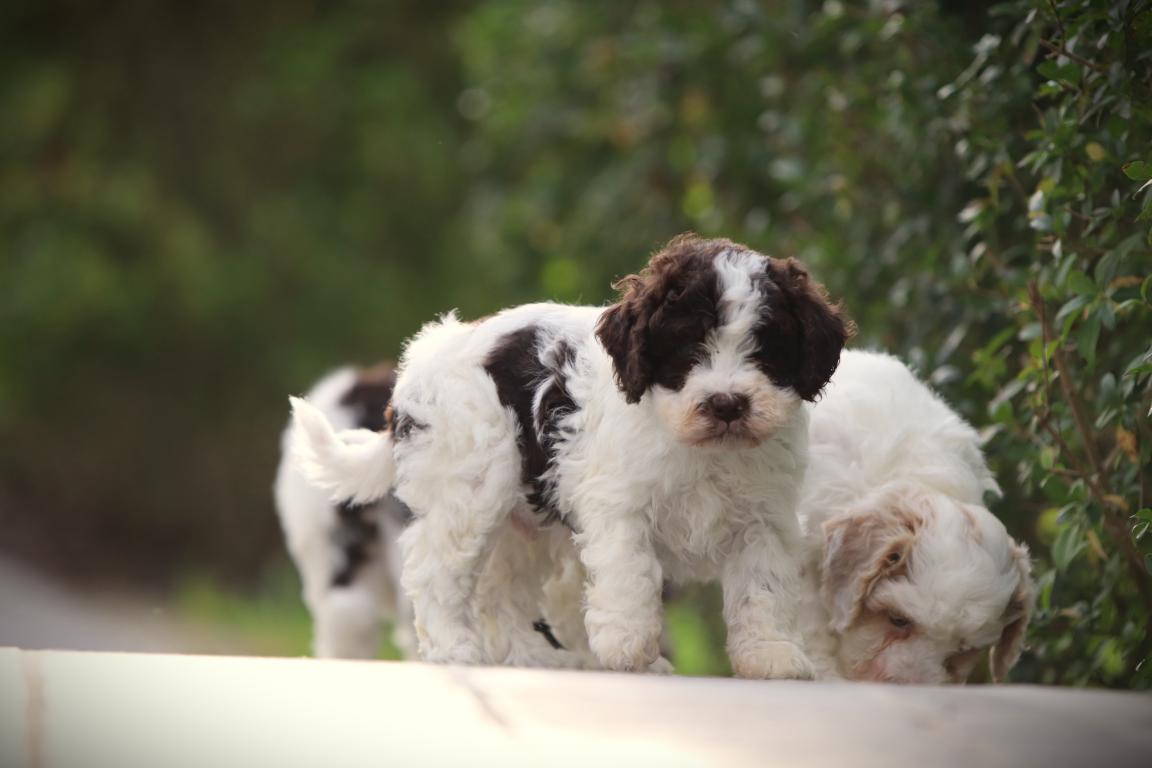
Available from 26 October
- Italian Waterdog
- Hypo-Allergique
- Born: 30 August 2026
- Mother: Lady
- Father: Rollo
- 🧬 DNA Checked
- 🇧🇪 Origin: our own kennel
Our usual process
Buying a Lagotto Romagnolo puppy from Woefkesranch – Belgian breeder since 1990
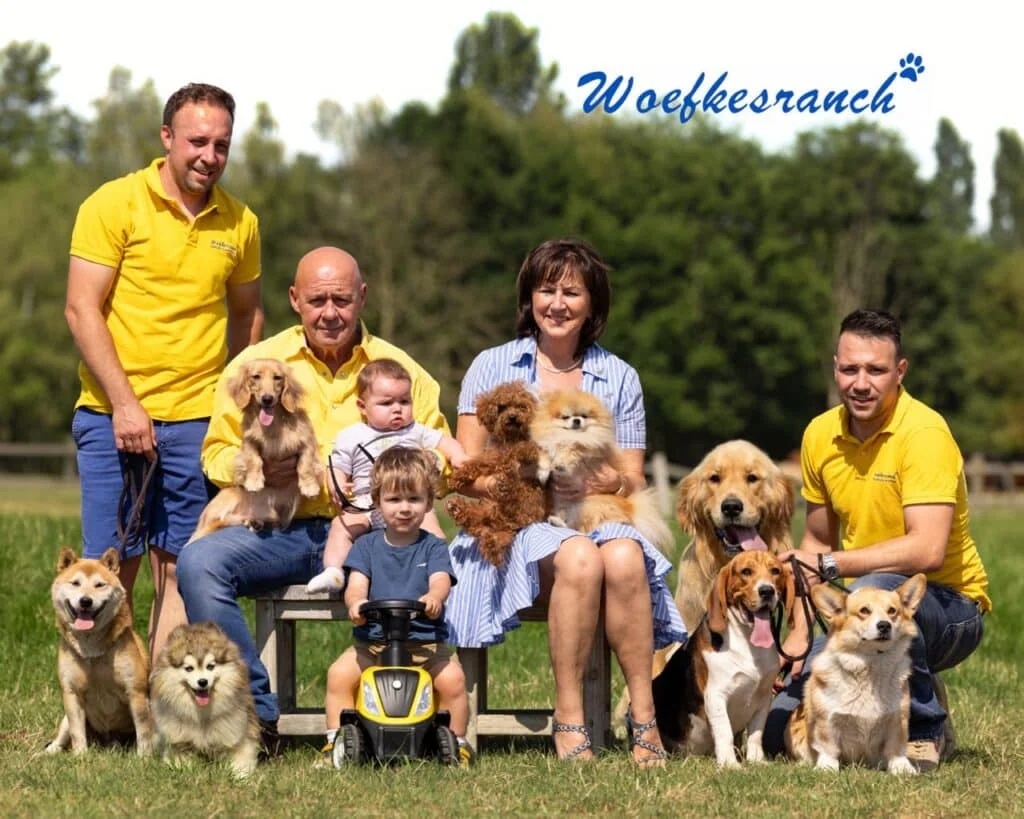
How it works:
- Meet the puppies (optional). Make an appointment to see the puppies with their mother, and to work out together which puppy suits your family.
- Reserve your puppy (optional). You can reserve online (24/7) or by phone on +32 (0)15 75 59 42. After reserving, you receive photos on request. If a puppy is already 8 weeks old, you can also take it home at your visit.
- Collection from us or home delivery. You can collect your puppy from 8 weeks old. It leaves microchipped, vaccinated, dewormed and with its European passport, and we register it in your name in DogID together. If you have no transport, someone from Woefkesranch brings your puppy to your home, within 250 km of our ranch in Putte (including the Netherlands, France, Luxembourg and Germany).
- 1-year guarantee. Every puppy has a 1-year guarantee on hereditary conditions and hidden congenital defects. We remind you about the first booster vaccination and deworming.
- Lifelong support. We remain available by phone or WhatsApp, also for training tips and health questions. For urgent matters we can be reached 24/7.

Written and reviewed by Marleen Dyck, co-founder of Woefkesranch
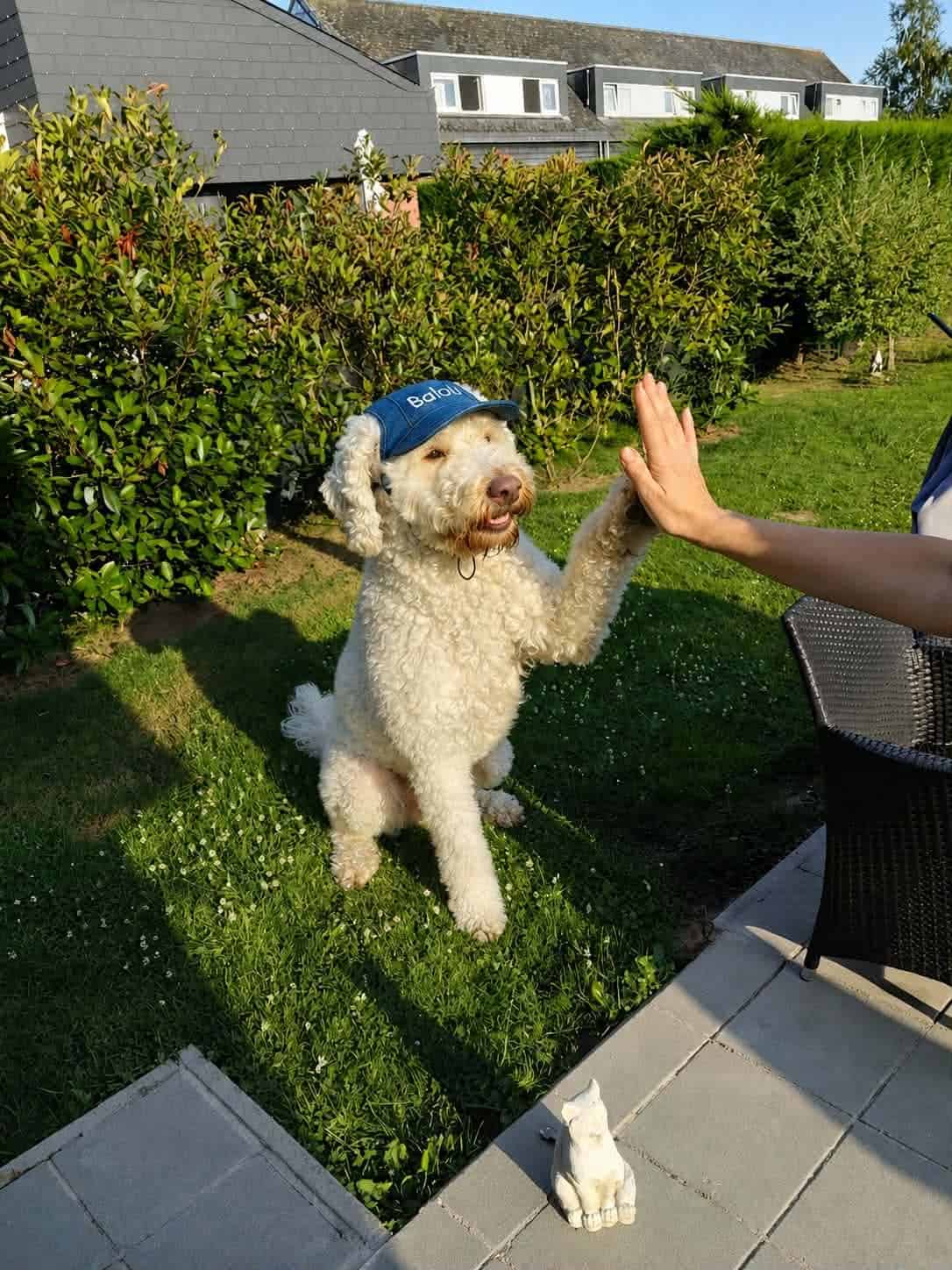
Character
A busy worker with a very soft side
An energetic water dog that loves to retrieve, to swim and to work for its owner. Reserved with strangers at first, and thoroughly devoted to its own family once it knows them.
What to expect
Reserved at first
Early socialisation is essential.
Eager to work
Loves retrieving and learning tasks.
Energetic
Needs a lot of exercise, and swims gladly.
Affectionate
A family dog with a high cuddliness factor.
Height*
~44.5 cm
Weight*
~13.5 kg
Life expectancy
~14 years
Origin
Italy, Romagna
*The sizes above are based on the FCI breed standard. Woefkesranch aims for them, but the health of the dogs always comes first.
Breed summary
You will discover that the Lagotto Romagnolo is a cheerful working dog with a dense, curly coat that does not shed, which often makes it easier to live with for people with dog allergies. This Italian water dog comes from Emilia-Romagna, where it retrieved in the marshes long before it became the truffle hunter it is known as today. You will need to brush that coat regularly, because it mats. These dogs are reserved with people they do not know, so early socialisation matters. Read on to see what this breed asks of you.
In five points
- The Lagotto Romagnolo has a dense, curly coat that does not shed, which often makes it easier to live with for people who are allergic to dogs.
- Bred in the marshes of Emilia-Romagna as a water retriever, the Lagotto later became Italy’s specialist truffle hunter, and is still worked as one today.
- This is a reserved breed toward strangers and new situations, so socialising a puppy early matters more here than it does for many other dogs.
- A Lagotto needs at least an hour of activity a day, plus search games or training to occupy it.
- The hereditary conditions known in the breed are Benign Familial Juvenile Epilepsy and Lagotto Storage Disease, which a responsible breeder screens the parent dogs for.
History and Origin
The Lagotto Romagnolo is an Italian water dog breed that has existed since the 16th century. The breed originates from the Emilia-Romagna region in northern Italy. The inhabitants of the flat marshland were called “vallaroli” or “lagotti”. The breed name Lagotto Romagnolo was derived from that.
This dog was used as a hunting dog in the marshes until the 19th century. From the 19th century its role as a hunting dog ceased and eventually the hunting instinct disappeared. However, it can still be present when stimulated.
Afterwards the breed was employed as a truffle hunter in the region. Due to various circumstances the breed was in danger of disappearing until the late 1970s, when breeding of the breed began again.
From water retrieval the breed moved to truffle hunting as the wetlands were drained, and the nose that had found birds was turned to finding truffles instead. Today the Lagotto Romagnolo is still worked as a professional truffle dog, especially in Italy.
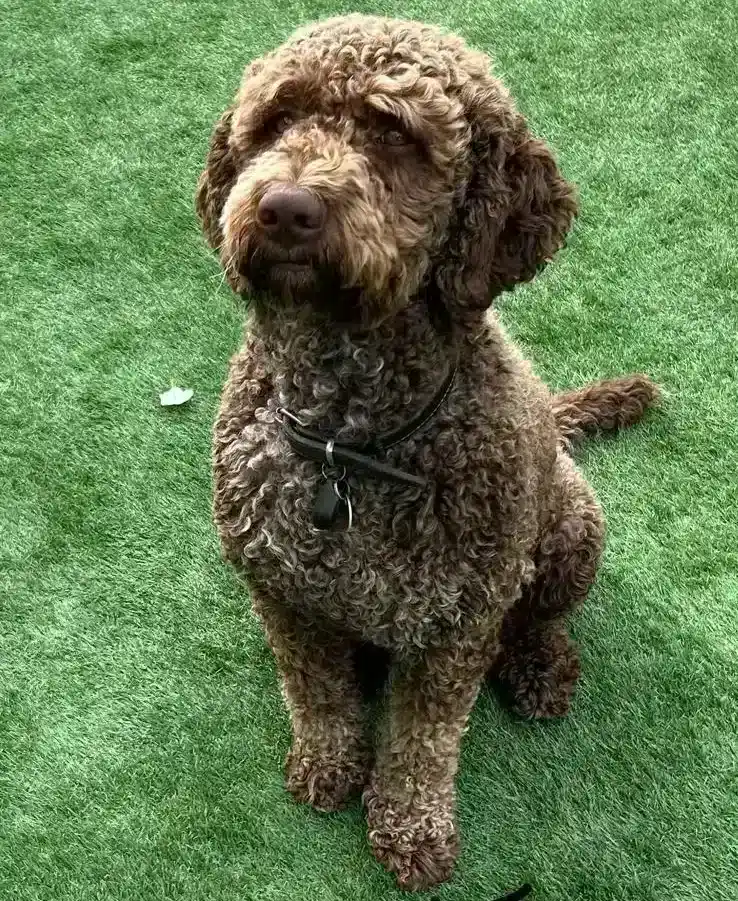
Physical characteristics and grooming
The Lagotto Romagnolo is a dog breed that does not shed. That often makes it more suitable for people with dog allergies.
The coat tends to mat. So you will need to detangle it regularly. A trim by a dog groomer should also be done about four times a year. Another option is to learn to clip it yourself; this will also strengthen the bond with your dog. Don’t forget to trim the hair growth in the ears.
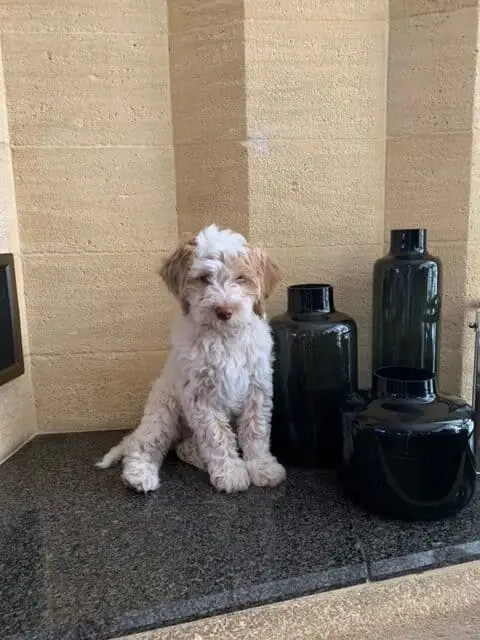
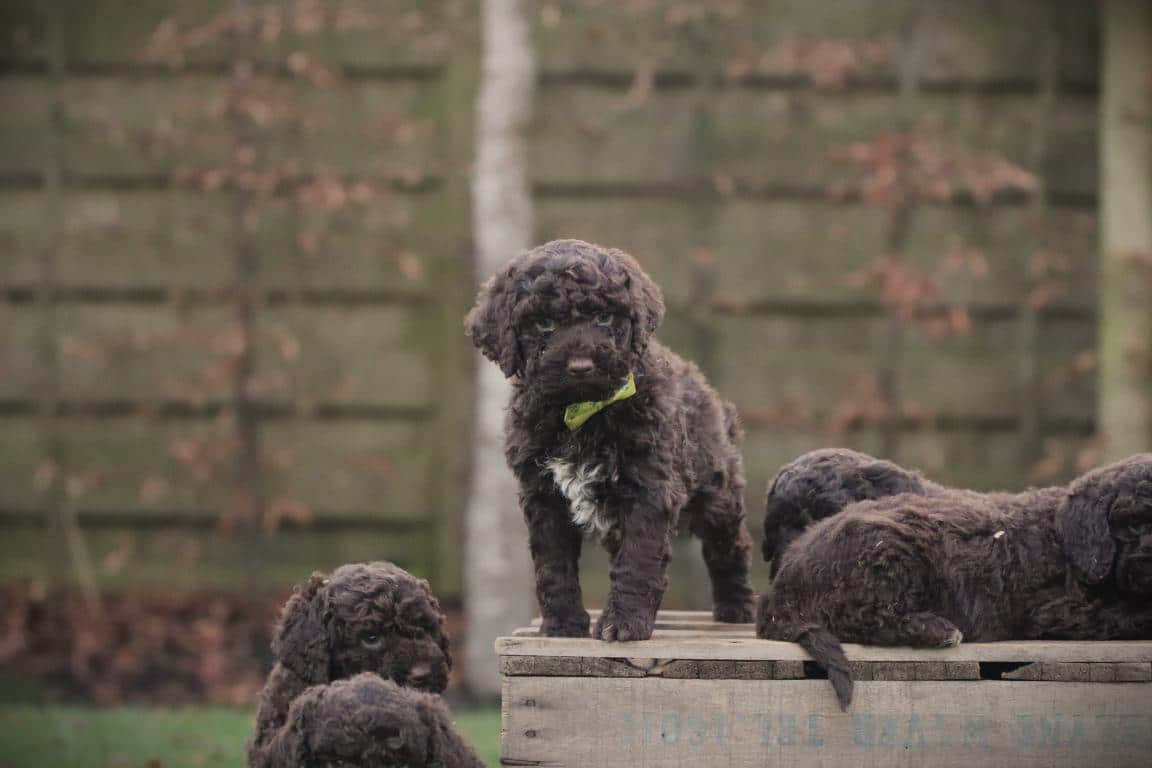
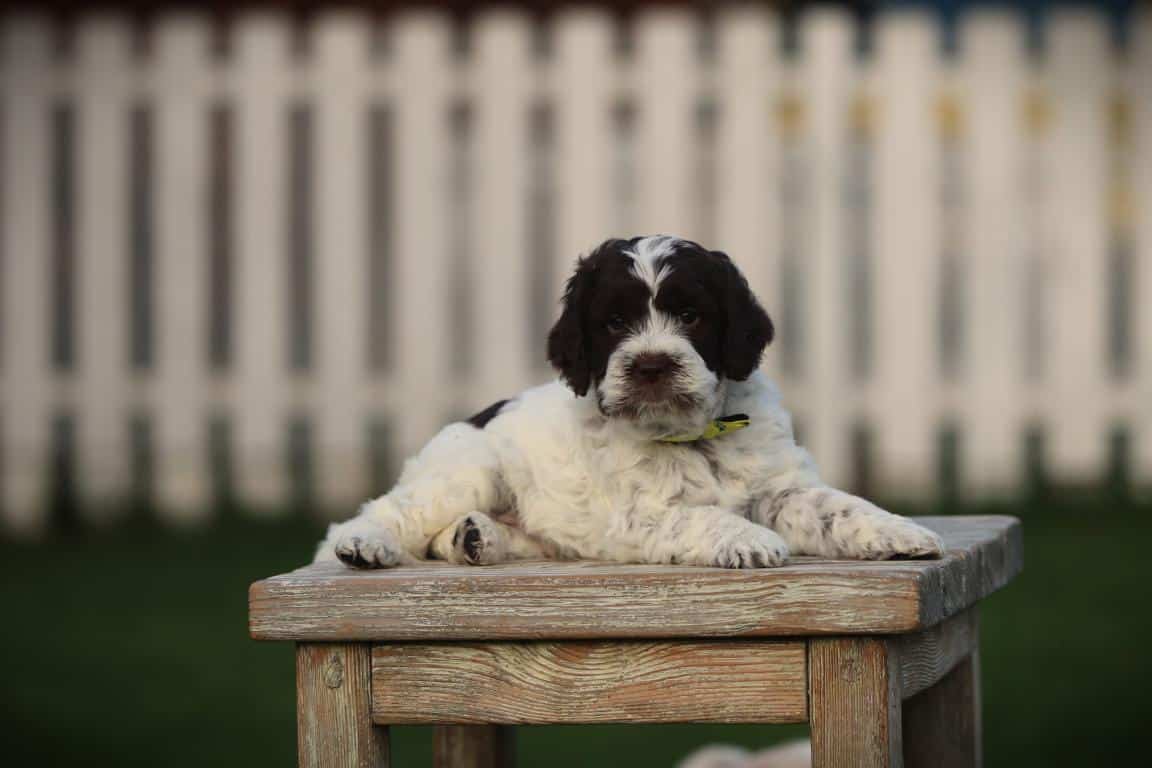
Accepted colours run from off-white and white with brown or orange markings to solid brown, brown roan and orange roan, with the curl pattern and the density of the coat defining the dog’s outline more than its colour does.
| Characteristic | Male | Female |
|---|---|---|
| Height | ~45.5 cm | ~43.5 cm |
| Weight | ~14.5 kg | ~12.5 kg |
Hypoallergenic: all breeds at Woefkesranch
A purebred coat is known in advance, while a cross can take after either parent. The low shedding depends on the coat being kept up, so grooming is needed whichever you choose. Where an allergy is a real concern, spend time with the individual puppy before deciding.
| Characteristic | Lagotto Romagnolo | Labradoodle | Cockapoo | Maltipoo | Miniature Poodle | Maltese |
|---|---|---|---|---|---|---|
| Height | ~44.5 cm | ~48.5 cm | ~36.5 cm | ~28 cm | 28–32 cm | ~22.5 cm |
| Weight | ~13.5 kg | ~20 kg | ~10 kg | ~5 kg | 5–7 kg | ~3.5 kg |
| Hypoallergenic | Always | Not always, depends on the parents | Not always, depends on the parents | Usually, both parent breeds are low-shedding | Always | Always |
| Coat care | Brush twice a week, trim every 6 to 8 weeks | Brush several times a week, groomer every 8 to 12 weeks | Brush daily, trim every 8 to 10 weeks and never shorter than 5 cm | Brush weekly, professional trim every 6 to 8 weeks | Comb regularly, professional trim every 2 to 3 months | Comb weekly, trim once or twice a year |
| Breed origin | Purebred, from Italy | Labrador Retriever and Poodle | Cocker Spaniel and Poodle | Maltese and Miniature Poodle | Purebred, from France | Purebred, from Malta and Italy |
Heights and weights from the FCI breed standard.
Comparison of the Lagotto Romagnolo and the Labradoodle
| What differs | Lagotto Romagnolo | 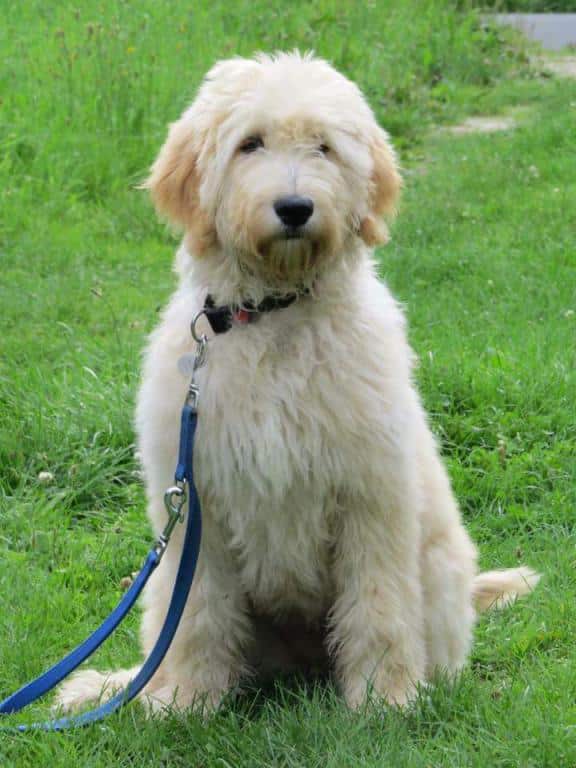 Labradoodle |
|---|---|---|
| Origin | A recognised Italian breed from the 16th century, bred in Emilia-Romagna to retrieve waterfowl from the marshes, and later used to search for truffles | A Labrador crossed with a Standard Poodle, bred in Australia in 1989 as a guide dog for a family with a dog allergy |
| Size | One size: males ~45.5 cm and ~14.5 kg, females ~43.5 cm and ~12.5 kg | Three sizes. A mini (~39 cm, ~11 kg) is smaller than a Lagotto, a medium (~48 cm, ~19 kg) about the same size, a large (~58 cm, ~30 kg) larger |
| Coat and grooming | Always dense and curly. A short daily brush and the groomer 4 to 6 times a year | Curly, wavy or straight, in many colours. Brushing daily to once every two weeks and the groomer every 8 to 12 weeks |
| Character | Devoted to its own family, takes its time with people it does not know yet | Open to everyone, including people it does not know yet |
Both are intelligent family dogs with a coat that sheds little, which makes them more suitable for many people with a dog allergy. Both need plenty of exercise and mental work every day, such as scent games or training.
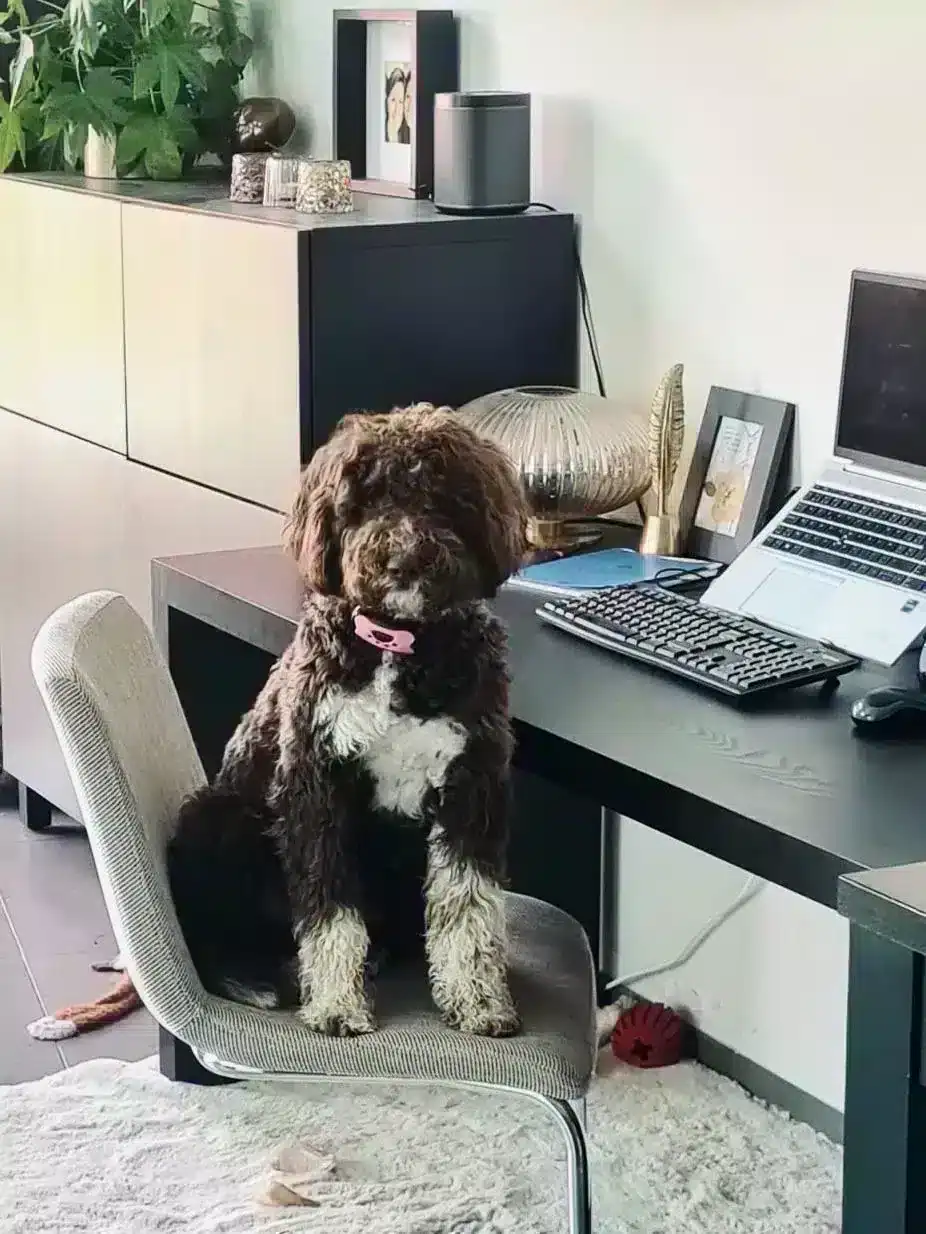
Personality and Temperament
This breed is reserved toward other people and new experiences. It is therefore important to start socialization at a young age.
It needs a lot of exercise and likes to work for its owner, and it takes readily to retrieving. Once it has learned to swim it will swim at any opportunity.
It is an affectionate family dog that enjoys the attention of its own people.
Around other animals the Lagotto is usually social and adaptable when it has been well socialised, showing calm, curious interest rather than aggression. Introductions still want planning, and small pets want secure housing.
Health and Nutrition
The Lagotto Romagnolo is a dog breed with few hereditary conditions.
Regular health check-ups matter for the Lagotto Romagnolo. As with every breed, there are some health issues a prospective owner should know about.
Woefkesranch selects the parent dogs on health, temperament and the health checks appropriate for the breed. The known hereditary conditions in the Lagotto Romagnolo are Benign Familial Juvenile Epilepsy, or BFJE, and Lagotto Storage Disease, or LSD.
When buying a puppy, choose a breeder who performs health screenings on the parent dogs, and ask for the test results for hip dysplasia and eye conditions.
A daily look over the dog costs a minute and catches most problems early: ears, eyes and coat, and any change in appetite or energy. Keep vaccinations and worming on schedule, and keep the exercise regular rather than occasional and strenuous.
The coat is a health matter as well as a grooming one. Because the dog does not shed, dead hair stays in the curls and mats form against the skin, where they trap moisture and cause irritation. Keeping the coat open is part of keeping the dog well, not only part of keeping it tidy.
Training and Exercise
As with other dog breeds, this breed needs good guidance in raising the puppy. Patient repetition is necessary for proper training.
The older the dog gets, the less time you need to spend on training and the more on having fun. Of course, the dog must clearly know who is in charge.
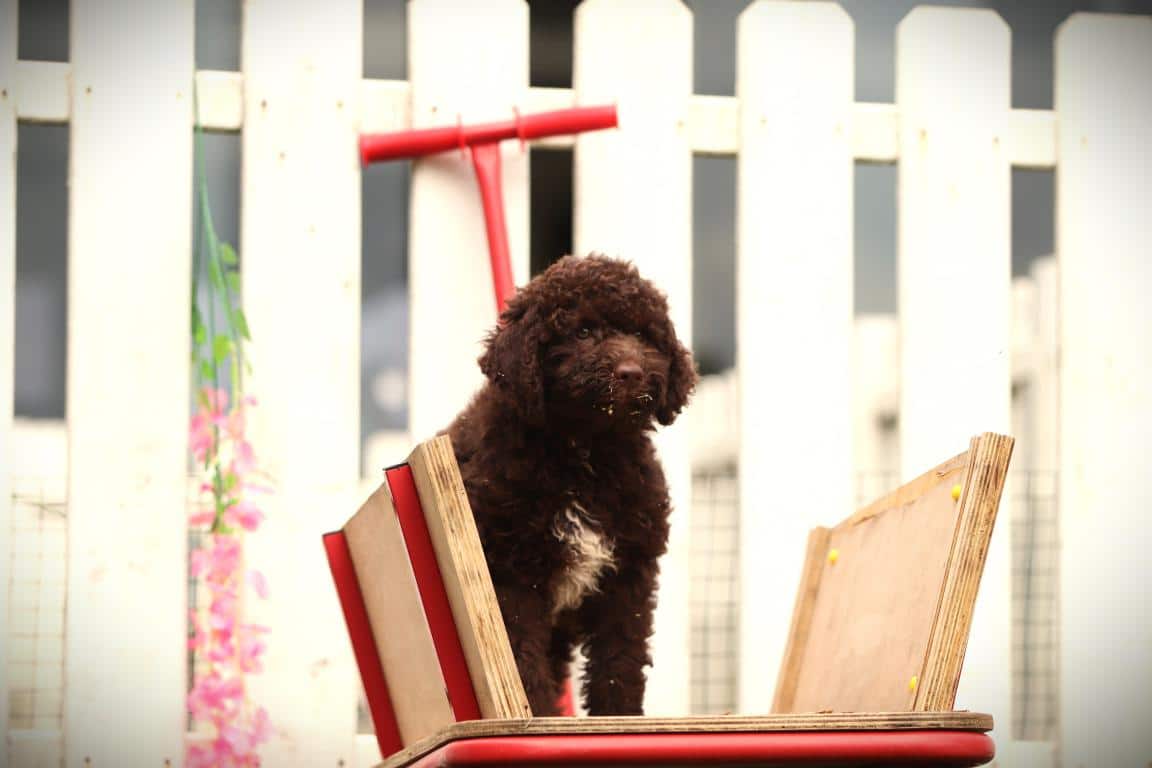
As an active working dog the Lagotto Romagnolo needs a lot of exercise and mental stimulation: at least an hour of activity a day, regular mental challenges such as search games, and dog sports such as agility, flyball or tracking. Many Lagottos love water and will swim at any opportunity.
When training a Lagotto it is important to take its sensitive nature into account. Positive reinforcement works best, while harsh corrections lead to insecurity. Consistency, patience and a loving approach are what get results.
Choosing and caring for your Lagotto Romagnolo
Choosing the right breed and breeder
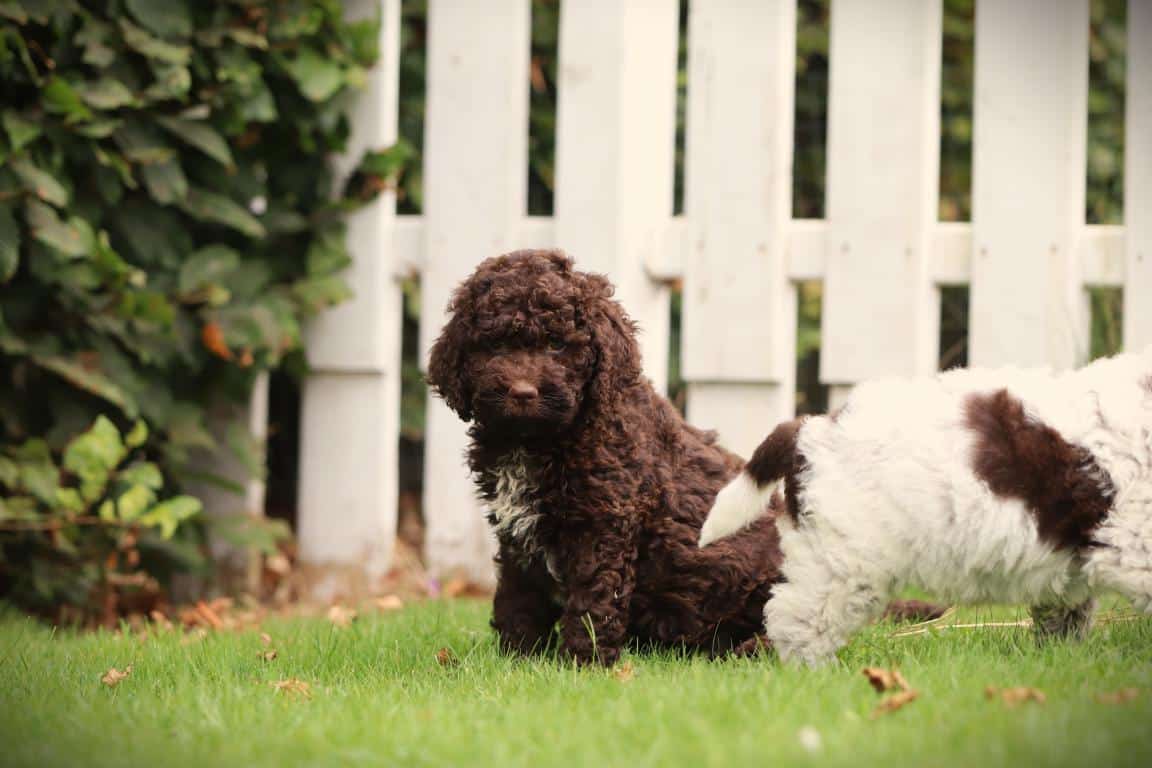
A Lagotto Romagnolo is intelligent, affectionate and has a keen nose. The coat asks for regular grooming in return, so the breed suits an owner who is willing to keep that up.
A good breeder is affiliated with a breed club, performs health screenings on the parent dogs, pays attention to early socialisation, asks about your living conditions and experience with dogs, and provides support and advice after the purchase.
The curly coat needs clipping about four to six times a year, and checking for mats between sessions. Short daily brushing prevents most tangles, with a slicker brush and a metal comb worked through the curls rather than torn through them.
Bathe only when the dog is dirty, or every six to eight weeks, because frequent washing strips the natural oils that keep the coat water-repellent. Dry it completely, since moisture left in the curls is what starts a mat.
Essential daily care
Caring for a Lagotto Romagnolo means committing to a daily routine that addresses their grooming, feeding, exercise and health needs.
For optimal daily care, focus on these key points:
Coat
Clip it four to six times a year and check for mats in between. Short daily brushing with a slicker brush and a metal comb prevents most tangles.
Ears
Check the ears daily and trim the hair that grows inside them, which is where moisture and tangles collect.
Food
Balanced nutrition is enough for most dogs. Add supplements only where there is a deficiency, and on veterinary advice.
Exercise
At least an hour of active exercise a day, plus search games or training to keep it occupied.
Regular veterinary visits are essential to monitor health, contributing to a longer lifespan for your Lagotto Romagnolo. If you are considering getting a puppy, it is important to recognize a good breeder.
Recognised family business since 1990, now in its second generation
We are a recognized breeder of Lagotto Romagnolo puppies in Belgium. Our ranch is in Putte (near Mechelen), between Brussels and Antwerp, about 40 kilometers from Brussels, 30 kilometers from Antwerp and 80 kilometers from Ghent. Our puppies are socialized on the ranch through contact with our caretakers and with other dogs and puppies. Woefkesranch has been a family business since 1990 and is now in its second generation. Every puppy is born in our own kennel under permanent supervision, with no imports and no middlemen. Families are guided before the purchase and are welcome back with their questions long afterwards.
Delivery to your door in and around Brussels, Cologne, Amsterdam, Rotterdam, Düsseldorf, Essen, The Hague…
If you have no transport, someone from Woefkesranch brings your puppy to your home, up to 250 km from Putte. Approximately: Hasselt 60 km, Charleroi 80 km, Mons 100 km, Liège 110 km, Bruges 120 km, Rotterdam 120 km, The Hague 150 km, Düsseldorf 180 km, Amsterdam 190 km, Cologne 190 km, Essen 220 km.
Frequently Asked Questions
What is the price of a Lagotto Romagnolo puppy?
The price of a Lagotto Romagnolo puppy is on average somewhere between €1500 and €3500, although there are also breeders who ask €5000 for a puppy. Maintenance costs are about €10 to €50 per month, which includes food and accessories.
Is the Lagotto Romagnolo suitable for people with allergies?
The Lagotto Romagnolo is often mentioned as an option for people with allergies because it does not shed. No dog is completely hypoallergenic, though. Allergic reactions are caused by proteins in saliva, dander and urine, not just by hair, so anyone with an allergy should spend time with the breed before deciding.
How much exercise does a Lagotto Romagnolo need?
A Lagotto Romagnolo needs at least one hour of active exercise daily, preferably spread over several walks. This intelligent working dog also needs mental stimulation in the form of training, search games or dog sports. An under-stimulated Lagotto can develop unwanted behaviour.
How does a Lagotto Romagnolo behave with other pets?
A Lagotto Romagnolo can live well with dogs and cats when introductions are planned, the environment is managed and impulse control is trained from the first day. Start with scent exchange and short on-leash meetings on neutral ground, supervise all early interactions, and provide secure housing for small pets.
Can a Lagotto Romagnolo live comfortably in an apartment?
A Lagotto can live in an apartment provided its exercise and mental needs are met, which means enough walks and activities every day. Lagottos can be territorial and may bark at unfamiliar sounds, which is a challenge in an apartment, so good training and sufficient exercise matter.
Where can I find a reliable Lagotto Romagnolo breeder?
A reliable breeder provides transparent information about the puppy’s origin, its parents, the health checks performed and the conditions in which it was raised. You should be able to meet the puppies and their mother, and the breeder should remain available after adoption. At Woefkesranch the puppies are born at our own breeding facility in Belgium.
Come and see
Make an appointment
Do you want to visit our puppies? You can also make an appointment.
- 100% Belgian puppies
- Professional statutory warranty
- 24/7 service after sale
- Puppies have all necessary vaccines
- Puppies are dewormed multiple times
- Chipped and with Belgian/European passport
- DNA-tested parents