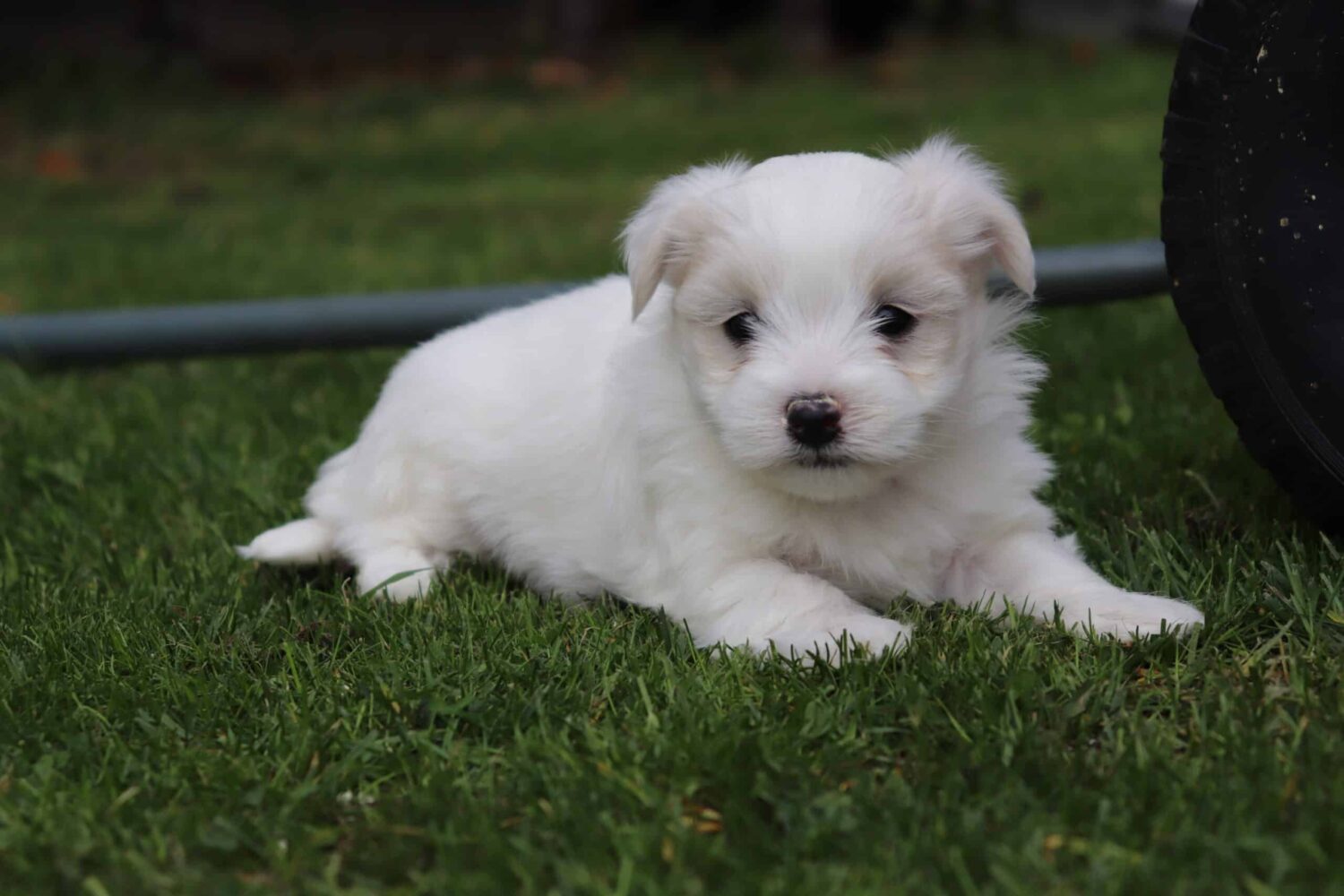
The Maltese is a cheerful little dog that also sheds very little hair.
🧬 We test the health of our Maltese
The health of our puppies is our absolute top priority. Did you know that we test our dogs carefully? Read all about our DNA tests and pedigrees at the Maltese here.

Description
The Maltese is a dog breed originating from Italy, belonging to the bichon family. They make excellent family dogs.
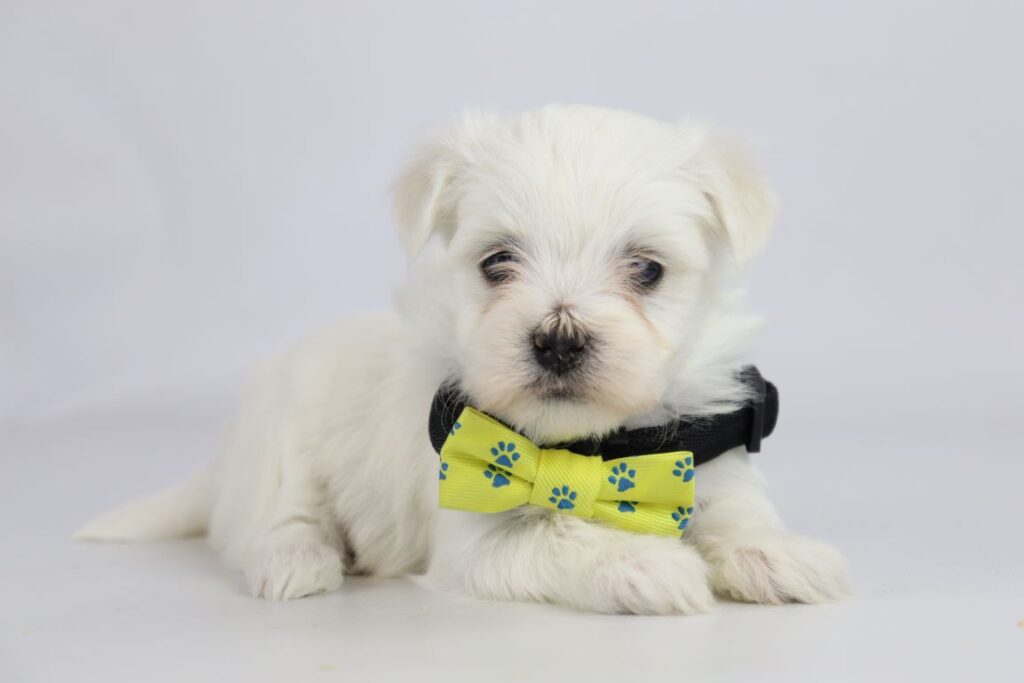
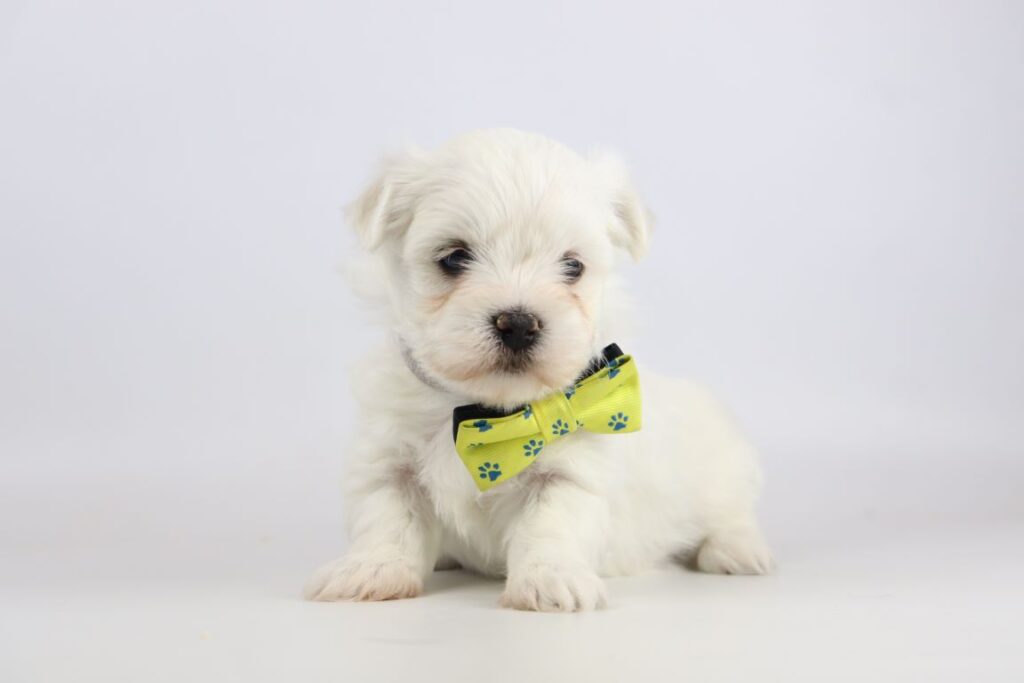
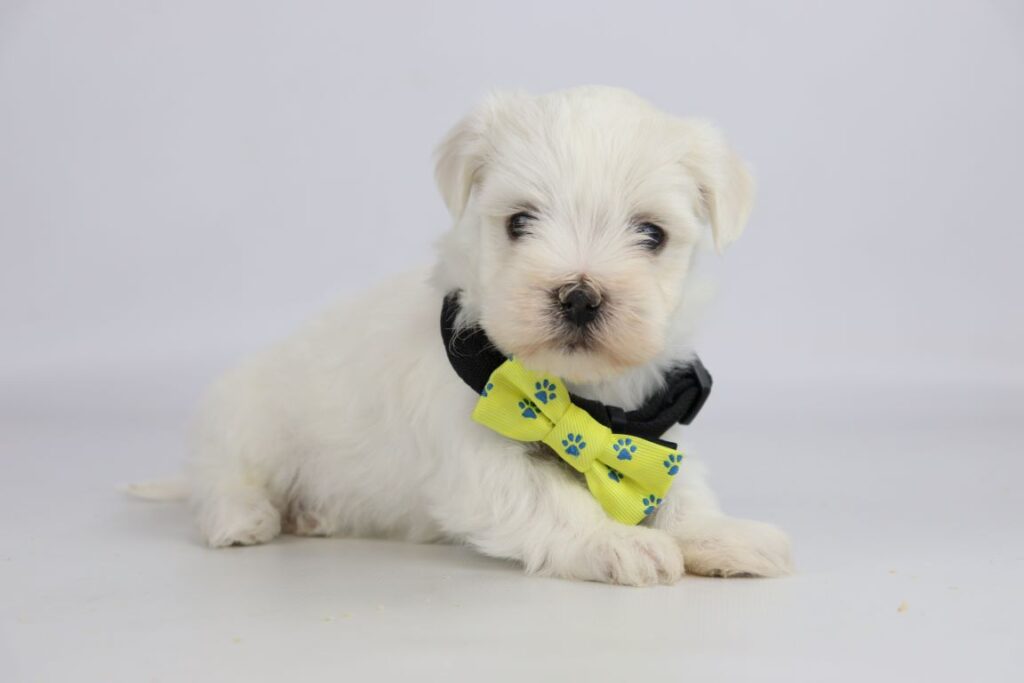
Their white coat consists of long, white, silky hairs. Maltese dogs do not have an undercoat. The coat has a parting along the back.
Their skin is pigmented with dark spots.
For our Maltese puppies for sale, visit our available puppies.
Because of their floating and natural appearance combined with their distinctive trot, it often looks like they are rolling forward.
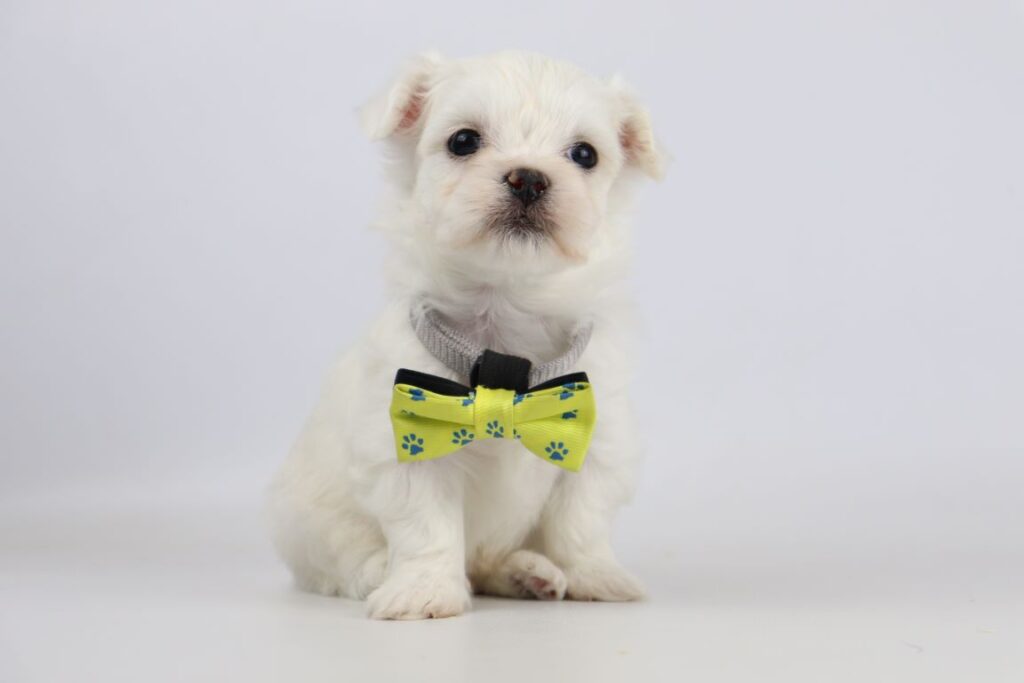
The body of the Maltese is elongated, with the withers slightly above the topline. Its chest slopes nicely downward and its back is straight. The croup is very large and long, slightly sloping. The limbs are short with a sturdy build.
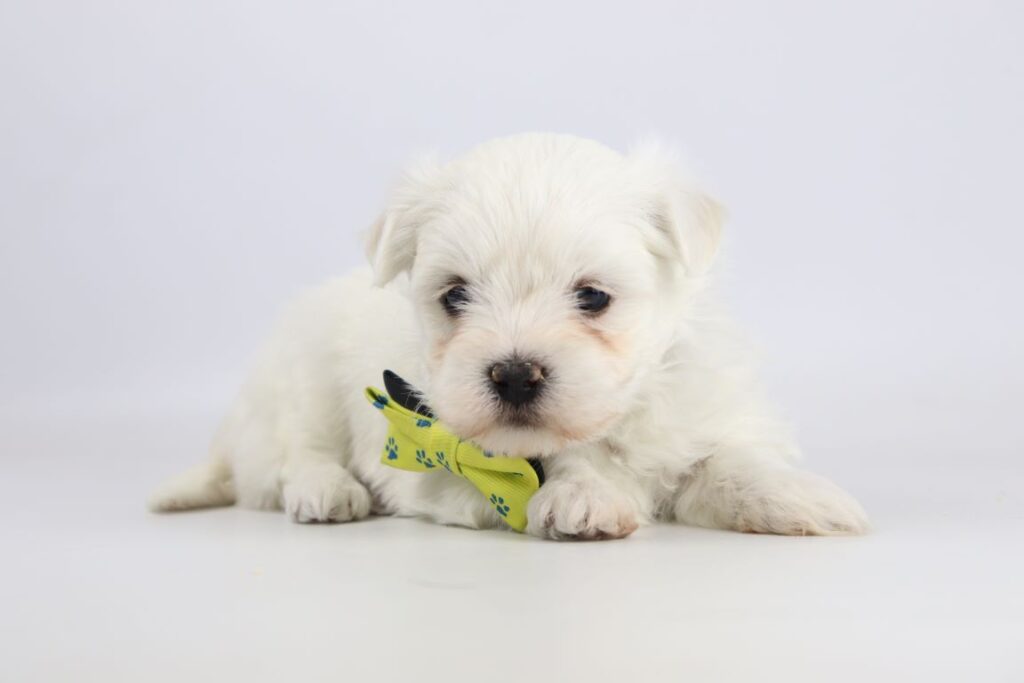
The head is rather large with a flat skull. They have a prominent nose and fairly large dark eyes.
The paws are round and the toes are well connected and curved. The tail is thick at the base but tapers towards the tip. The tail curls forward.


Maltese – FCI Breed Group 9
The Maltese belongs to the group of companion dogs and toy breeds.
Country of origin: Italy
Current and original purpose: Companion dog.
Other names: Bichon Maltese, Malteser Terrier, Maltese lion dog
Life expectancy: 12 to 15 years
Temperament: Obedient, Fearless, Affectionate, Intelligent, Lively, Reactive, Gentle, Active, Playful.
Character and temperament

The Maltese radiates great joy and delight. They are very intelligent, lively, playful and very social.
They are happy and content when they are the center of attention or with their family. This endearing breed is bright, loving, and a deeply devoted companion.
Training them is not difficult because they adapt to any situation. They should never be trained harshly as they are very sensitive to the tone of your voice.
A classic companion dog, very affectionate toward all family members. It is also a dog that is very loyal to its owner.
Puppy training
Maltese puppies always adapt effortlessly to circumstances, making training fairly easy as well.
They should never be trained harshly because they are sensitive to voice tone and they enjoy being in the company of their family.
Living Conditions of the Maltese

Maltese dogs require little exercise, but they can easily handle a good walk, which they will actually enjoy.
This dog feels comfortable both indoors and in the garden. It adapts to all situations and therefore also to its owner’s lifestyle.
Despite its small appearance, the Maltese is a sturdy dog that rarely gets sick. Its life expectancy ranges between 12 and 15 years.
Occasionally, it may suffer from eye disorders or dental and gum issues, which are more sensitive in this breed.
Cancer, old age, and heart disease are the most common causes of death.
However, some conditions have been observed in the Maltese:
- Congenital portosystemic shunt (a birth defect causing toxic waste to accumulate in the brain, leading to neurological problems)
- Shaker Dog syndrome (trembling, a neurological disorder caused by a deficiency of myelin, a condition commonly found in small dogs with white coats)
- Hydrocephalus
- Patellar Luxation
- Trichiasis or distichiasis (a condition where eyelashes grow incorrectly, causing corneal infection)
- Persistent ductus arteriosus (a defect leading to heart failure).

The care of the Maltese requires regular attention: daily detangling and combing, trimming once or twice a year, and giving baths. The condition of the ears and eyes must be carefully monitored.
Care
The long silky coat of the Maltese needs to be thoroughly combed weekly because the coat is very soft.
The Maltese sheds little or no hair and is good for allergy sufferers.
To avoid unsightly tear stains, clean the eyes occasionally. Also clean the beard after meals for the same reason.
If hairs grow in the corners of their eyes and obstruct vision or irritate the eyes, it is best to trim them shorter. You can also cut the coat short if combing is too time-consuming for you.
Give him regular baths and make sure the dog is thoroughly dried afterward. Also clean the ears regularly.
Recreation and Activities for the Maltese
The Maltese, known for its charming appearance and lively personality, thrives on attention and stimulation. To promote their well-being, it is essential to offer various recreational activities that match their energy level and social nature.
1. Walks and Exploration: Maltese enjoy gentle walks and explorations. Short, daily neighborhood walks not only provide exercise but also allow them to satisfy their curiosity.
2. Interactive Games and Toys: Stimulate your Maltese’s mind with interactive toys and games. Hide treats in puzzle toys to challenge their intelligence and encourage playful interaction with their owners.
3. Obedience Exercises: They respond well to obedience training. Teach them simple commands and gradually introduce more complex exercises. This strengthens the bond between owner and dog.
4. Social Interaction: Maltese dogs are social creatures. Arrange playdates with other dogs or take them to dog-friendly events to improve their social skills.
5. Indoor Entertainment: Provide indoor entertainment on rainy days. Let them release their energy with interactive toys and offer cozy resting places for relaxation.
6. Short Training Sessions: Keep training sessions short and engaging. Maltese dogs can get distracted quickly, so focus on positive reinforcement and make learning fun.
7. Agility and Dexterity: Introduce agility exercises in the garden. Maltese dogs enjoy navigating small obstacles and it promotes physical activity.
By offering a varied range of recreational activities, you keep your Maltese not only physically healthy but also strengthen the bond between you and your fluffy companion. Experiment with different activities to discover what best suits your Maltese’s personality.
History of This Breed

The Maltese is one of the oldest dog breeds in the world and originated from Malta. Statues of similar dogs have been found in Egyptian tombs dating back 3000 years.
This dog was described by the Greek philosopher Theophrastus, belonging to the “Melita” breed, an archaic name for Malta. It was developed in Italy with the addition of miniature spaniel and poodle blood. The breed became particularly popular with women in ancient Greece and Rome.
The Maltese, also known as the Bichon Maltais, is one of the five breeds classified as Bichons by the Fédération Cynologique Internationale. The other breeds in this group are the Bolognese (Bichon Bolonais), the Löwchen (Bichon Petit Chien Lion), the Havanese (Bichon Havanais), and the Bichon Frisé (Curly-haired Little Lion).
The Maltese is the oldest of the Bichons. Figurines found in the tomb of Pharaoh Ramses II prove that its ancestors were already very fashionable in ancient Egypt. These figurines date back to the 14th century BC.
Ten centuries later, these dogs reappeared in the Greece of Aristotle and in ancient Rome. Subsequently, the Maltese was introduced to Asia in the 1st century BC by merchants traveling along the so-called Silk Road.
The numerous experts who have concluded that the breed received input from Tibetan dogs may therefore be correct. The Greek geographer Strabo, who lived around the beginning of our era, had a great interest in the Maltese.
But the description he gave of the little dog he called ‘Canis meletensis’ absolutely cannot dispel the still existing doubt about the origin of the breed. It is likely that Strabo meant the Sicilian town Melenta with the word ‘meletensis’. Since Melenta is also the ancient name for the island of Malta, the confusion is complete.
However, it is of little importance whether the cradle of the Maltese was on the island of Malta in the Mediterranean or not. What is interesting to know is that during Strabo’s time, Malta became the favored port for seafarers and merchants heading to Asia.
This means that quite a number of Maltese dogs could very well have been present there, and that these dogs might even have been bred there.
The Maltese appeared in Europe in the 15th century. Just as his ancestors were depicted on Greek and Egyptian pottery, his image appeared on tapestries and paintings from the late Middle Ages and the Renaissance.
For example, he can be seen on the tapestry La Dame à la Licorne (The Lady with the Unicorn) preserved in the Musée de Cluny in Paris. He was also the subject of Flemish, German, Dutch, and Spanish artists, such as Memling, Durer, Brueghel, Van de Venne, and Goya.
The breed established itself firmly in England from 1520, when Queen Mary Stuart of Scotland imported a few specimens from Lyon and regarded them as her favorite pet. However, there was another reason for this rapid success, but a very unusual one.
Among the English, the long coat of the Maltese was said to cure rheumatism. It seems this is still believed across the Channel, as gloves and scarves made from Maltese fur can be purchased in England.
It is believed that these lively, small dogs came to our regions with the Crusaders in the Middle Ages.
In more recent times, the Maltese has become a very popular companion and lap dog. The Maltese is also highly loved as a show dog.