
The Pomeranian owes its name to the region of Pomerania, which is now part of Germany and Poland.
It is a Spitz breed, meaning a type of dog with various wolf-like characteristics. They can trace their roots back to large sled dogs and are closely related to breeds such as the American Eskimo Dog, Alaskan Malamute, Siberian husky, Norwegian Elkhound and Samoyed.
Early dogs of this breed were much larger than those known today, with a weight of up to 15 kilograms. Queen Victoria was a great fan of Pomeranians and is responsible for the small size of these dogs today. She may have reduced the breed’s size through her own breeding during her reign.
Soon after, these dogs were entered into dog shows where their popularity soared.
In 1888, Dick was the first Pomeranian registered in the American Kennel Club registry.

Advantages
- Pomeranians are perfect for small houses or apartments.
- Good watchdog
- Suitable for beginners
- They can not only quickly learn basic obedience skills, but also tricks.
- They are playful and attentive, and fit into almost any size home.
- Very energetic, so such a pet is suitable for active owners.
- Despite his small size, he can exhibit watchdog qualities.
- Easy to carry and can be taken along on trips.
- Even when left home alone, a Pomeranian does not typically chew on shoes, furniture, and more.
- Requires little space and food costs are minimal.
Disadvantages
- Pomeranians can be vocal and bark at anything they want to intimidate (including strangers).
- Separation anxiety – it will not be easy for them to be left home alone for a very long time.
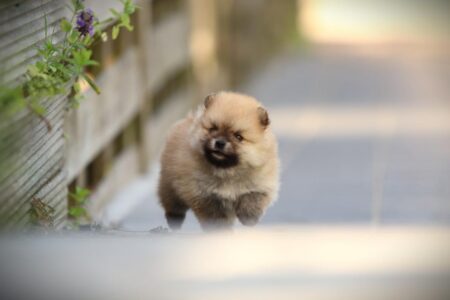
- Puppies have a fragile skeleton; therefore they are prone to injuries such as bone fractures
Fun facts
- They are also called Dwarf Keeshond.
- Michelangelo had a Pomeranian by his side when he painted the ceiling of the Sistine Chapel.
- Physicist Isaac Newton, whose Pomeranian named Diamond reportedly chewed on many of his manuscripts.
- Martin Luther had a Pomeranian named Belferlein whom he often mentioned in his writings.
- Composer Mozart had a Pomeranian named Pimperl and he dedicated an aria to his little dog.
- Elvis Presley owned a Pomeranian named Sweet Pea, which he originally bought for his mother.
- Two Pomeranians were among the three dogs that survived the sinking of the Titanic in 1912. Both escaped in lifeboats with their owners.


Appearance of a Pomeranian
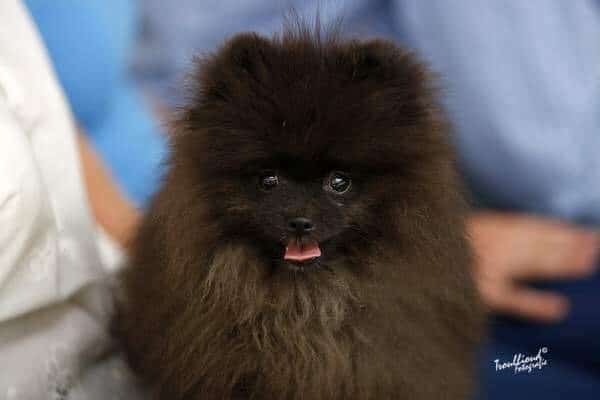
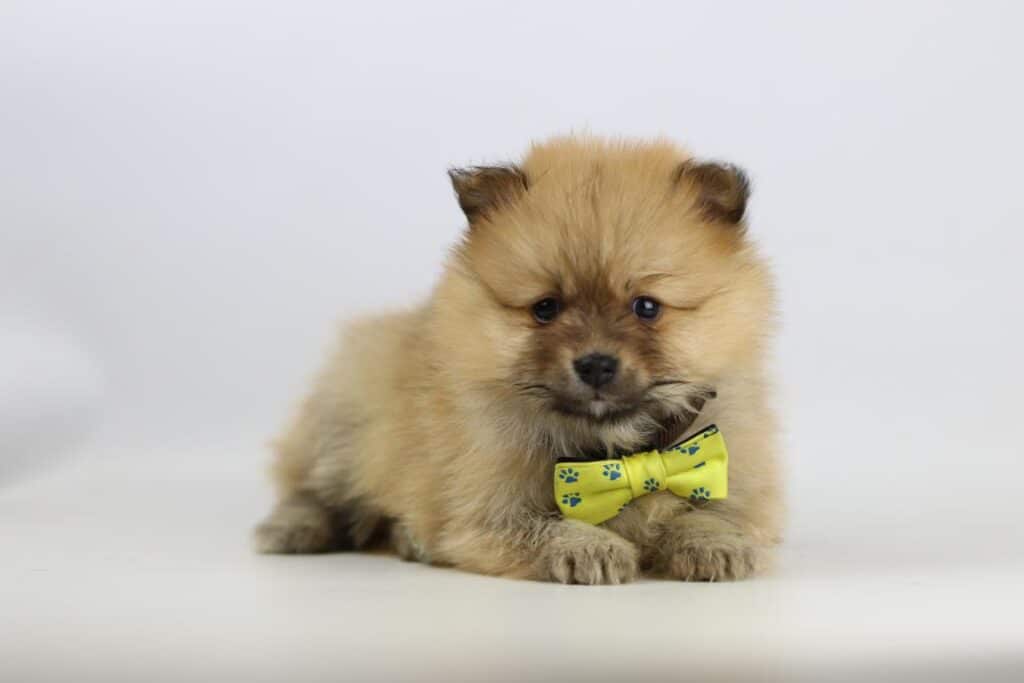
People sometimes refer to the Pomeranian as a little lion. They have a pointed face and a small, very furry body. Their head is tapered and almost fox-like in shape. They have a narrow muzzle and ears that stand upright. Their tail is set high and hangs straight from their body.
On average they reach 18 to 30 cm in height and weigh between 1.5 and 5 kilograms.
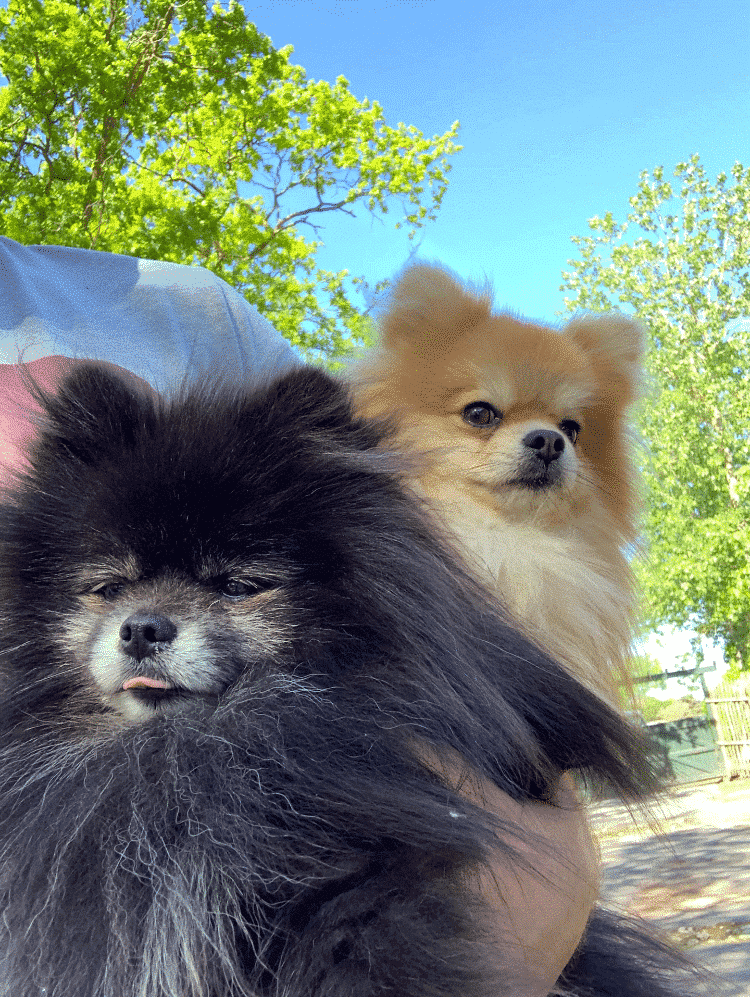
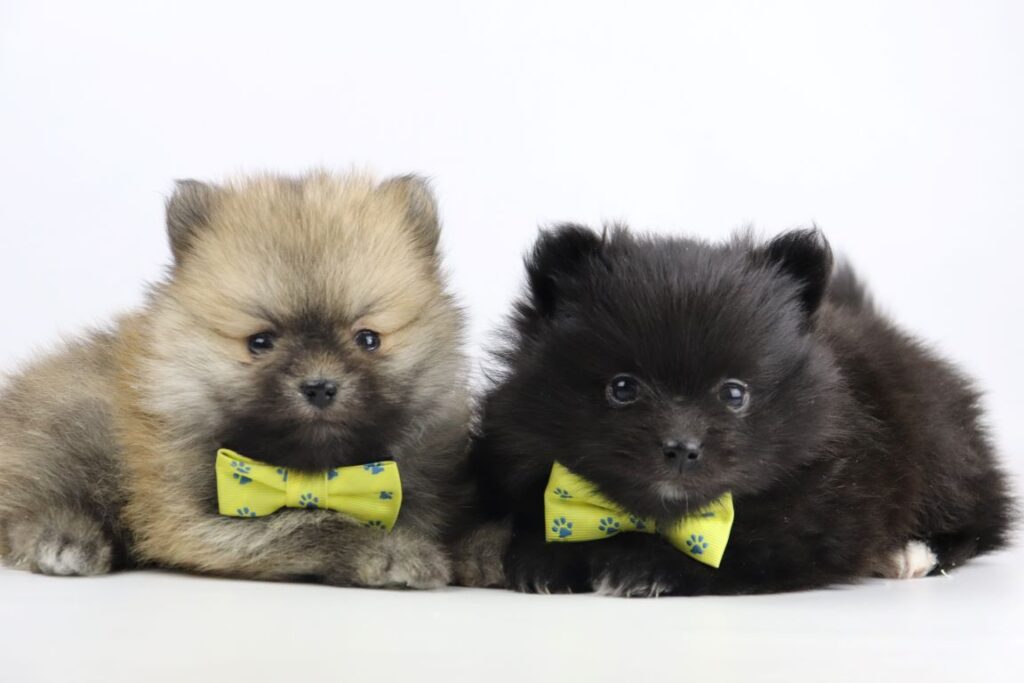
They have a thick, fluffy coat that comes in various colors, including white, brown, orange and black. They also come in cream, red, sable, shaded gray chocolate, tan, brindle and lavender.
They have a fairly long lifespan of about 12 – 16 years.
Shedding
As cute and fluffy as they are, Pomeranians do shed.
They don’t shed as much as some other breeds, but they still shed significantly. They are not known as heavy shedders, yet their abundant coat does leave some hair around the home.
Costs
On average, a Pomeranian costs 3000 euros. The price ranges between 1500 and 3500 euros.
The price depends on factors such as the breeder, the location, the dog’s bloodline, the color and the age.
Exercise and trainability
Training a Pomeranian is not very difficult. These dogs are very cooperative and receptive during training sessions. They learn new commands and tricks they are taught quite quickly.
In terms of exercise, an adult Pomeranian usually needs no more than 30 minutes of walking per day, divided into a morning and an evening walk. The general rule of thumb for walking a puppy is about 2 – 5 minutes for each month of age. For example, for a 4-month-old puppy a walk of 8 to 20 minutes is sufficient.


Intelligence
A Pomeranian is a fairly intelligent breed that has considerable thinking and decision-making ability. According to Stanley Coren’s Intelligence of Dogs, this breed ranks 23rd.
Can a Pomeranian swim?
They have the instinct to swim, but they do not have sufficient strength required to swim for long.
If a Pomeranian is placed in a pool for the first time where its feet cannot reach the bottom and it becomes stressed, it can exhaust itself and drown. At first they may seem a bit hesitant, but once they become familiar with the water, they enjoy swimming a lot.
If your dog does not seem to enjoy swimming, you should never force it to do so.
Does a Pomeranian bark a lot?
They are vocal dogs, so it’s no wonder that they bark from time to time.
They use their voice quite often, which can be a bit noisy for their owners, but this bad habit can easily be kept under control with good guidance and training.
Pomeranians bark for many reasons, including wanting to protect you and themselves, boredom, joining in the excitement around them, seeking attention, and reacting to outside disturbances such as sirens, fireworks and general noises.
Weather and climate
Pomeranians’ tolerance for cold is fairly good and these dogs can comfortably thrive in cold and wintry areas. But if conditions become excessively harsh, it’s a good idea to keep these dogs warm and cozy indoors.
This breed does not tolerate high temperatures and heat very well. These dogs should receive extra care and attention from their owners during the summer months.
Are they child-friendly?
These dogs get along well with older children who know how to behave properly around a dog, but they are less suitable for very young children. This is because young children simply do not have the knowledge or the expertise needed to handle small dogs.
However, if you teach your puppy from the beginning to get along with young children, this will not pose any problem.
Are they friendly towards other dogs and animals?
If your Pomeranian is well socialized, he will probably enjoy the company of dogs of all breeds. They do not realize how small they are, and are not afraid to challenge larger dogs.
If a Pomeranian does not receive proper training and guidance, he may not be as warm and friendly toward other dogs. But because they are small, they can get along very well with other ‘toy’ breeds, such as Maltese, toy poodles, pugs or Shih Tzus. With proper socialization from a young age, Pomeranians can also learn to enjoy themselves with larger breeds. It is important to create a safe environment, including dog beds for small dogs, where they can feel comfortable. This way they can fully develop their friendliness and playful nature and enjoy the company of other dogs. It is also essential to ensure that high-quality Pomeranian puppies come from responsible breeders who prioritize the health and temperament of the parents. This contributes to a good foundation for socialization and training, allowing them to develop optimally. With patience and dedication, Pomeranians can grow into loving and social companions.
If your dog was raised with a cat since they were both young, they can get along well. These dogs remain gentle and warm with other animals and are considered a social breed.


Are they friendly toward strangers?
Pomeranians are very friendly, but they can be a bit reserved with strangers. With too little socialization, their natural cautiousness can turn into suspicion, which is unpleasant to deal with every time you have guests. So good socialization from an early age is recommended.
Can they live in an apartment?
A Pomeranian is one of the best apartment dogs you can find.
They are also very active and playful dogs, although they don’t need much space or a garden to be happy. Their need for exercise is fairly minimal, which also contributes to these dogs fitting well into apartment living.
Pomeranians and first-time owners
This breed is a good dog for novice owners if your lifestyle matches the characteristics and needs of the breed. It is important to efficiently meet all their exercise and grooming needs so these dogs can remain healthy and comfortable.
If a beginner or new owner is willing to take on the responsibility of raising and caring for a Pomeranian, then this dog is a good choice for them. It is important to prepare well for the specific needs of this playful and active dog. Make sure you are well informed about their temperament and care so you can build a happy and healthy relationship. For more information you can look at Pomeranian purchase tips and advice.
Can they be left alone?
A Pomeranian can comfortably be alone for 6 to 8 hours. If your Pomeranian puppy is still very young, it is important to train it to do so.
If you haven’t taught your Pomeranian this, your dog may suffer from separation anxiety. That will make it more difficult to be away for long periods of time.
Is a Pomeranian a good watchdog?
Pomeranians are excellent watchdogs. Although they are small in size, they bark persistently and loudly to effectively warn you.


Health issues
The most common health problems are patellar luxation, tracheal collapse, hypothyroidism, …