You are considering acquiring a dog, whether or not a pedigree dog. But why I do not recommend a pedigree dog, you can read here.
Dog Shows
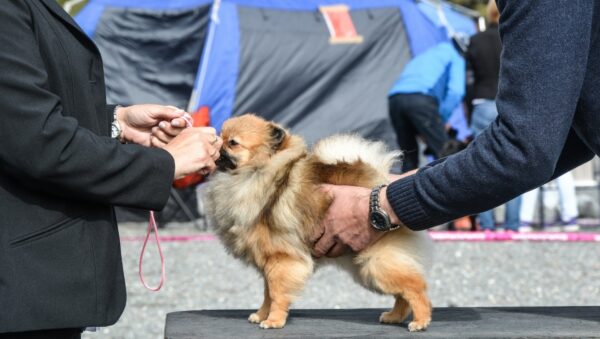
If you want to participate in competitions with your dog, you will need a pedigree. But for most people, who keep their dog as a pet, this is not necessary. A pedigree dog, in our opinion, has more disadvantages.
In such a competition, they judge your dog on their beauty. The dog must be as close to the ideal as possible, whether that ideal is healthy or not. For example, pedigree associations have demanded a nose as flat as possible for certain breeds for years. This often causes breathing problems in some dogs.
Inbreeding
Unfortunately, breeders are still allowed to inbreed, even pedigree breeders. Whether consciously or not, it remains inbreeding, and this is one of the worst things you can do during breeding.
You may wonder how pedigree breeders inbreed. Well, a dog becomes a champion several times at a competition. And then it starts, that dog suddenly covers many more females. Because everyone wants puppies from the champion. What they forget is that the percentage of DNA genes starts to resemble the champion more and more.
Moreover, pedigree dogs can be sourced from a smaller pool for breeding animals. You are only allowed to breed pedigree dogs with pedigrees. While pedigree dogs make up only a small part of all dogs. So the pool with different DNA genes is much smaller.
We, as professional breeders, can combine dogs, both with and without pedigrees. This way, the genes remain more diversified.
Discrimination
It is pure discrimination that for a pedigree dog, both parents must also have pedigrees.
What is wrong with a dog without a pedigree according to them? While it can also resemble the ideal image of the breed association just as well!
Moreover, we are not allowed to apply for a pedigree because Saint Hubertus only allows small hobby breeders in their inbreeding club 🙁
What do experts think?
Even experts from the BBC think this.
How then?
Woefkesranch is a family breeding farm where you can visit the puppies with their mother. We select our breeding animals with the aim of as little inbreeding as possible, while still having a beautiful dog.
Choose a puppy you have confidence in and with a breeder. Choose Woefkesranch!