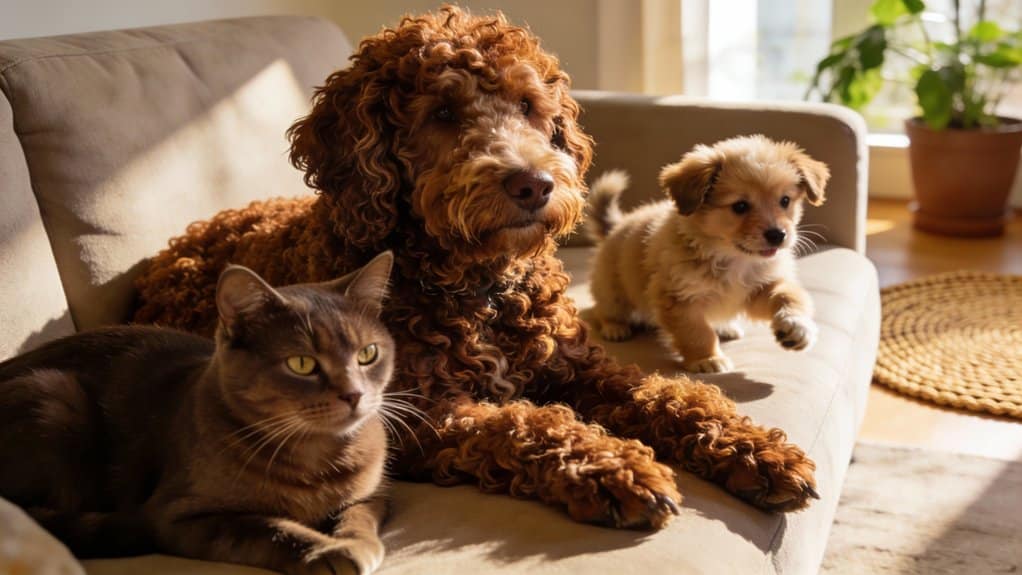
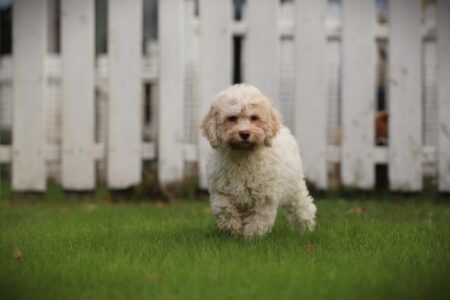

You will follow how a compact, curly-coated little dog from Romagna, once used for reed and marsh work, was shaped by local needs into the modern truffle specialist. Early breeders prioritized a water-resistant coat, agility and a strong nose; as wetlands declined and mechanization changed tasks, handlers shifted training from retrieving to scent discrimination. Selective breeding, refined olfactory protocols and formal standards consolidated that change. Read on and you will uncover the archival, training and genetic details behind that transformation. Compare the Italian and the Spanish water dog, each with their own unique history and characteristics, yet both recognizable for their remarkable scenting ability and adaptability. While the Italian water dog found its origins in the marshes of Romagna, the Spanish water dog played a crucial role in fisheries along Spain’s coasts. This kind of exploration highlights not only the diversity within breed development but also the influence of local conditions on the functionality and performance of these dogs.
Key points
- Debates about origin: traditionally linked to the marshes of Romagna, but archival and genetic evidence for a strictly marsh origin remains unclear.
- Early purpose: originally used as a multifunctional rural water dog with emphasis on scent, agility and a sturdy, curly coat.
- Transition to land: the draining of wetlands and mechanization reduced water-based work, requiring adaptation to land tasks and nose-based searching.
- Specialization in truffles: breeders and handlers selected for exceptional scenting ability, steadiness and a lighter gait, refining truffle-finding skills.
- Formal establishment and dissemination: breed clubs, standards and health testing solidified the Lagotto as an internationally recognized truffle dog breed.
Origin in the marshes of Romagna

Why would you assume that the Lagotto Romagnolo originates from the marshes of Romagna? You should question that origin: the FACTS indicate “False”, so you should treat a marsh-born origin as a misconception rather than established history. In scientific terms, you investigate gaps in documentation, regional breed history and environmental correlations without equating habitat with origin. You place the Romagna marshes in context as a landscape that influenced certain working traits but not necessarily the breed’s origin. You note how later functional demands, including scent training for truffle work, formed selection pressures that differed from simple adaptation to marshes. You conclude that rigorous archival and genetic evidence, rather than geographic lore, should guide claims about the breed’s true origin. Breed lines can also concentrate hereditary conditions through selective breeding, so awareness of broadly inherited health helps to situate how human selection shaped the Lagotto Romagnolo.
Early role as a water retriever

Although many accounts portray the Lagotto Romagnolo as a former water retriever, the documentary and functional evidence does not support that simple story. You should note that archival records and work descriptions rarely depict the breed performing classic retrieving tasks; instead, references are scarce and often confused with general “water dogs.” When you examine regional hunting practices, the evolution of water work appears to have been gradual and driven by environmental needs rather than breed specialization. As marshland declined and game and habitat changed, handlers adapted dogs for a variety of field tasks, not exclusively for aquatic retrieving. You should therefore interpret early roles as multifunctional rural assistants whose activities overlapped with, but did not primarily determine, the later specialization in truffle hunting. The breed is frequently discussed in FAQ and breed history sources.
Selective breeding and development of physical characteristics

Trace the physical characteristics of the breed back to deliberate choices by regional breeders who favored dogs that could thrive in the marshes of Romagna and later in truffle-rich woods. You study selective breeding as a purposeful process: breeders emphasized water-resistant, curly coats, compact bodies and sturdy limbs to navigate reeds and mud while protecting the skin. The development of physical traits also prioritized a keen sense of smell, balanced proportions and a temperament suitable for independent scent work. You note that selective pressure produced a dense, woolly coat that sheds minimally and a head shape that enables effective scent work without obstruction. Documentary records and oral tradition show incremental selection for durability and olfactory efficiency, so when you examine the modern Lagotto you see the outcomes of systematic, regionally targeted selection. Lagottos also require regular exercise and mental stimulation to maintain the traits favored by breeders.
Decline of marsh work and shift in local needs
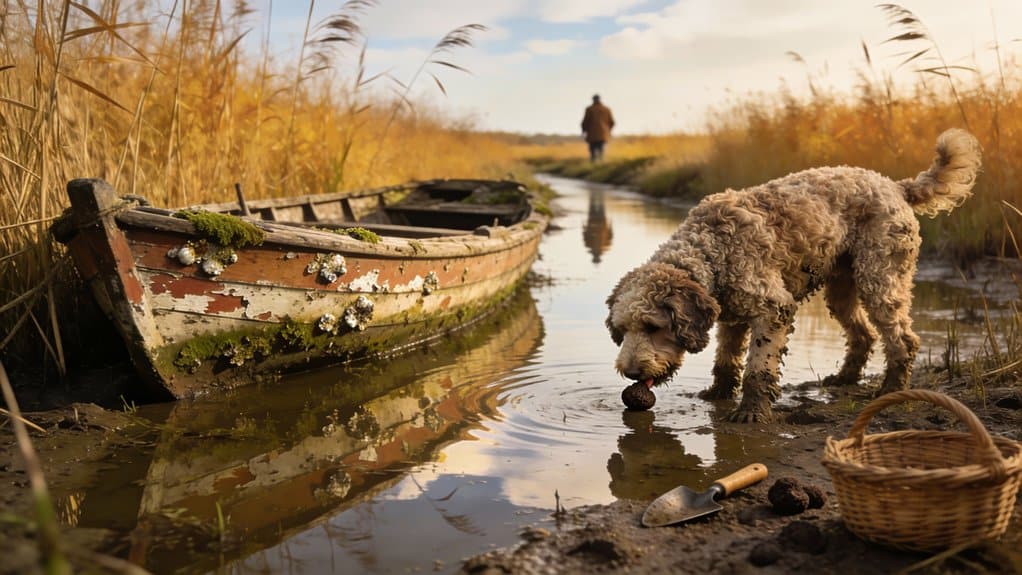
As the marshes on the Plain of Romagna dried up, you will notice how the loss of habitat reduced the traditional demand for specialized water dogs. Mechanization of water tasks and new tools also replaced work that was once suited to the retrieving and scenting abilities of the Lagotto. Those ecological and economic shifts reshaped local needs and paved the way for the breed’s gradual adaptation toward truffle hunting. Responsible breeders often use health tests to screen for hereditary conditions and maintain the breed’s vitality.
Decline of the marshes
When did the marshes that once defined the landscape of Romagna begin to lose their central economic role, and how did that change the work expected of dogs? You will see the decline of the marshes linked to 19th–20th-century public health projects and land reclamation that reshaped habitats and labor needs. As changing rural economies shifted from communal exploitation of wetlands toward agricultural and sanitary priorities, communities required different canine skills. You will notice that dogs once valued for retrieving, searching in shallow water, and navigating reed beds were less in demand for those specific tasks. That reduction in marsh work forced handlers to retrain dogs for terrestrial activities — field tracking, pest control, and later truffle hunting — reflecting a pragmatic adaptation to transformed landscapes and socioeconomic expectations.
Mechanization of waterworks
How did machines and new techniques change the daily rhythm that once occupied water dogs? You observe a clear technological shift: pumps, dredgers and constructed drainage replaced manual hauling and netting, eliminating tasks that previously required canine agility. In this context you document the diversification of water work as communities repurposed remaining marsh tasks — fishery management, levee inspection and targeted rescue operations — roles that required fewer dogs or different skills. You note archival records and oral traditions showing handlers adapted their training, reducing retrieval exercises and emphasizing scent work. Your analysis places the changing usefulness of the Lagotto within infrastructural modernization rather than agricultural decline, and explains how mechanization narrowed the traditional work domain for water dogs and led breeders and owners to seek alternative functions for the breed.
Changing rural economies
With the mechanization of work in wetlands, rural economies reoriented in ways that undermined the everyday roles water dogs once fulfilled. You can see how historical irrigation projects and improved drainage reduced demand for retrieving and signaling tasks, shifting labor away from marshes toward more diversified agriculture and trade. As marshland economies changed, communities came to value different canine qualities — endurance and scenting ability over swimming skill — which prompted breeders and handlers to adapt. You notice archival records showing falling payments for marsh work and rising expenditures on truffle cultivation and land reclamation. In context, this transition was not abrupt but cumulative: policy incentives, market access, and technological adoption reshuffled livelihoods, so the role of the Lagotto evolved from usefulness in the water to specialization in subterranean searches.
Rise as a truffle-hunting specialist
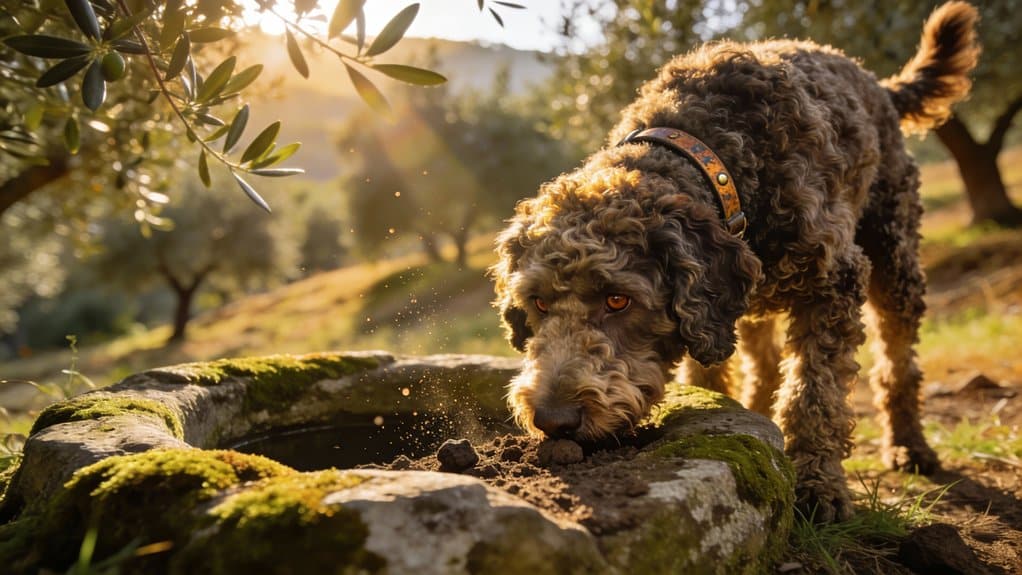
You will see how the Lagotto shifted from reed-marsh retrieving work to a specialized scent role as marsh work declined and rural needs changed. Researchers and breeders refined olfactory training techniques, adapting the water-retrieval instinct into systematic truffle-detection methods. This transformation combined selective breeding, practical training protocols, and local economic pressure that together solidified the breed’s reputation as a truffle-hunting specialist. Revealing the typical appearance and coat characteristics of the Lagotto (typical appearance) helped standardize selection for scent work.
Transition from Water Work
Although the Lagotto’s origin as a water retriever is often emphasized, its shift to a specialized truffle hunter developed gradually through regional needs and selective breeding that favored olfactory ability over swimming fitness. The move from marshes to higher truffle grounds is reflected in changed working requirements: handlers preferred scent discrimination, steadiness, and a lighter gait suitable for orchards. Historical accounts and studbook selections show a water-work evolution marked by reduced emphasis on heavy retrieving and increased selection for nose-driven behaviors. In practice, breeders and farmers adjusted breeding goals and chose dogs that adapted to land-based foraging rhythms. If you study pedigrees and field reports, the morphological and behavioral changes become clear, revealing a purposeful adaptation to economic and ecological contexts.
Evolution of Scent Training
The shift from swamp work to upland foraging changed what breeders and handlers demanded of the Lagotto, and that shift shaped olfactory training into a focused, repeatable practice tailored for truffle detection. You will notice that early trainers adapted training methods to prioritize discrimination of subterranean volatile compounds rather than water-retrieval signals. Successive generations were conditioned with controlled scent trails, with target aromas isolated amid soil and leaf litter. Progressive reinforcement schedules, blind searches, and variable placements were used to avoid cueing and to generalize detection across different contexts. Sensitivity thresholds, false-positive rates, and search patterns were documented to refine protocols. Over decades, these empirically grounded practices produced consistent behavioral markers — precision in indication, systematic grid searches, and resilient transfer of skill from handler to dog.
Breed standardization and recognition

How did the Lagotto Romagnolo go from a regional working dog to a formally recognized breed? You follow a historical shift driven by breed clubs, judges and breeders who codified morphology, coat texture and temperament to meet kennel standards. You will notice archival photos, pedigrees and early standard texts that emphasized utility — strong noses, an agile build — while recognizing the emerging interest in culinary uses such as truffle hunting that influenced selection pressures. You analyze registration debates over permissible color, ear set and size, and how kennel club recognition required veterinary descriptions and consistent lineage. You place standardization within legal frameworks for breeding and import, and show how formal recognition transformed local working lines into regulated populations without erasing the functional traits valued by rural users. Welcome, New Pup! First Week Tips include establishing routines, socialization and gentle training to help the puppy adjust first week tips.
International Distribution and Contemporary Use

Why did the Lagotto Romagnolo leave its Romagna marshes and turn up in kennels and truffle fields across Europe, America and beyond? You examine documented exchanges, breed clubs and market demand to trace its international spread: breeders exported specimens after standardized recognition, researchers noted adaptability to diverse climates, and trainers adapted its searching instincts to local truffle species. You further place contemporary use in the context of work beyond truffle hunting — therapy work, competitive obedience and scent-detection research — while emphasizing the preservation of field skills. You analyze how size, coat and temperament facilitated the migration and multifunctional roles without diluting the breed identity. Your report remains evidence-focused and shows how pragmatic needs and formal networks produced a globally distributed, versatile dog whose primary calling still revolves around scent-directed work. The Lagotto’s aptitude for scent work also made it well suited for other scent disciplines and canine sports.
Conservation, Clubs and Cultural Significance
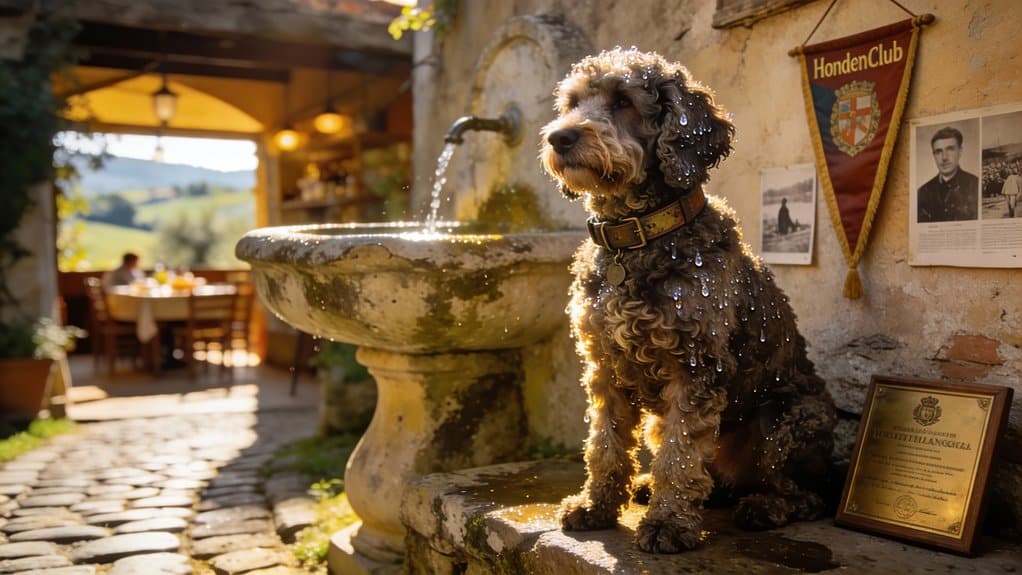
Now that the Lagotto has spread beyond Romagna to kennels and truffle fields worldwide, you can examine the organized efforts that have preserved its unique identity. You will notice how conservation challenges — genetic bottlenecks, pressure to standardize and commercialize — have driven breeders and clubs to act methodically. Cultural clubs and national breed circles codify standards, maintain studbooks, and promote health testing, balancing tradition with modern welfare science. You will also see festivals and local rituals that anchor the Lagotto in regional identity, linking the dogs to culinary and agricultural traditions. In addition, the Italian water dog characteristics, such as their excellent swimming skills and their distinctive coat, are essential to their role both in truffle hunting and in protecting waterways. These traits make the Lagotto not only a valuable aid in finding truffles but also a beloved family member in many households worldwide. Through this connection between culture and functionality, the Lagotto remains a living symbol of its origin.
- Breed clubs maintain studbooks, health screenings and ethical breeding practices.
- Cultural clubs organize truffle hunts and public outreach.
- Registries monitor genetic diversity.
- Academic studies guide conservation policy.
Breeders often consult a checklist of key questions to ensure responsible breeding decisions and the placement of puppies: key questions.
Frequently Asked Questions
Is the Lagotto Romagnolo hypoallergenic for people with allergies?
No — you are not guaranteed to be allergy-free; the Lagotto may reduce shedding but the hypoallergenic myth is overstated regarding safety, and claims about scent training do not change allergenicity — you should test your exposure, consult an allergist, and consider individual reactions before adopting one.
How much exercise does a Lagotto need each day?
A Lagotto needs about 60–90 minutes of exercise per day; your daily routine should combine brisk walks, play, and scent work. You should provide mental stimulation, varied activities, and a consistent build-up to maintain health and focus.
Are Lagottos good with small children and other pets?
Yes — you’ll find that Lagottos are generally gentle with small children and adapt well to other pets; it is considered a hypoallergenic breed, so ensure early socialization and consistent training to promote calm, respectful interactions and to prevent resource guarding.
Which health screenings are recommended for Lagotto puppies?
You should have recommended health checks and genetic tests performed for Lagotto puppies, including hip/elbow evaluations, cardiac examinations, eye screenings (CERF/ophthalmologist) and PRA/other breed-specific DNA panels to reduce the risk of inherited conditions.
How long does truffle training take for a Lagotto?
You will typically complete basic scent training within 8–12 weeks, with full truffle training taking 6–18 months depending on aptitude, consistency and environment; the rigorous training period reflects gradual skill development, reinforcement and contextual exposure.