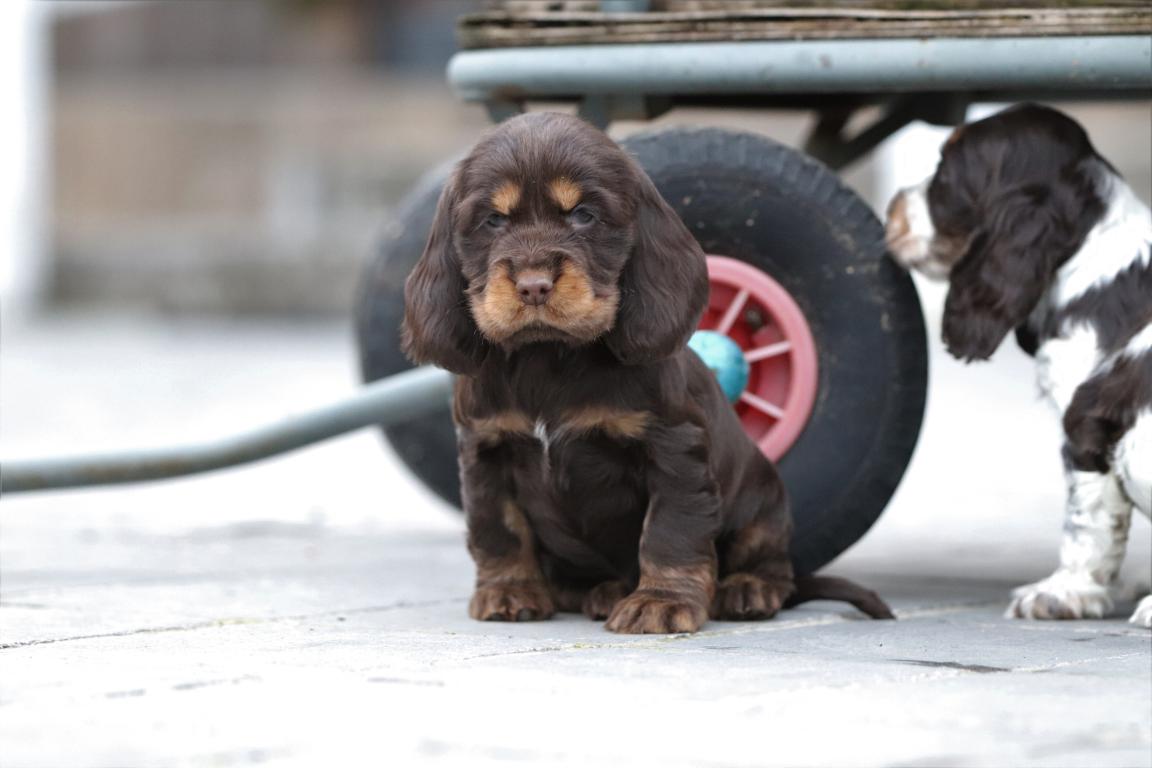
Are you looking for an English Cocker Spaniel? Then you are probably facing an important choice: will you go for a short-haired or long-haired variant? Because yes, these popular family dogs come in different coat types, and that makes quite a difference. In this comprehensive guide about the short-haired vs long-haired English Cocker we help you with your choice.
The English Cocker Spaniel is among the most beloved spaniel breeds, and that’s understandable. These medium-sized dogs have a friendly temperament and a sturdy, well-balanced build. They were originally bred for hunting – and you can still see that in their behavior. They are excellent at hunting game, even on difficult terrain.
But here’s the thing: the choice between short- and long-haired has consequences. Not only for the appearance, but also for the care, the behavior and yes, also for your wallet. With an average purchase price between 800 and 1,200 euros and regular grooming costs of 50 to 70 euros per session, it’s wise to carefully consider which type fits your lifestyle.
It’s essential to fully understand the short-haired vs long-haired English Cocker comparison before you make a decision.
Because let’s be honest: a long-haired Cocker requires more maintenance than its short-haired cousin. At the same time, each type has its own charm and characteristics. In this guide we compare the practical differences, so you can make a well-considered choice for the perfect four-legged companion.

Appearance differences between short-haired and long-haired English Cocker
When you look closely at an English Cocker Spaniel, the physical differences between the short- and long-haired variants become immediately apparent. These differences go far beyond coat length — they affect the dog’s entire appearance.
Coat length and texture: silky vs voluminous
The short-haired English Cocker Spaniel, often from working lines still used for hunting, has a shorter and less dense coat. These dogs carry a functional coat that is practical during fieldwork. The texture feels silky, but remains significantly less voluminous than that of long-haired counterparts.
By contrast, the long-haired variant displays a silky, glossy coat that is considered the most distinctive feature of the breed. This coat requires more maintenance but also serves as a calling card at dog shows. Important detail: the coat must never be harsh or curly, although light waviness is permitted. The voluminous character contributes to the elegant appearance that show dogs are so prized for.
Colors and patterns: solid vs roan or pied
Both coat types offer an impressive variety of colors. Solid-colored English Cockers occur in shades such as black, red, golden, liver (chocolate brown) and black-and-tan. Black Cockers often have a “heavy coat” that can be coarser and more difficult to maintain.
Multicolored varieties display fascinating patterns such as piebald (white with colored spots) and roan. Roan patterns show finely mixed colors: blue roan, orange roan, lemon roan and liver roan. Both solid-colored and multicolored dogs can have tan markings, adding even more visual variety.
Notably, coat color sometimes affects the texture. Liver roan Cockers often have a coat that lightens as the dog ages. Sometimes the undercoat is lacking, which can result in bald spots after plucking.
Ear shape and feathering: shorter vs longer hair
The long, low-set ears are among the most characteristic features of the English Cocker Spaniel. Short-haired working lines have somewhat shorter ears, which are more practical during hunting because there’s less risk of getting caught in undergrowth.
Long-haired varieties carry ears covered with long, straight and silky hair — also called “feathering.” This feathering provides an elegant appearance and is an important focus in shows. The ears should appear low-set with long, silky feathering.
Besides the ears, long-haired English Cockers have noticeable feathering on the forelegs, chest, belly, hindquarters and tail. This feathering contributes to their regal appearance. Some long-haired Cockers even develop a true ‘wig’ on their head with locks up to 20-30 centimeters long.
Behavior and temperament by coat type
The difference between short- and long-coated goes much further than you might think. An English Cocker’s coat type often indicates its temperament, energy and work drive, including its character.
Working dog vs show dog: energy and focus
The short-coated English Cocker from working lines has a higher energy level and excellent stamina. These dogs are mentally and physically more demanding. If you don’t provide enough stimulation, you’ll get behavioral problems. They were bred for practical work — hunting — but also perform excellently in dog sports such as agility, flyball and detection work.
The long-haired variant from show lines also has work drive, but not to the same extent. Both types are active, social and cheerful, but here’s the difference: a dog from the working line needs specific hunting training to channel its strong prey drive. For a show-line Cocker this is usually not necessary.

Social interaction: affection and alertness
All English Cockers are affectionate and attached to their owner. They like to follow their owner everywhere — that’s typical for this breed. Interestingly, solid-colored Cockers are somewhat more independent and are more likely to display dominant behavior than multicolored individuals.
They are generally friendly toward strangers. They are not true guard dogs, but they do bark at signs of trouble or visitors. They usually get along very well with children, although they don’t like it if children roughhouse with them. They also usually do well with cats and other pets, especially when raised together from a young age.
Trainability: obedience and playfulness
The English Cocker Spaniel is intelligent and eager to learn, but requires an approach that suits its type. Short-coated Cockers from working lines learn incredibly quickly — including the wrong things. They need an experienced trainer who can anticipate their strong drive.
With both types, a combination of gentleness and consistency is essential. Never use harsh training methods – these sensitive dogs can become anxious or shut down completely as a result. Show-line Cockers respond best to positive reinforcement techniques.
Both types are playful and have a strong desire to please. The training should be varied and fun to keep their attention. Remember: despite its endearing appearance, an English Cocker needs a firm but gentle hand during upbringing.
Grooming needs: how much time does it really take?
Now let’s get concrete. Because caring for an English Cocker Spaniel takes time – but how much exactly? That depends on which type you choose. And let’s be clear: there’s a considerable difference between a short-haired and a long-haired variant.
Brushing frequency: twice a week vs weekly
A short-coated English Cocker Spaniel from working lines? You’ll brush that once to twice a week and you’re done. Their coat mats less quickly and is much easier to maintain.
But a long-haired variant is a different story. Their silky coat needs to be brushed at least three to four times a week to prevent mats. Some experts even say: do it daily for the best results. Brushing also stimulates blood circulation and acts like a massage for your dog.
Be aware: the more active your dog is, the more often you’ll need to brush. Forest walks or swimming? That means extra work. Wet paws quickly lead to mats.
Grooming: 4x vs 6x per year
A short-coated Cocker needs approximately four grooming sessions per year. The dead hair is removed and the coat is shaped – done.
The long-haired variety, however, needs to visit the groomer more often. Six times a year is the norm. At each session the dead hair is removed from the head, back, shoulders, thighs and flanks. Plus washing, drying and cleaning ears and eyes. Expect a visit every 8–10 weeks to keep the coat healthy and manageable.
Ear care: risk of infections in long-haired Cockers
The ears? That’s a point of attention, especially for long-haired Cockers. Their drooping ears with that long feathering are particularly prone to infections. Check weekly and clean if necessary.
Long-haired Cockers have a higher risk. Moisture can become trapped in the ear, creating a perfect environment for bacteria. So ensure good air circulation and always thoroughly dry the ears after swimming or bathing. And be careful: no water in the ears while washing.
Short-haired Cockers suffer less from ear problems thanks to their shorter feathering. But regular checks remain important – for them too.
Health and hereditary predispositions
Both types of English Cocker Spaniel bring specific health challenges. Health must be guaranteed at all times, regardless of which coat type you choose. These dogs do have a life expectancy of 10 to 15 years, but it is important to be aware of potential problems.
Coat-related skin problems
Distichiasis is common in the English Cocker Spaniel. Extra eyelashes grow where there are normally no hair follicles. These abnormal hairs irritate the cornea, causing watery eyes and swelling. In severe cases, ulcers can even form on the cornea.
Coat type affects skin health. Long-haired Cockers are more prone to skin problems because their denser coat retains more moisture. In short-haired types air circulates better, which reduces the risk of skin allergies and infections. Neutered Cockers often develop a thicker, more woolly coat that requires extra care.
Ear infections: more common in long-haired types
Otitis externa (ear infection) is among the most common conditions in English Cocker Spaniels. However, these infections occur more often in long-haired individuals. Their drooping, hairy ears hinder air circulation, creating an ideal environment for bacteria and yeasts.
You can recognize symptoms by pain, itching, scratching, head shaking and an unpleasant odor. Otitis externa is diagnosed in about 10.09% of English Cocker Spaniels annually. Thoroughly dry the ears after swimming, especially in long-haired types.
Hip dysplasia and PRA: does it occur more often in one type?
Hip dysplasia affects both coat types, but solid-colored Cockers (more often short-haired) seem to suffer from it more than multi-colored individuals. This condition causes malformation of the hip joint, resulting in pain and mobility problems.
Progressive Retinal Atrophy (PRA) is an inherited eye disorder that causes blindness. The dog first has poorer vision in twilight and will eventually become completely blind. A genetic test reveals whether a dog is clear, a carrier, or affected. Other common inherited conditions include cataracts, familial nephropathy and dilated cardiomyopathy.
Genetic testing before purchase is always recommended, regardless of which type of Cocker you choose. There are no significant differences in susceptibility to PRA between the different coat types.
Comparison table
Below you will find an overview of the main differences between the two types. This table helps you quickly see where the practical differences lie:
| Feature | Short-coated English Cocker | Long-coated English Cocker |
| Coat type | Shorter and less dense, silky | Silky, glossy and voluminous |
| Ear feathering | Shorter ears | Long feathering on ears |
| Grooming frequency | 4x per year | 6x per year |
| Brushing frequency | 1-2x per week | 2x per week |
| Energy level | Higher energy level, more endurance | Moderate energy level |
| Work drive | Strong work drive, suitable for hunting | Less pronounced work drive |
| Trainability | Learns quickly, needs an experienced trainer | Responds best to positive reinforcement |
| Sensitivity to ear infections | Less sensitive | More sensitive due to dense feathering |
| Skin issues | Less susceptible due to better airflow | More susceptible due to denser coat |
| Average grooming costs | 50-70 per grooming session | 50-70 per grooming session |
The most important questions to ask yourself: Do you have time for intensive coat care? Are you an active owner who wants to do a lot with the dog? And are you willing to invest extra in professional grooming?
This table shows that both types have their own challenges. The short-haired variant demands more from you as an owner in terms of activity, while the long-haired one requires more time for grooming.
Costs and long-term maintenance

After reviewing all the differences the picture becomes clear: short-haired and long-haired English Cockers each have their own advantages. The short-haired variant from working lines brings more energy and a stronger work drive, but requires less intensive coat care. Long-haired Cockers have that beautiful, voluminous appearance but do demand more maintenance.
It comes down to your lifestyle. Are you an active person who has little time for daily coat care? Then a short-haired Cocker will probably suit you better. Do you enjoy caring for a lush coat and have more time available? Then you will likely prefer the long-haired variant.
Both types give you the same warm, intelligent, and loyal companion. The English Cocker Spaniel remains, regardless of coat type, a dog with a friendly character and a strong bond with its family. With the right care, training, and attention, every Cocker becomes a healthy and well-balanced dog.
The most important thing is that you are honest about what you are looking for. Do you want a sporty walking partner that requires less maintenance? Or do you prefer an elegant appearance that you invest more time in? Both choices are fine, as long as they fit your situation.
An English Cocker Spaniel — short-coated or long-haired — will enrich your life with its cheerful temperament, intelligence and unconditional love. The choice you make mainly determines how much time you spend on grooming and how much daily exercise your dog requires.
The choice between a short-coated and a long-haired English Cocker Spaniel ultimately comes down to practical considerations. Owners of short-coated Cockers often appreciate the easier maintenance, while enthusiasts of long-haired specimens enjoy that beautiful, elegant appearance.
Financially, the two types differ little in purchase price. For a pedigree puppy you pay between 1,200 and 1,500, regardless of coat type. But the long-term costs do vary. The more intensive grooming of the long-haired Cocker means about two extra grooming sessions per year — which amounts to an additional 100–140 per year. For more information about purchase costs, see our guide on the price of an English Cocker.
There is also a clear difference in time investment. In addition to weekly brushing, the long-haired variant requires daily attention to prevent matting, especially after outdoor activities. At the same time, a short-coated English Cocker needs more physical exertion because of its higher energy level.
Experienced dog owners typically choose the type that fits their lifestyle. Active families often opt for a short-coated Cocker because of its sporty character. Households with less time for long walks, but more patience for coat care, are more likely to choose the long-haired variant.
The English Cocker remains, regardless of coat type, a devoted family dog that, with proper care and attention, grows into a loyal companion.
Key Takeaways
This guide helps you make the right choice between a short-coated and long-coated English Cocker Spaniel based on practical differences in grooming, behavior and costs.
- Short-coated Cockers have a higher energy level and a stronger working drive, making them better suited to active owners
- Long-coated variants require more intensive coat care: brushing 3-4 times per week versus 1-2 times for short-coated types
- Grooming costs vary: short-coated Cockers need 4 trims per year, long-coated ones 6 times per year
- Long-coated Cockers are more prone to ear infections due to their dense feathering around the ears
- Both types cost 1.200-1.500 to purchase, but long-coated specimens have 100-140 higher annual care costs
The choice depends on your lifestyle: short-coated Cockers suit active families with less time for coat care, while long-coated variants are ideal for owners who enjoy intensive grooming and appreciate an elegant appearance.
Interested in a puppy? See our page about upcoming litters. Still unsure between breeds? We also have a detailed comparison between the English and American Cocker Spaniel.
Are you curious about the pros and cons of this breed? Or would you like to know more about what to expect from an adult English Cocker? Maybe you’re wondering if these dogs can be left alone well? Visit our informative pages for more insight.
For all your questions about the English Cocker Spaniel or advice from an experienced breeder, feel free to contact us.